


The Academy of Music, which was located in Manhattan, was one of the most prominent and grandiose US opera houses in the 19th century. It was built in 1854 and hosted some of the most famous opera and theater performances of that era. Learn more at new-york-trend.com.
THE FOUNDATION OF THE NYC OPERA HOUSE
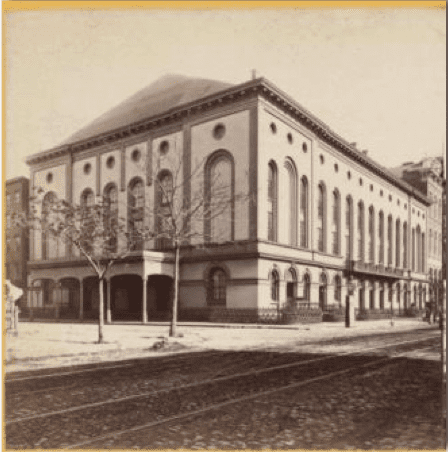
The NYC opera house was not the first opera house in the cultural history of the city. The first one in New York was the Italian Opera House, which was built in the early 1830s. However, the opera house in Manhattan has the title of the first successful specialized opera house in the USA.
In the early 1850s, a need to create a new opera house appeared in New York and the plan for the largest opera venues in the whole world was developed. It was intended to accommodate 4,000 visitors on five levels. The building of the New York City opera house or the Academy of Music was constructed in 1854 on the corner of 14th Street and Irving Place in Manhattan. It was a truly majestic building in the French Renaissance style. The opera house featured decorative elements and frescoes, which added to its grand appearance. Such architecture resembled the great European opera houses.
THE OPERA HOUSE OPENING AND HOSTED PERFORMANCES
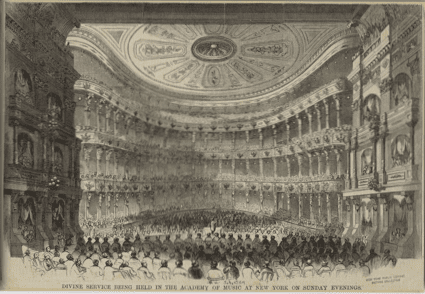
The Manhattan opera house has become a center of New York’s cultural and social life since 1854. The Academy of Music was originally built as a home for the New York Philharmonic Orchestra, but soon it began to host the largest performances and events.
The first performance took place there in 1854. Then the opera house hosted productions by the Max Maretzek Italian Opera Company, Jaime Nunó’s Havana Italian Opera Troupe and the Max Strakosch Italian Opera Company. It quickly gained a reputation as an elite venue, which attracted the attention of world-famous artists.

The Academy of Music was not only a place to enjoy opera and classical music, but it also hosted many other events, such as
- political rallies
- theatrical productions
- celebrations (in particular, Hanukkah, Jewish New Year)
- conferences
- sports events
- exhibitions
- fairs
- charity balls
- meetings ( there was a meeting with the Prince of Wales)
- masquerade balls.
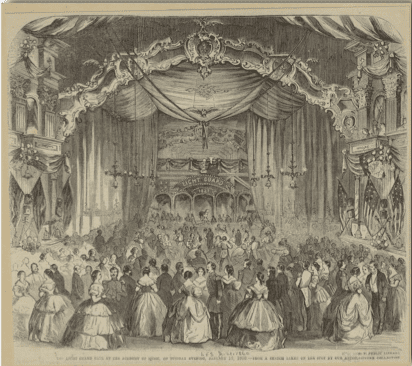
In the second half of the 19th century, the opera house was reconstructed several times. In 1866, a terrible fire happened at the opera house, which completely destroyed the building. The Music Academy in Manhattan was restored only in 1883. But at that time, the Metropolitan Opera was opened in New York, which was a strong competitor to the old Academy of Music. As a result, in 1886, the restored opera house stopped showing opera and switched to vaudeville. The creation of new and modern theater venues, such as the Metropolitan Opera, led to the declining attendance of the Academy. Finally, in 1926, the opera house was closed.
In the 21st century, the Consolidated Edison Building is located on the site where the Music Academy once stood. Although the opera house doesn’t exist in the 21st century, it played a very important role in shaping the cultural landscape of New York and the United States in general during the second half of the 19th century.
Although the Academy of Music was relatively short-lived, it became one of the most significant and grandiose US opera houses in the 19th century. The US and the world’s famous artists and opera singers came here to perform the most famous opera and theatrical productions of the era. The opera house in Manhattan was the center of New York’s cultural and social life during the 19th century.