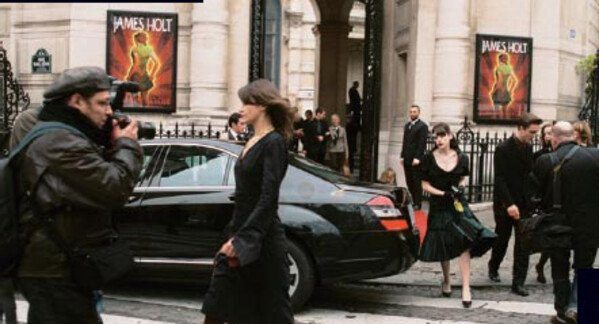
The film The Devil Wears Prada took the world by storm back in 2006 and remains a favorite for many viewers to this day. The famous film was preceded by Lauren Weisberger’s book, which made just as much noise. Secrets of the fashion world, a stylish New York, a story based on truth, legendary actors, scandals, and gossip—all this and more turned the book and its film adaptation into a true sensation. More at new-york-trend.
Lauren Weisberger’s Book
In 2003, the entire New York fashion world was given an unforgettable topic of conversation, while audiences around the globe had no idea what an incredible film adaptation awaited them. The one who impressed everyone was a writer then just beginning her career—Lauren Weisberger. The story of her life and work seems like something out of a movie, but she managed to write her own happy ending through her efforts. Originally from a small town in Pennsylvania, she graduated from Cornell University, set out to find herself, and conquered New York. After her studies, Lauren traveled extensively and eventually settled in the metropolis, where she navigated her first job and wrote a bestseller.
The Devil Wears Prada caused quite a stir even before its release: people in the fashion industry eagerly awaited the book to get the inside scoop, and 20th Century Fox bought the rights to the still-unfinished manuscript. Lauren Weisberger consciously bet on this work, understanding that the book met all the requirements for commercial success. It all began when she took a job working for Anna Wintour. She worked there for about 10 months, after which she quit and began attending a writing course taught by Charles Salzberg. It was there that the book, which immediately received its current title, was born. The writer then connected with agent Deborah Schneider, and everything was set in motion. This left Lauren with a tight deadline to finish her novel.
The book became a story about the fashion world, stunning in its rules and absurdity, featuring a horrible boss and a newcomer needing to advance her career. It’s also about ambition, human relationships, the pursuit of success, and a re-evaluation of principles. And, of course, it’s impossible not to mention that the novel’s characters were inevitably compared to real people. The strict boss is seen as Anna Wintour, the intern is, of course, Lauren Weisberger, and other characters are compared to the inner circle of the fashion magazine editor. These assumptions are not baseless, as the writer’s own experience was very similar to what she describes in the book. After the release of The Devil Wears Prada, the New York world split into two camps: those who considered the book a guilty pleasure full of gossip, and those who trashed the author in their articles. Wintour’s authority, as she drew parallels to herself, played a significant role in this situation.
Lauren Weisberger herself bravely endured this trial, listening to her team’s advice. She tried not to read the reviews, denied any similarities to real people, and celebrated the success of the novel, which was highly praised by ordinary readers.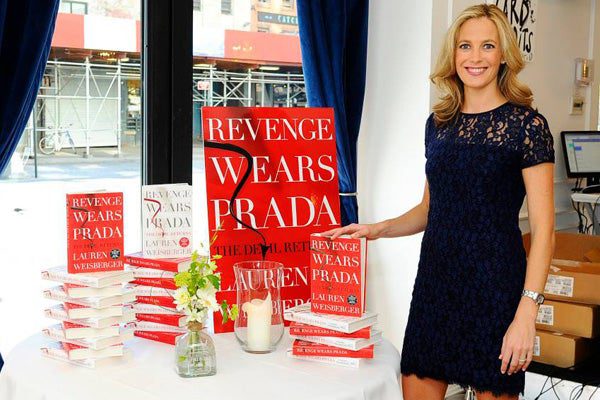
The Story of the Film
While the book captivated many readers and became popular, its film adaptation reached a whole new level, with experts still talking about its brilliance today. The film was released in 2006, grossed over $326 million at the box office, brought its creators numerous awards, and became an example for professionals in various fields. For many years, directors, critics, journalists, costume designers, and others have never tired of debating the film’s phenomenon. That’s because The Devil Wears Prada won everyone over with its acting, concept, style, execution, marketing, and more.
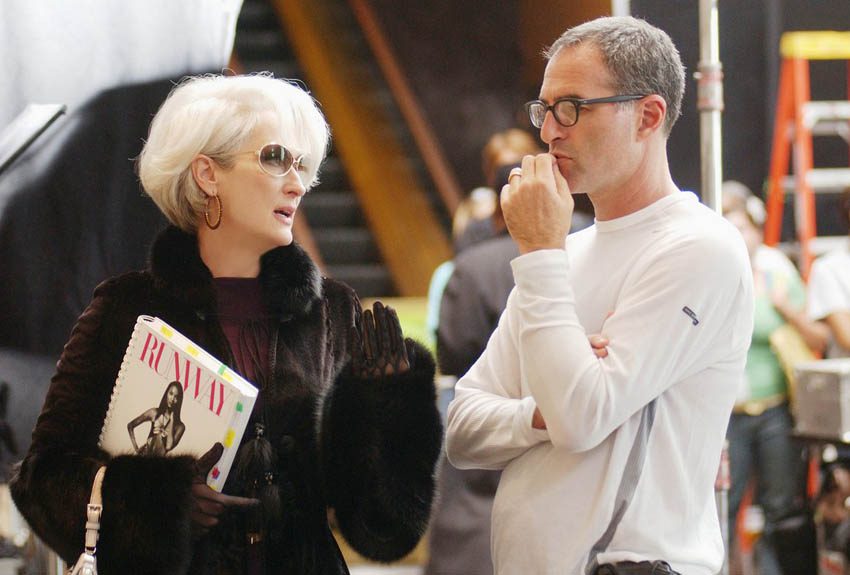
A team of professionals took on the film, elevating it to such a high level. The director was David Frankel, the producer was Wendy Finerman, the screenplay was written by Aline Brosh McKenna, Patricia Field was responsible for the costumes, and the main roles went to Meryl Streep, Anne Hathaway, Emily Blunt, and Stanley Tucci. It all started with 100 pages of the book, which the filmmakers instantly bought before it was even finished. This meant that both the author and the screenwriter had to work at an accelerated pace to finish on time. The story was sharp, funny, and light, but this didn’t satisfy the director, who wanted to take a more serious approach to portraying the fashion industry. That’s why four people worked on the screenplay until Frankel met McKenna, who tirelessly crafted the film’s story.
The team saw a lot of depth and meaning in this work, which they wanted to convey to the audience. The director’s model for the film was Isaac Mizrahi’s Unzipped, and the creators later realized their film had no equivalent in the industry. The adaptation doesn’t just poke fun at the whims of fashion; it also explores an industry that has a huge impact on everyone. The film shows the specifics of working in glossy magazines, the path to the highest levels of power, the experience of beginners, and the nature of leadership. And although many people draw parallels between Miranda Priestly and Anna Wintour, the team states that they did not rely on this information and tried to move away from public expectations. They succeeded wonderfully, as no one would dare call the film a harsh satire. It’s about emotions and feelings, the peculiarities of the industry, and the search for one’s own purpose. That is why it is still analyzed in minute detail, from the costumes to the dialogue.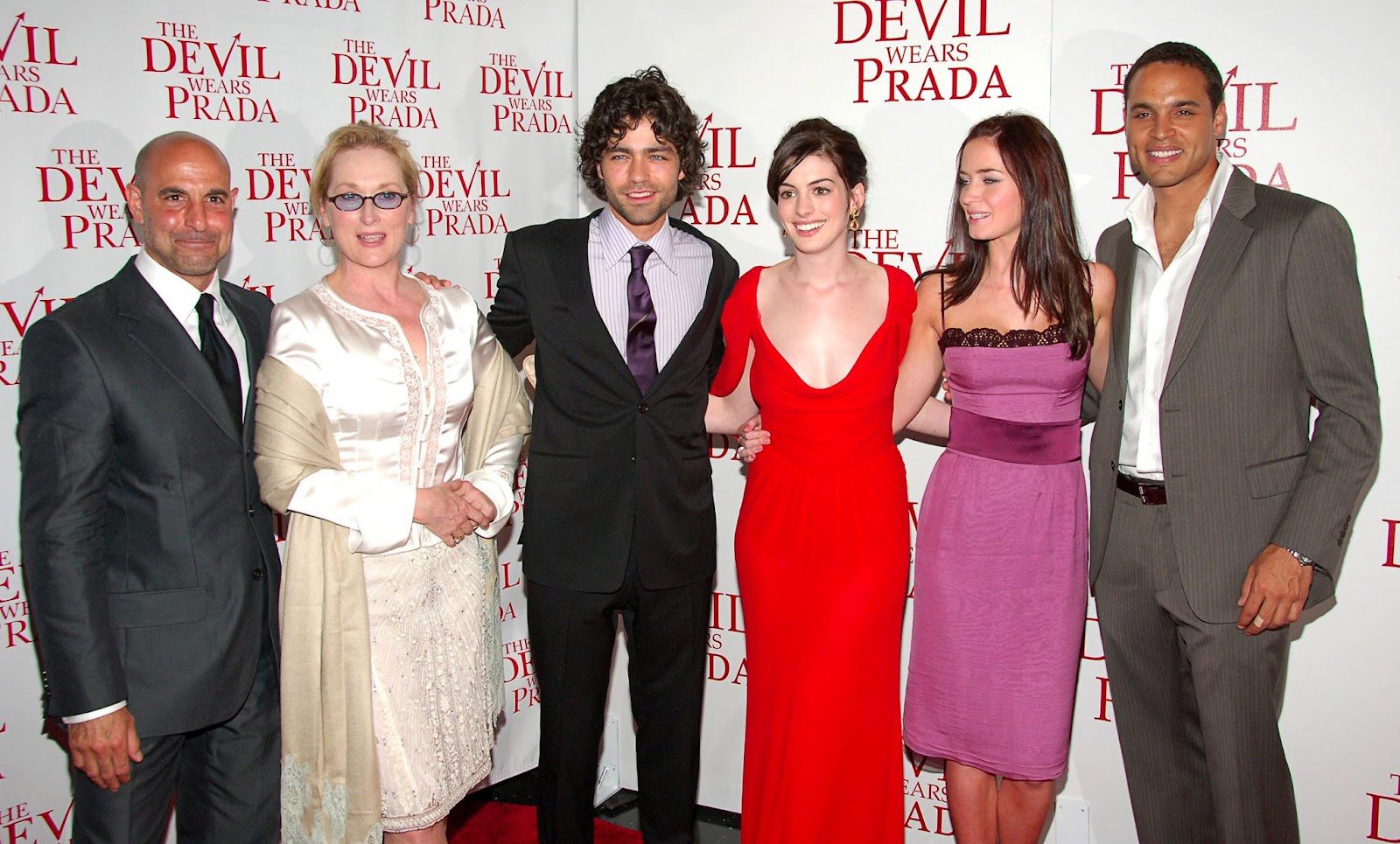
Behind the Scenes
The process of creating The Devil Wears Prada was pure magic, crafted by professionals in their field. There were many funny, touching, and exciting moments on set, but there were also some difficulties that were miraculously resolved.
The cast, which is now incredibly star-studded, deserves special attention. The first to be cast was Meryl Streep, who became the diamond of the project. While this decision seems obvious now, the team had doubts at the time, as the actress had no experience in comedy. However, all doubts vanished when Meryl demonstrated the true level of her skill. The celebrity struck a perfect balance between trusting the team’s work and having her own vision. She entrusted the team with creating her character and, in turn, embodied Miranda perfectly, adding depth and charisma. The actress also helped a lot on set and stayed in character even during breaks, something she later regretted.
Meryl Streep’s co-star was Anne Hathaway, who was not the first choice for the role. The actress already had a lot of experience in similar films, and the team didn’t realize the full extent of her popularity and influence. That’s why this collaboration might not have happened, but fate decided otherwise. The actress knew she wasn’t the first choice but took on the role, and the filmmakers were charmed by her. The team fought hard for Emily Blunt, who had other plans that were canceled at the last minute. The director later admitted he was thrilled with this turn of events, as the actress added charisma to her character. And it’s impossible not to mention Stanley Tucci, who won everyone over with his portrayal, performance, and humor.
There were also problems during filming, as Anna Wintour had a great deal of influence over the New York fashion industry. As a result, designers, stylists, and other specialists refused to help the team, or if they did, it was only anonymously. Patricia Field had to work hard on the costumes, which no one wanted to provide. And when the clothes did appear, the actors had to wear them carefully, as everything was on loan. The same problem occurred with filming locations, as no one was willing to cooperate with the creators. Despite all the problems, the film created a huge buzz, and the final touch was the incredible trailer and the recognizable poster with the devilish heel.
New York in the Lens
The creators of The Devil Wears Prada unanimously agree that New York City is another star of their film. It became the main location and backdrop for the story. In addition to the incredible streets and diverse places, the story captures the atmosphere of the city at that time. As the film’s director noted, the team managed to film it in a way that will never be repeated: the frantic pace, the fashion dominance, the career twists, the noisy streets, the sexuality, and the glamour. The creators were also extremely grateful to Fox for providing the necessary funds and encouraging them to shoot in the city.
New York was home to many of the crew members, who helped reveal it from all sides. That’s why they invested all their love and portrayed the metropolis from various angles: rich, glamorous, simple, touching, stylish, and beautiful. Although the filming was supposed to include Paris, New York also dominated those scenes. There were also problems, as the film crew struggled for a long time to get permission to shoot at the Museum of Modern Art or in Bryant Park. It wasn’t easy to find a location for Miranda’s apartment either, but all these issues were eventually resolved. An interesting fact is that after the film’s release, Anna Wintour changed the interior of her office because she found too many similarities with the movie.
Viewers can admire the Lower East Side, the Upper East Side, TriBeCa, the Spring Street subway station, the St. Regis Hotel, the offices of The New York Sun, the Hudson River, and other locations.