Patti LuPone is a legendary Broadway diva whose incredibly powerful voice and belting technique forever changed modern musical theater. In this article on new-york-trend.com, we will trace her journey from The Juilliard School to the highest theatrical awards, uncover the secrets of her vocal mastery, recall her high-profile scandals, and discuss her feminist impact on the entertainment industry.
The Belting Phenomenon: Anatomy of the Broadway Sound
In the public imagination, belting is often perceived as something harsh—like singing that crosses the line into shouting. In reality, however, it is one of the most complex vocal techniques in contemporary musical theater, where control matters far more than sheer volume.
Classic female belting, famously brought to the forefront by Ethel Merman, typically spans the C4 to C5 range. It is described as a thick, bright, almost “brassy” sound—one that stays close to a speech-like quality but is elevated to maximum stage intensity.

Today, this style has evolved under the pressure of new aesthetics. Performers are expected to deliver a sound closer to pop and rock vocals, expanding the range up to D5, and sometimes even F5. This is no longer just vocal power—it is performing on the absolute edge of human physiology.
To maintain control while hitting such staggering heights, singers employ a few key techniques:
- The Mix-Belt: A seamless blend of chest and head registers. This takes the heavy load off the vocal cords and prevents excessive pressure.
- Resonance and Articulation: Narrowing and focusing the sound through specific vowel shapes to make it brighter and capable of “cutting through” the acoustic space.
- Physical Support: Active engagement of the core muscles. Without this anchor, any powerful sound quickly turns into dangerous vocal strain.
From an acoustic standpoint, true belting isn’t screaming; it’s full-bodied singing with a specific spectral boost that allows the voice to cut through an orchestra completely unamplified. That is exactly why it was so dominant in the classic Broadway sound: the live human voice literally soared over the orchestral wave.
Patti LuPone is widely considered one of the greatest modern exemplars of this approach. Her timbre marries raw power with surgical precision, and her technical stability allows her to sustain complex vocal lines without ever dropping the dramatic tension. At the same time, LuPone has been a fierce critic of modern theater’s overreliance on microphones. She constantly emphasizes that the ability to fill a house with a live, acoustic voice is a foundational professional skill that defines the very essence of the theater.
In this sense, belting is not about being loud. It’s about endurance, supreme control, and the ability to ensure that the human voice remains the undisputed center of the stage, even in our highly technological era.
From Juilliard to Stardom
Born on April 21, 1949, Patti LuPone began her professional journey in 1972 as a member of the first graduating class of The Juilliard School’s Drama Division. This wasn’t just a diploma—it was an admission ticket to a world that demanded total commitment from day one.

Following graduation, LuPone joined The Acting Company, formed under the leadership of John Houseman. She spent years touring the United States with the troupe—a four-year boot camp of grueling stage discipline and incredibly high acting standards.
However, she skyrocketed to fame in the late 1970s when she landed the titular role in Andrew Lloyd Webber’s Evita. The part demanded an almost superhuman vocal capacity. It was this exact role that propelled LuPone into the upper echelon of Broadway royalty. She won her first Tony Award for the performance, though she has often admitted since that the experience was exhausting and remains one of the toughest of her entire career.
LuPone’s awards resume reads like a chronicle of sustained dominance at the top of the theater world:
- Tony Awards: 3 wins (8 nominations)
- Laurence Olivier Awards: 2 wins (3 nominations)
- Grammy Awards: 2 wins (2 nominations)
- Emmy Awards: 2 nominations
She also made a monumental mark in London, becoming the first actress to play Fantine in the Royal Shakespeare Company’s production of Les Misérables, earning an Olivier Award for her work. In 2006, she was officially inducted into the American Theater Hall of Fame, permanently cementing her status as a pillar of modern musical theater.
The “Brassy Lady”: A Voice Unapologetic
In theatrical circles, LuPone is frequently associated with the “Brassy Lady” archetype—a loud, straightforward, sometimes abrasive woman who never asks for permission to take up space on stage. Her characters rarely fit into traditional molds of femininity. They are complex, ambitious, and prickly—and that is exactly why they are so brilliantly alive.

Theater scholars point out that the mere presence of such a heroine on stage is an act of defiance. A woman singing at full volume and dominating a room shatters conventional gender roles, which historically dictated that female voices should be restrained or heavily regulated.
LuPone perfectly channels this energy into her most iconic roles: Mrs. Lovett in Sweeney Todd and Madame Rose in Gypsy. Her characters don’t ask for your sympathy—they aggressively command it.
The actress explains her own temperament without any false modesty:
“I am a total Italian, and that means a big personality.” She adds, “If somebody has talent, they are entitled to be temperamental.”
The role of Madame Rose in Gypsy is widely considered the Hamlet of musical theater for women—not just because of its sheer scale, but due to its intense psychological depth. In 2008, LuPone took on the part on Broadway at the age of 59, and her interpretation became a landmark event in theater history.
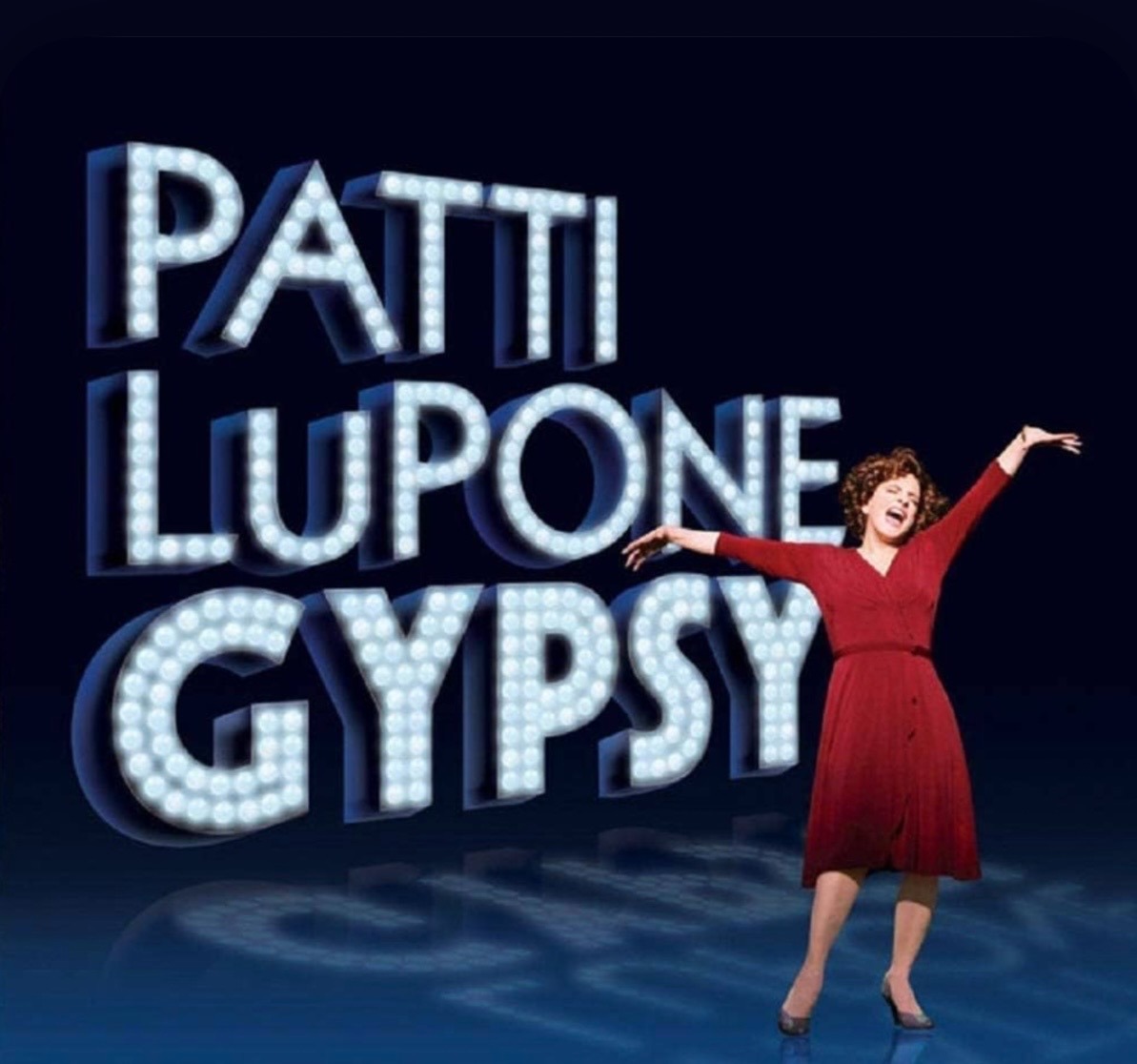
Critics noted that she didn’t just rehash the blueprint laid down by Ethel Merman; she essentially reinvented it. Her Rose wasn’t some flat caricature of a “mother from hell.” She was a deeply flawed, flesh-and-blood woman wrestling with fierce ambition, genuine love, and a profound inner brokenness.
Scandals, Memoirs, and Uncompromising Candor
Offstage, Patti LuPone is just as blunt and unapologetic as the women she plays. Her autobiography, Patti LuPone: A Memoir, pulls back the curtain on the decidedly unglamorous side of Broadway—a world that is anxious, conflict-ridden, and often ruthless. There is no filter in these stories. It’s the raw account of someone who has navigated the belly of the beast for decades and refuses to bite her tongue.
One of the most explosive chapters in her career involves the musical Sunset Boulevard. LuPone was led to believe she would originate the role of Norma Desmond on Broadway, but producers ultimately gave the part to Glenn Close. The fallout was incredibly public and ended in a hefty financial settlement. Throwing diplomacy out the window, LuPone later famously dubbed composer Andrew Lloyd Webber a “sad sack”—sharp, direct, and completely sugar-free.
Another defining trait is her fanatical commitment to theater etiquette. LuPone is legendary for her zero-tolerance policy regarding audience distractions. A glowing cell phone in the crowd can instantly trigger a mid-show confrontation. On several occasions, she has literally stopped the play dead in its tracks to publicly call out disruptive patrons. Some view this as wildly aggressive, while others see it as a desperate, valiant crusade to protect the sanctity of live theater.
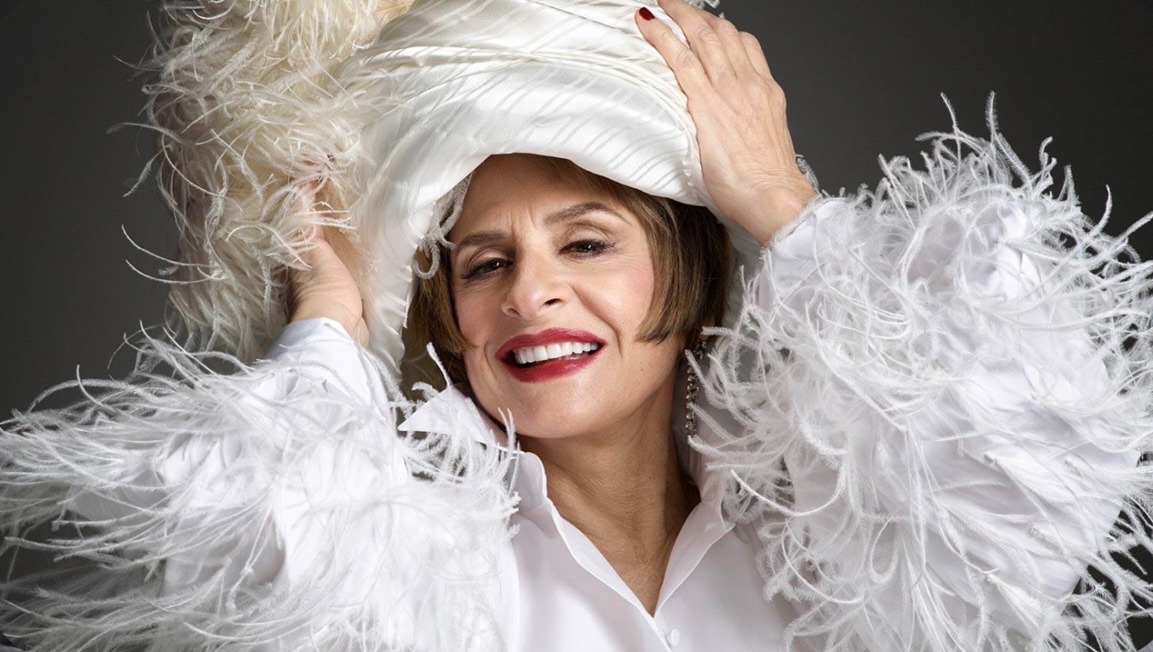
Still, her public persona is far from a one-dimensional caricature. LuPone is not afraid to own her mistakes. She has publicly apologized to colleagues, including Audra McDonald and Kecia Lewis, for making insensitive remarks.
“I am devastated that my behavior has caused harm,” she stated.
In her writings, LuPone frequently returns to the idea that our failures shape us much more profoundly than our triumphs:
“I truly believe you learn more from your failures than you do your successes.”
This isn’t an excuse; it’s the working philosophy of someone who has experienced the theatrical trenches firsthand.
Her bluntness extends well beyond the arts. In 2026, she publicly slammed the Donald Trump administration’s plans to remodel the Kennedy Center, labeling the politician a “clown” and urging the artistic community to push back. This wasn’t just a spontaneous outburst; it was perfectly aligned with her long-standing belief that culture cannot afford to stay silent when threatened with subjugation.
Patti LuPone is a sheer force of nature on stage. Her career demonstrates how belting evolved from a mere vocal technique into a state of mind: direct, deeply emotional, and entirely unconcerned with smoothing over the rough edges.
She fought her way from the halls of Juilliard to become one of Broadway’s most powerful figures, yet she never lost the essential thing that makes her great: the internal, electric tension that commands the stage to meet her on her terms. And perhaps that is the very essence of her theatrical genius. LuPone doesn’t care about being liked. She demands to be heard—and she forces the room around her to resonate with the exact same brutal honesty that she brings to the spotlight.