In the early 20th century, composer Marion Bauer was a pivotal figure in shaping American musical identity. She crafted original music for piano, solo vocalists, ensembles, and symphony orchestras. Beyond her compositions, Bauer was a renowned music educator, teaching at New York University and lecturing at the Juilliard School. She also penned influential books and articles on music and actively participated in various professional organizations. Read on to discover more about the remarkable life of this talented woman on new-york-trend.
Early Life and Family
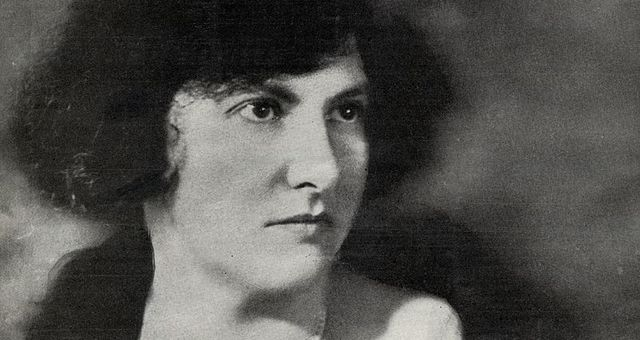
Marion Bauer was born on August 15, 1882, in Walla Walla, Washington. Her parents, Jacques and Julie Bauer, were of French-Jewish descent; Jacques worked as a shopkeeper, and Julie was a teacher. Marion was the youngest of their seven children. Her elder sister, Emily, also became a composer, educator, and a well-known music critic in adulthood.
The sisters’ love for music stemmed from their father, Jacques, an amateur musician who ensured a piano graced their home. Emily initially learned to play on it and later taught her younger sister. After their father passed away in 1890, the family moved to Portland, where Marion graduated from St. Helen’s Hall in 1898.
Following her graduation, Marion headed to New York City, where Emily was living at the time. Marion harbored ambitious dreams of a career as a composer, determined to achieve her goal.
Mastering the Art of Music
In New York, Marion Bauer began studying with composer Henry Holden Huss, and also received lessons from her sister. In 1905, she met French violinist and pianist Raoul Pugno, who was then on a concert tour in the U.S. Thanks to her heritage, Marion was fluent in both English and French. She offered to teach Pugno English, and in return, he invited her to study in Paris.
Bauer journeyed to the French capital in 1906, where she had the invaluable opportunity to study with the esteemed composer Nadia Boulanger. She also gave English lessons to Boulanger in exchange.
A year later, Marion returned to New York and began studying with Walter Henry Rothwell. During this period, she also started teaching piano and music theory. From 1910 to 1911, Bauer was back in Europe, studying in Berlin with Paul Ertel and embarking on her own compositional path. After completing her studies, she signed a contract with music publisher Arthur P. Schmidt in 1912.
Marion Bauer returned to Berlin once more in 1914. However, with the outbreak of World War I, she had to interrupt her studies and return home. Ten years later, the composer visited the Paris Conservatoire, where she studied with André Gedalge.
Though she never earned a formal music degree, her persistence, talent, and the chance to study with the leading composers of her time ultimately shaped her into a prominent figure.
Musical Career: Composing, Teaching, and Public Engagement
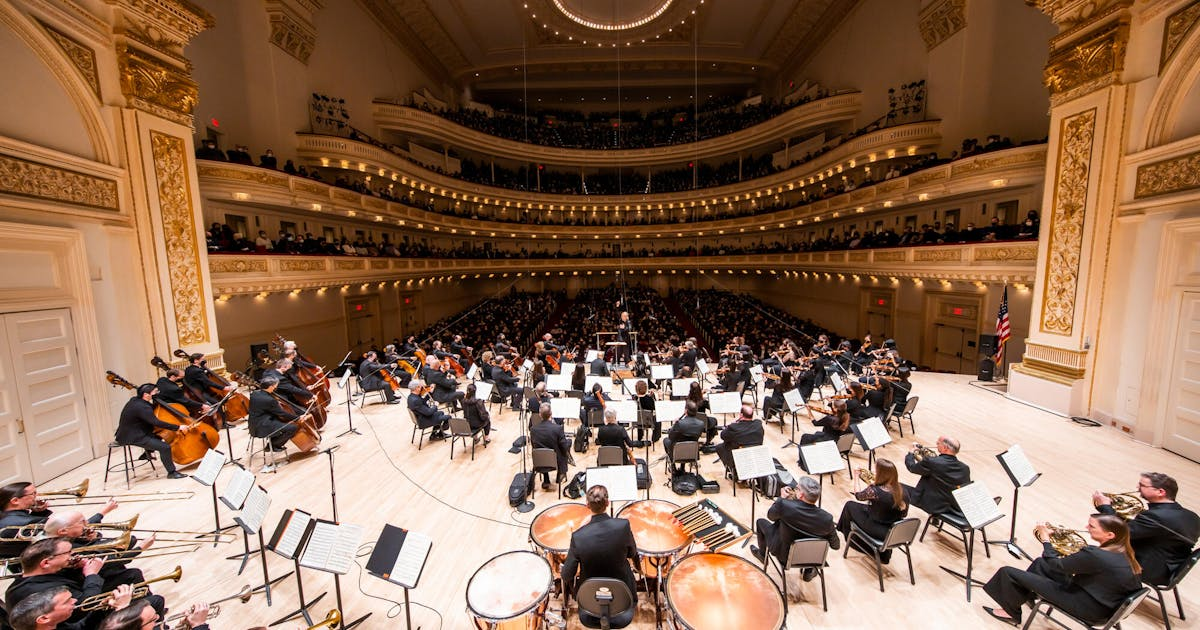
Marion Bauer’s music often featured harmonies built on thirds, fourths, and fifths, alongside dissonances. She composed numerous works for orchestras and solo performers, earning critical acclaim and audience appreciation. In 1947, her piece “Sun Splendor” premiered with the New York Philharmonic, and in 1951, an entire concert dedicated solely to her compositions was held at New York City’s Town Hall.
Despite lacking a formal music degree, Marion Bauer became a faculty member in the music department at New York University in 1926. She was the first woman invited to teach music at the institution. She remained there until 1951, teaching composition, form and analysis, aesthetics and criticism, and music history and appreciation. In 1930, she was promoted to associate professor.
In her teaching, Bauer utilized her own articles and books on musical topics. A strong advocate for new music, she encouraged students to perform works by lesser-known or emerging composers. The composer mentored future stars such as conductor Maurice Peress and composers Julia Frances Smith and Miriam Gideon.
Beyond New York University, Bauer lectured at Juilliard and Columbia Universities. As a guest lecturer, she spoke at Mills College, the Carnegie Institute, and the Cincinnati Conservatory of Music. Each year, Marion Bauer was invited to the Chautauqua Summer Music Institute, where she presented innovative lecture-concerts.
Throughout this period, she seamlessly balanced her teaching career with her own compositional work. Between 1919 and 1944, she participated in 12 artist residencies, where she met and interacted extensively with other composers, constantly striving for self-improvement.
Regarding her public engagement in music, Marion Bauer helped found the Society of American Women Composers, the American Music Guild, the American Music Center, and the American Composers Alliance. When Aaron Copland established the League of Composers in 1937, he invited the acclaimed composer to join its executive board. She also served as secretary of the Society for the Publication of American Music.
Marion Bauer published her musical insights in various academic journals. She was an editor for the publication “Musical Leader,” and her most famous book was “Twentieth Century Music.” Bauer wrote in an engaging and accessible style. In this book, she devoted significant attention to the work of women composers, a topic largely unaddressed in literature until then. Additionally, Bauer wrote about modernism, jazz, and other musical genres. For beginners, she penned an excellent book titled “How Music Grew: From Prehistoric Times to the Present Day.”
All of the composer’s multifaceted activities revolved around music, which was the core and meaning of her life. She championed both her own compositions and new musical directions, supported young composers, and tirelessly developed professional organizations. Her driving force was a genuine passion for music and an ardent desire to introduce as many people as possible to this enigmatic world.
Personal Life and Final Years of Marion Bauer
Marion Bauer never married, and her personal life largely remains shrouded in mystery. For a long time in New York, she lived with her elder sister Emily, who supported her financially until Emily’s sudden death in 1926. Marion was in Europe at the time but immediately returned home upon learning her sister had been hit by a car. Sadly, Emily did not recover from the accident.
Afterward, Marion moved in with her sister Flora, who also lived in New York. She resided with Flora until Flora’s death in the early 1950s.
In 1951, the composer retired from her teaching position at New York University, continuing to lecture only at the Juilliard School. Around this time, her health began to decline, prompting her to reduce her active engagements.
In early August 1955, Marion Bauer attended a composers’ meeting at the MacDowell Colony. Afterward, she traveled to visit her friend Harrison Potter, who resided in South Hadley, Massachusetts. There, on August 9, 1955, she suffered a heart attack. Medical professionals were unable to save her, and she passed away a few days before her 73rd birthday. The renowned composer was laid to rest alongside her sisters Emily and Minnie at Kensico Cemetery in Valhalla, New York.