The New York Public Library (NYPL), located in the heart of Manhattan, has long since transcended the traditional image of a quiet book repository. It has become a cinematic character in its own right—a place where architecture doesn’t just decorate the frame but sets the mood and drives the narrative alongside the actors. In this article on new-york-trend.com we dive into the magical world of cinema and the imagination of directors who redefined this library space, imbuing it with non-trivial meanings.
When Silence Explodes: The Library in “Ghostbusters”
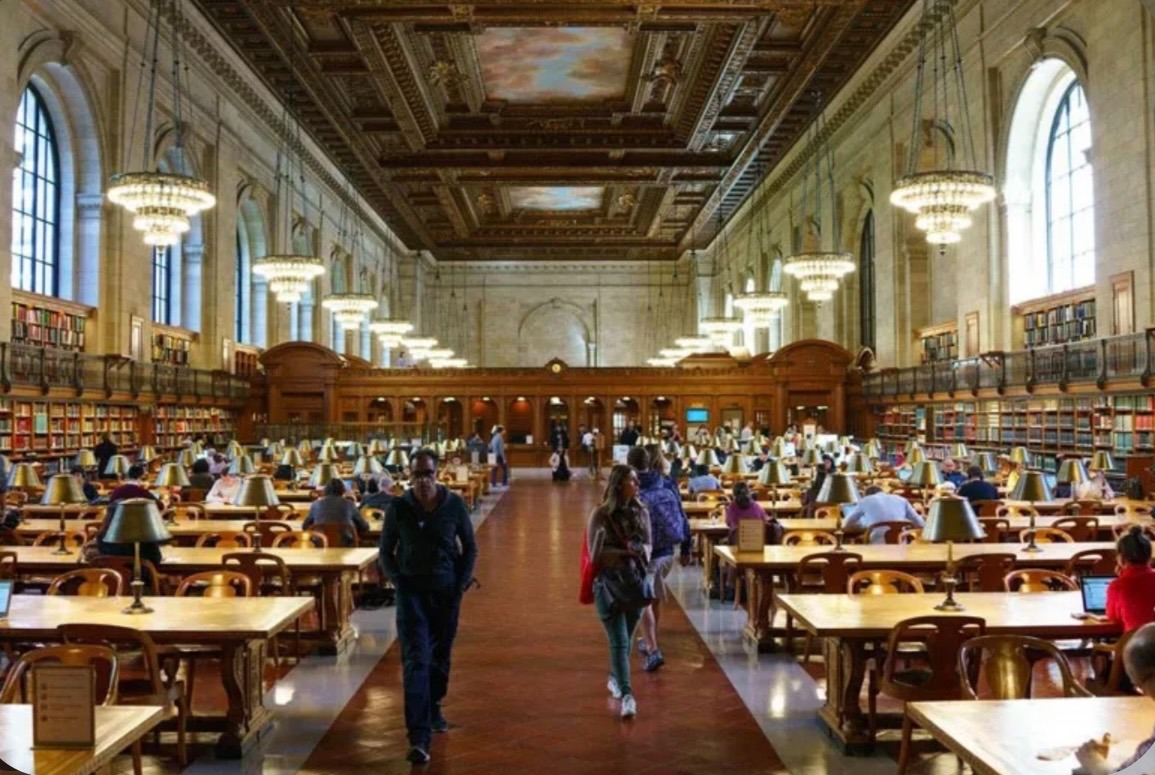
One of the most memorable scenes in this film unfolds in the famous Rose Main Reading Room—a hall where silence, order, and a nearly ritualistic focus usually reign. Long tables, green lamps, and dim lighting all create a sense of absolute stability. That is why the first “glitch in reality” here feels particularly loud.
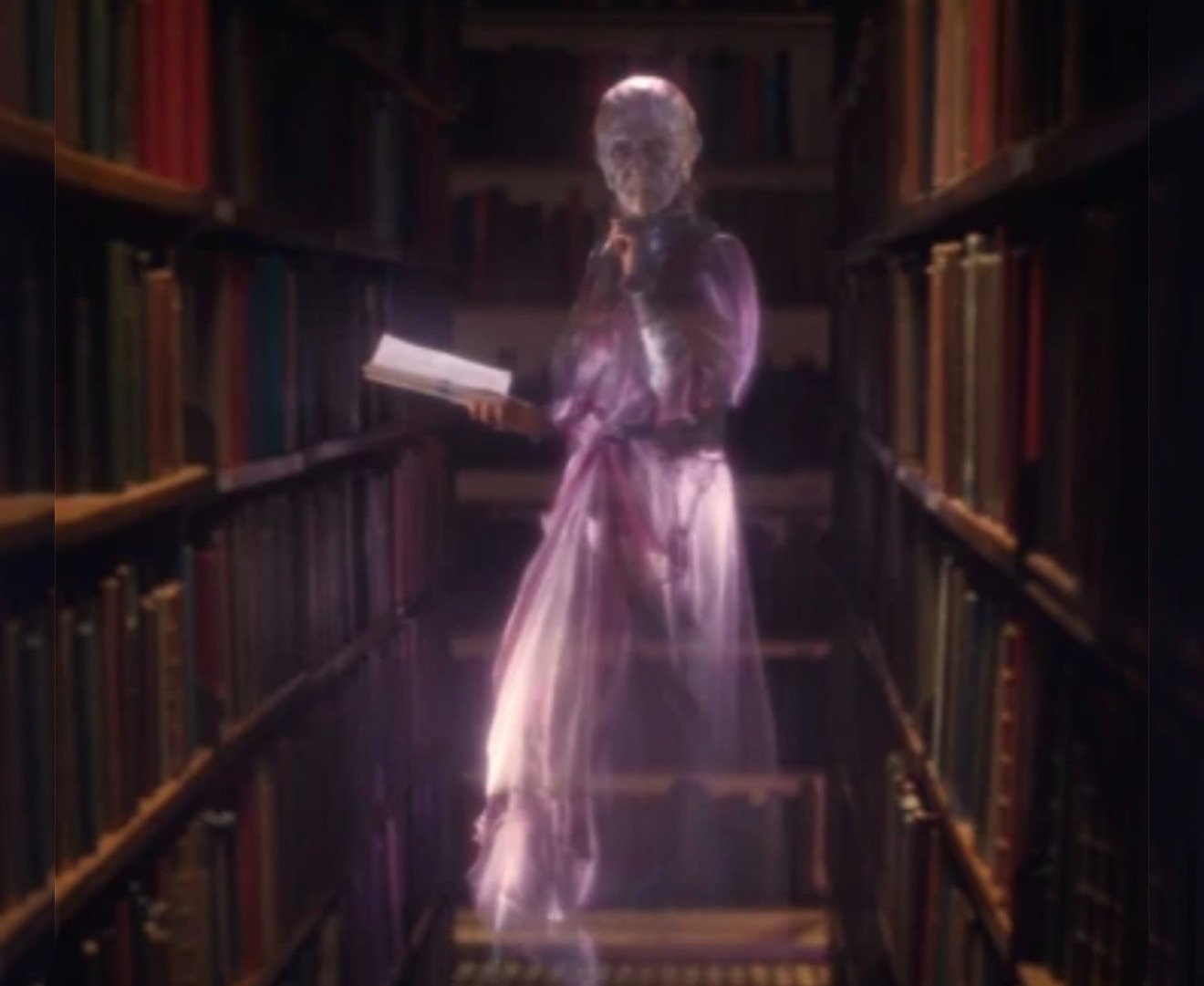
It begins with a subtle unease: books slide out of place, the air seems to grow heavy, and then total chaos erupts. In the basement stacks, a librarian suddenly finds herself surrounded by phenomena that defy logic. Card catalogs fly open, drawers slide out on their own, and an invisible presence moves between the shelves. The camera leads the viewer through a labyrinth of stacks where every turn promises a new threat.
This scene is built on sharp contrast. The library, as the personification of knowledge and order, suddenly clashes with something uncontrollable and irrational. The majesty of the space only amplifies the dread; the more monumental the halls, the more palpable the human vulnerability becomes. Ultimately, this episode serves not only as a striking opening to the film but as a moment where the architecture begins to “act,” transforming into a key participant in the story.
When Knowledge Becomes Fire: “The Day After Tomorrow”
In the film The Day After Tomorrow, one of the most powerful scenes takes place inside the main branch. Once again, it is a story not of silence, but of survival.
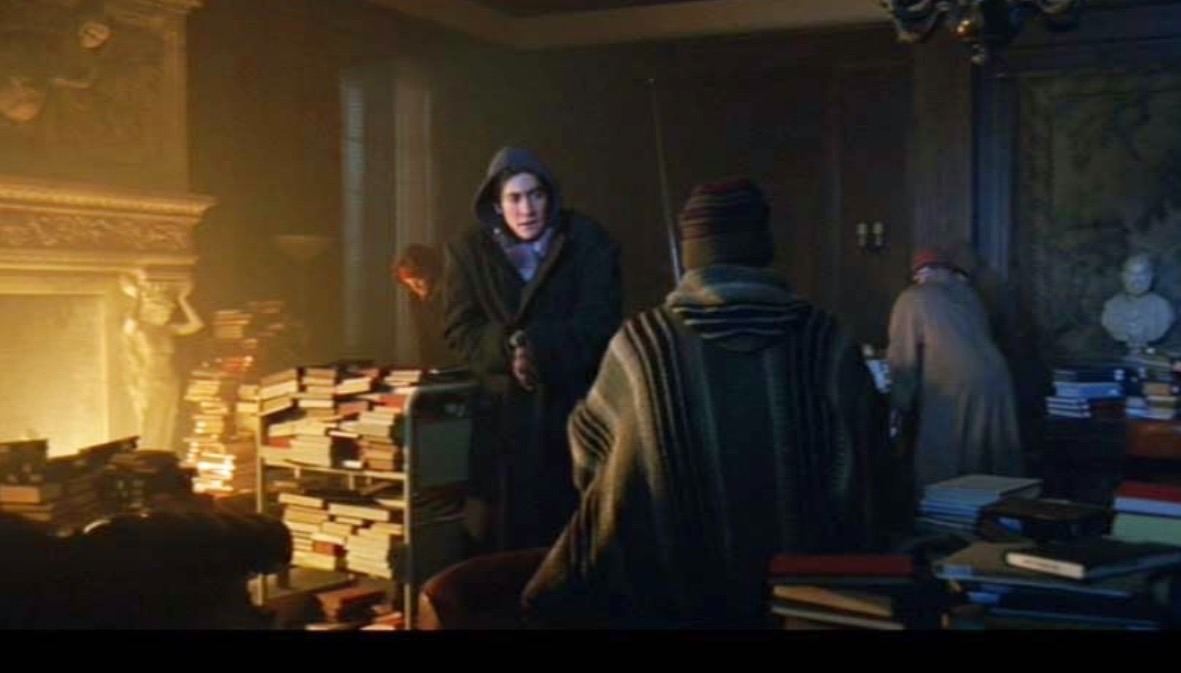
After a global climatic catastrophe, New York becomes a frozen trap. A group of people finds refuge in the massive reading room. Now, a fire burns there as the only chance to avoid freezing to death. Books that preserved human knowledge for centuries become fuel. The flames flicker against marble columns and arches, creating shots where culture literally burns to sustain life.
This episode is striking both visually and morally. The characters face a choiceless choice: preserve heritage or survive. The decision is obvious—in a world where the temperature kills faster than any idea, even the most precious items become a resource. The library emerges as the last bastion of civilization, but in a desperate sense: a place where knowledge yields to the primal need for warmth.
The Stairs Where Dreams Shatter: “Sex and the City”
The iconic steps of the NYPL become the stage for one of pop culture’s most painful romantic dramas.
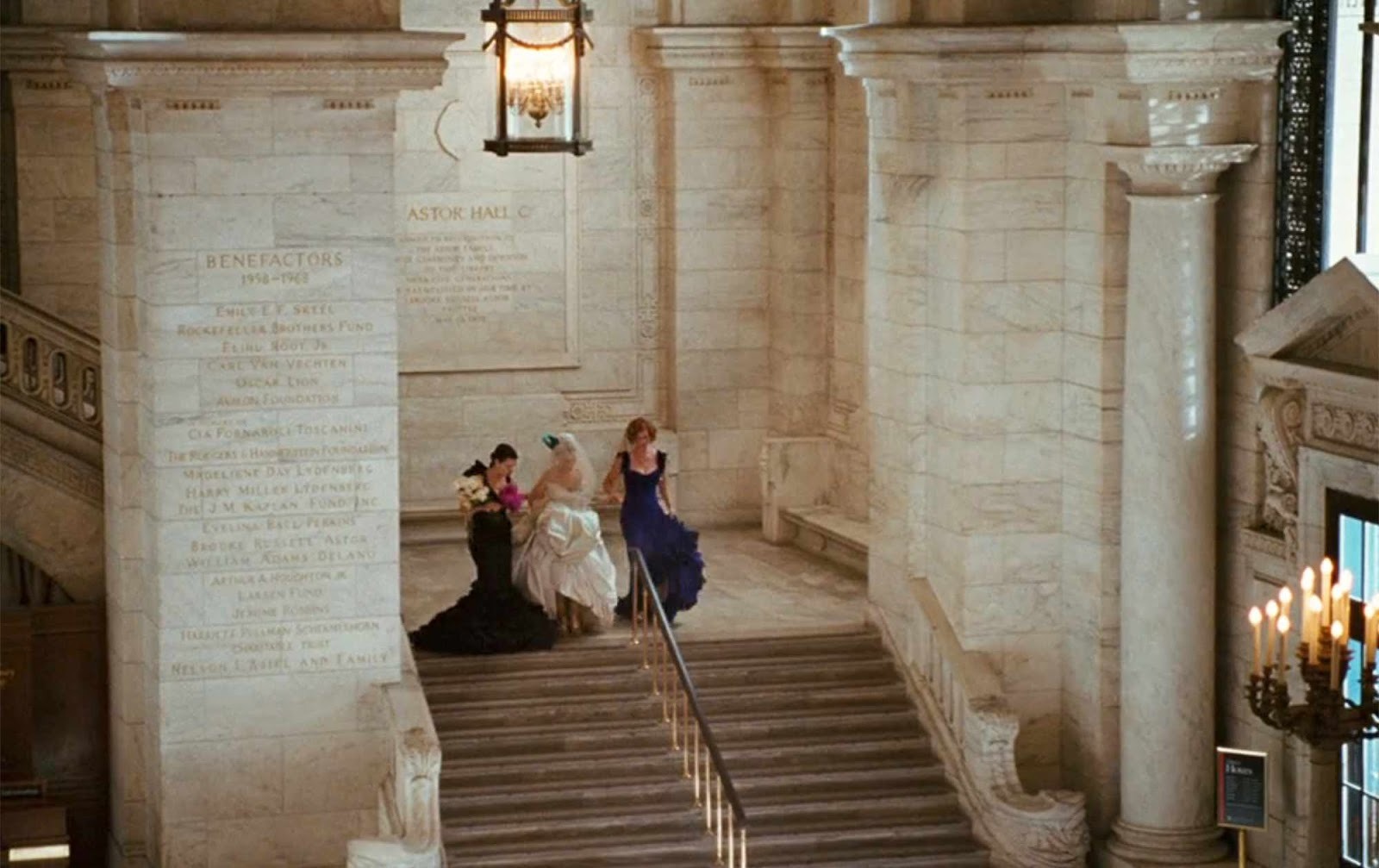
For Carrie Bradshaw, this location was the perfect embodiment of a dream: classic New York, grand architecture, and a sense of romance lingering in the air. This is where she plans her “movie-perfect” wedding. Everything looks like a fairy tale—marble stairs, columns, a designer dress, and the anticipation of happiness.
But the fairy tale shatters in an instant. The groom fails to show up. Those same stairs that were meant to symbolize the beginning of a new life become the site of a total collapse. Carrie descends them no longer as the heroine of a romance, but as a woman whose dream has crumbled before her eyes. The architecture here represents the “Ideal New York”—and against this elevated backdrop, the personal tragedy feels even more devastating.
Architecture as an Actor: The Library’s Other Cinematic Roles
In the film The Thomas Crown Affair, New York proves once again that its architecture isn’t just a backdrop—it’s a narrative tool. One of the most fascinating “masks” ever worn in the city belongs to the Public Library.
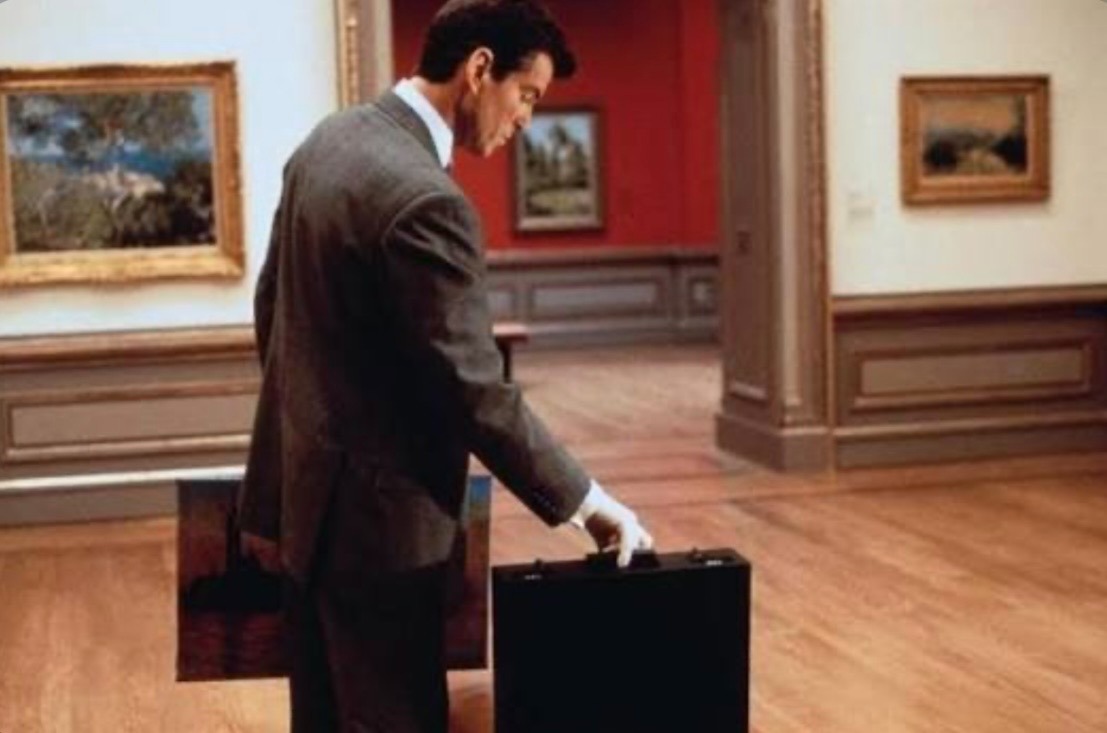
In the movie, the library’s interior is unexpectedly transformed into the Metropolitan Museum of Art. The grand lobby, with its marble columns and vaulted ceilings, seamlessly takes on the role of a museum gallery where the protagonist’s sophisticated heist unfolds. The deception is flawless. The audience sees a museum and believes in it, yet they are actually standing in a library. This clever use of space underscores the film’s central theme: illusion, manipulation, and the subversion of expectations. The library’s architecture is so iconic, yet so versatile, that it can “dress up” as any symbol of high culture.
However, this ability to change roles is only one side of the story. In other films, the library remains itself—a place where thoughts are shaped, feelings are born, and the city’s pulse is felt.
Other notable “performances” where the library plays itself:
- Finding Forrester – A sanctuary of silence and the protagonist’s intellectual coming-of-age.
- 13 Going on 30 – A romanticized, iconic slice of New York City life.
- Spider-Man – A vital thread in the city’s massive urban tapestry.
In each instance, the NYPL fulfills a different purpose: from a mask to a symbol, from a background element to a central participant. Its true cinematic power lies in its ability to transform while remaining instantly recognizable.
The Library Without a Script
In the documentary Ex Libris: The New York Public Library, directed by Frederick Wiseman, the institution finally stops “acting.” There are no fictional plots or dramatic twists—only a reality that proves to be just as captivating as any Hollywood blockbuster.
Wiseman treats the library as a living organism. The camera moves calmly through reading rooms, archives, and staff areas, capturing the daily hum: people reading, working on laptops, or simply seeking warmth to get through the day. Students, researchers, families, and those with nowhere else to go all share the same space.
The director pays special attention to the people who keep this complex machine running: the librarians and archivists. Their work—from helping find rare manuscripts to organizing community programs—reveals the library as an institution that constantly adapts to the needs of the city. The film is a micro-world of a great metropolis, where knowledge isn’t an abstraction but a daily practice that brings people together.
Behind the Scenes of Silence: Filming at the Library
Behind the grand marble interiors lies a complex logistical operation. What looks effortless on screen is actually the result of strict rules and meticulous planning.
How it works in the real world:
- Permits are mandatory. No film crew can simply walk in and start rolling. Commercial projects must obtain official permits, sign contracts, and often rent the space during off-hours.
- Time is of the essence. Even legendary scenes, like those in Ghostbusters, were filmed under tight constraints—often in the early morning hours before the doors opened to the public.
- Cinema vs. Reality. Often, what you see isn’t what was actually there. In The Day After Tomorrow, parts of the interior were recreated using CGI. Extreme scenes—like burning books in the middle of a hall—are strictly forbidden in the actual historic space.
- The Rule of Silence remains. The library is a working environment. Crews cannot disrupt the silence, film patrons without consent, or block access to the collections.
Every shoot is a compromise between creative vision and logistical reality. Cinematic magic is born from a blend of real locations and studio ingenuity. Perhaps the ultimate paradox is that the more invisible this hard work is, the more convincing the movie feels.