Some artists simply play roles; others become the embodiment of an entire era. Mary Virginia Martin unquestionably belongs to the latter group. Her career spanned decades, during which she gifted audiences unforgettable experiences on stage, in film, and on television. In this article on new-york-trend.com, we explore the phenomenon that was Mary Martin, her most outstanding roles, and how her talent forever changed American musical theater.
From Texas to Broadway
In the small town of Weatherford, Texas, Mary Martin was remembered long before her name lit up theater marquees. In the 1920s, locals often saw a little tomboy whose ringing voice echoed from everywhere. The daughter of Preston and Juanita Martin grew up in an atmosphere where talent didn’t need to be forced; it manifested naturally. It was in her voice, her movements, and her constant need to perform, even if her stage was just the street.
In 1938, Mary landed a role in the Cole Porter musical Leave It to Me!. It was a classic case of one production altering the trajectory of a career.
Her character, Dolly Winslow—a young protégé of a powerful newspaper tycoon—could have remained just another face in a long line of Broadway roles. But Martin made her unforgettable. It was here that she first performed the hit My Heart Belongs to Daddy. The song instantly skyrocketed beyond the theater and took on a life of its own.
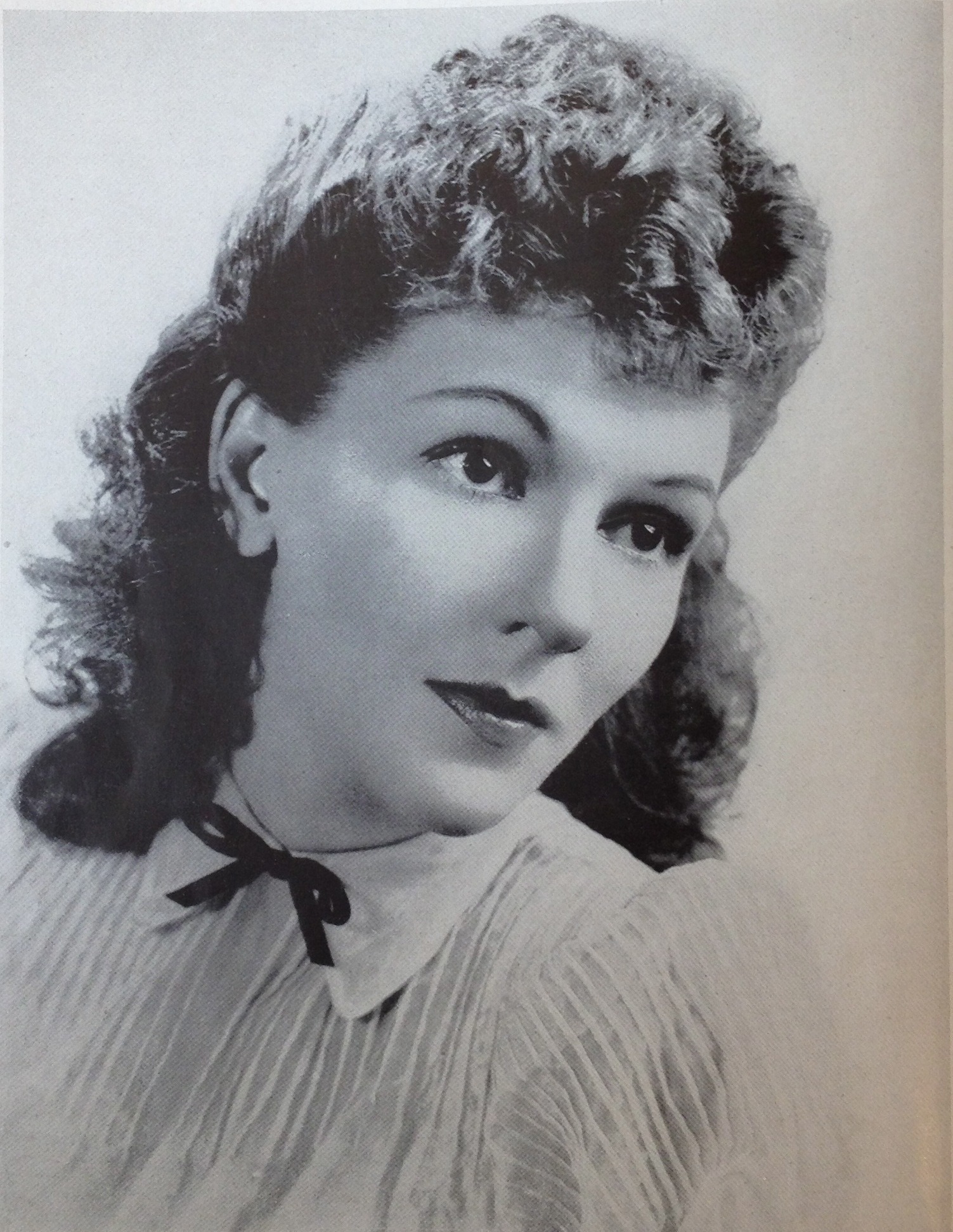
The scene, where her character finds herself at a Siberian railway station wrapped only in furs and surrounded by admiring men, became one of the most talked-about moments of the season. Martin expertly balanced on the edge of provocation and humor, and that is exactly what captivated the audience.
After this triumph, Mary was no longer just a “promising actress.” She had become a star that people followed. The doors that only yesterday seemed tightly shut suddenly swung open—one after another.
The Voice of New Drama
Mary Martin’s career unfolded during the Golden Age of Broadway, a time when musical theater transitioned from mere entertainment to working with grand narratives and powerful emotions. At the heart of this shift was the work of the legendary duo Richard Rodgers and Oscar Hammerstein II. Their musicals changed the very logic of the genre: song ceased to be a simple intermission between acts and became an integral part of the dramatic storytelling.
Martin found herself in this revitalized theater, stepping into a role that seemed tailor-made for her. One of her first landmark works was Nellie Forbush in South Pacific. The character was a mix of lightness and inner stubbornness, which allowed Mary to command the stage without unnecessary grandiosity.
But the true scale of her influence was revealed in The Sound of Music (1959), where she played Maria. While inspired by the story of the von Trapp family, the creators consciously deviated from real events. In real life, Maria was sent from the abbey to care for only one child suffering from scarlet fever. In the stage version, she becomes the governess for the captain’s entire family. It was this artistic transformation that made the story universally resonant.
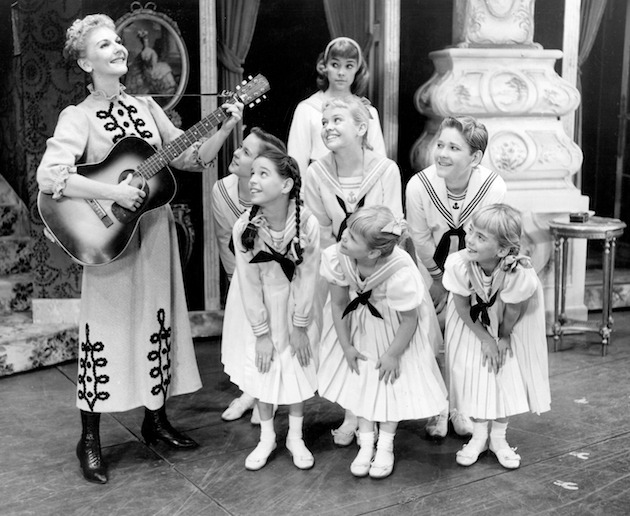
Martin built her Maria not as an unblemished saint or a strict mentor, but as a living, breathing person. Her character learned to interact with the children through the simplest things. Certain scenes became true pedagogical metaphors, showing how music helps create order out of chaos and find a common language.
For this role, Mary Martin received a Tony Award, definitively securing her status as one of the pivotal figures in American musical theater.
The Boy Who Wouldn’t Grow Up: The Magical Peter Pan
However, for the American public, Mary Martin remained, and always will remain, not just an actress, but a symbol—the boy who can fly. Her Peter Pan, starting in 1954, became a unique case. An adult woman so convincingly embodied the character refusing to grow up that the line between the role and the performer virtually disappeared.
While the production was directed and choreographed by the great Jerome Robbins, it was Martin who transformed it into a cultural phenomenon. She didn’t just play Peter Pan—she lived him. The actress frequently admitted that she felt like an “eternal child” herself, not eager to say goodbye to youth:
“Peter Pan is perhaps the most important thing to me that I have ever done in the theater.”
To appear convincing as a boy, Mary cropped her hair and wore a special corset to create a tomboyish, slight silhouette. But the look was just a detail, for the main thing was the character. Her Peter Pan was filled with light: curious, audacious, in love with adventure, and absolutely sincere in his childlike spontaneity. Critics called it a “rare fusion of actress and role.”
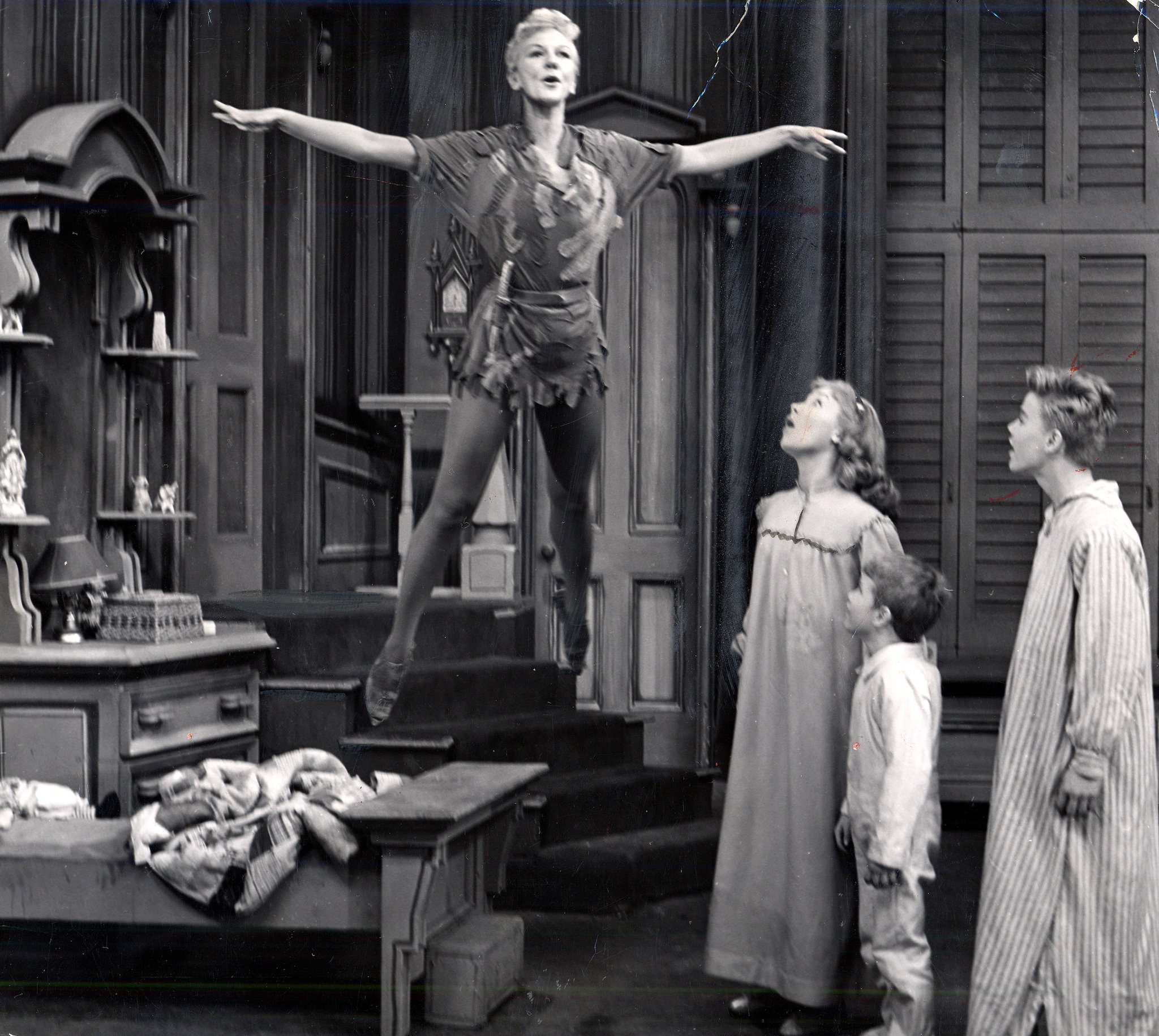
Special magic was born in the air. It was the flying that became the element that turned the performance into a genuine miracle. A unique harnessing system—the so-called interconnected pendulum, developed by British engineer Peter Foy—was created for Martin. It allowed her to zoom upward sharply, swiftly, and almost effortlessly—higher and faster than anyone before her. Mary herself admitted that it was there, just under the ceiling of the theater, that she felt truly happy.
Mary’s voice in this role was no less astonishing than her aerial stunts. She seamlessly switched between styles: from the powerful, ringing vocals in numbers like I’ve Gotta Crow and I’m Flying to the tender, almost intimate performance of Never Never Land. And her signature crow became so popular that children would recognize the actress on the streets and eagerly beg: “Crow for us!”
Despite the stage production’s relatively short run, its true triumph came not in the theater, but on television screens. On March 7, 1955, NBC broadcast Peter Pan live—and it was a breakthrough. A full-scale musical was broadcast in color for the first time, attracting an audience of roughly 65 million viewers. For that era, the number was staggering.
Later, the 1960 version began to be rebroadcast regularly. It became a beloved television fairy tale upon which generations of American children were raised. For millions of them, Mary Martin was the real Peter Pan—alive, not just imagined.
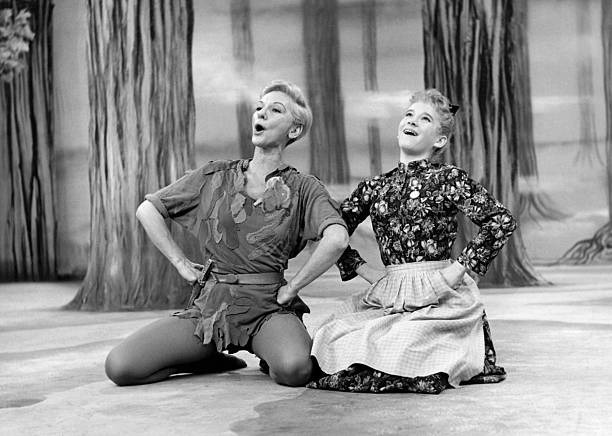
The role brought the actress further acclaim—another Tony Award and an Emmy Award. And in her hometown of Weatherford, Texas, a bronze statue was eventually erected: Mary Martin in flight, forever captured in the image of the boy who wouldn’t grow up.
Life After the Footlights
Once the great stage was behind her, Martin didn’t retreat into obscurity. She simply shifted her creative focus. One unexpected turn was her work in design. For roughly five years, she collaborated with the Fieldcrest company, creating patterns for towels, sheets, and pillowcases. By that point, Mary had already published a book on needlepoint, so textile design was a logical extension of her long-standing interest in handiwork and detail.
However, television, which was rapidly becoming America’s new main stage, proved more difficult for her. In an interview, Martin honestly admitted that the rigid timing and technical limitations of TV never felt natural to her. In the theater, the live audience was the single focus. On television, she had to adapt to the soulless mechanics of production, where an emotion had to be squeezed into a single second, not held within a live pause shared with the hall.
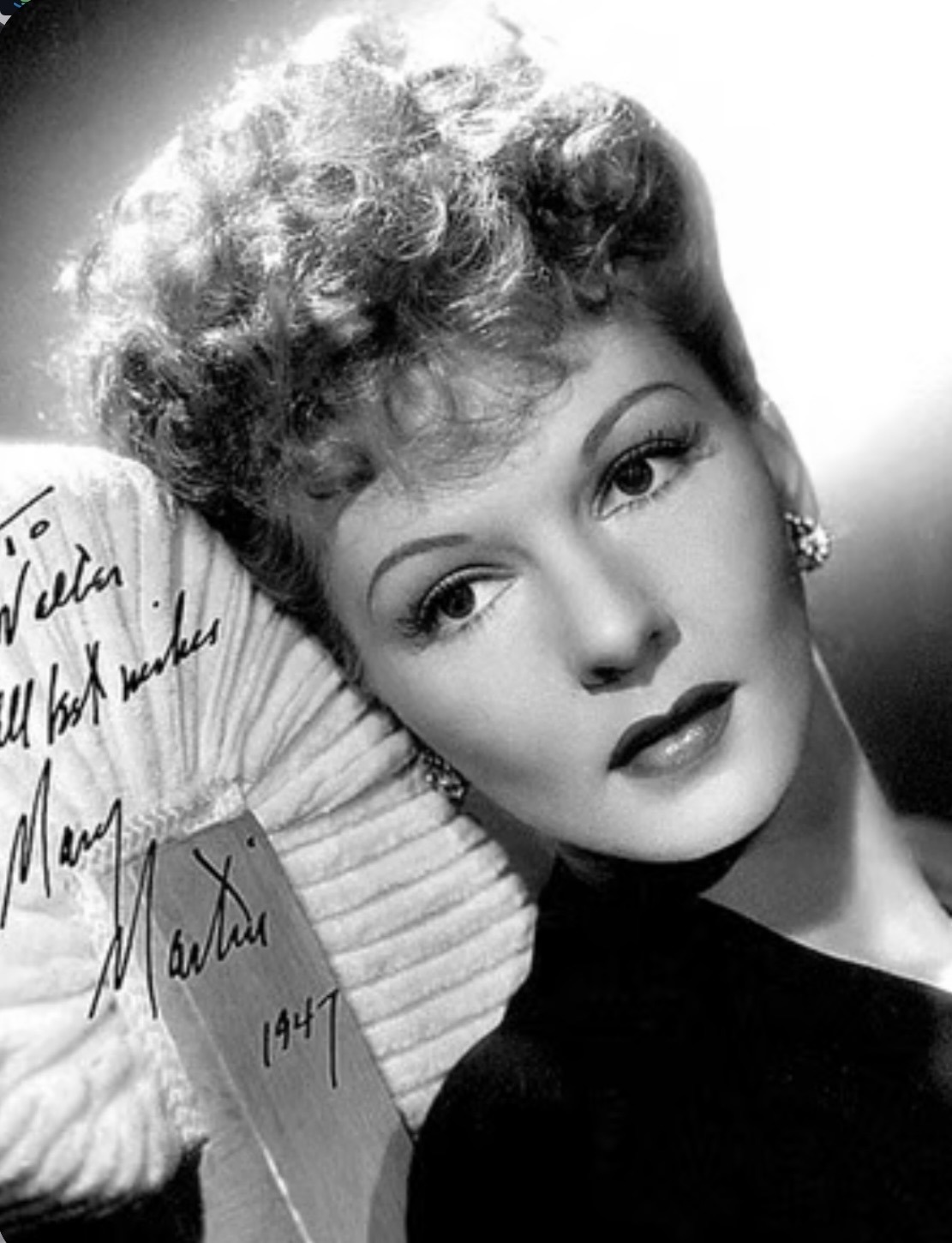
Despite these challenges, her contribution to the arts was duly appreciated and formally recognized. Mary Martin was honored with four Tony Awards for achievement in theater, an Emmy nomination for the musical program Together With Music on CBS, and she was a recipient of the Kennedy Center Honors—one of the highest cultural distinctions in the United States.
Mary Martin passed away on November 3, 1990, in Rancho Mirage, California, after a battle with cancer. She was 76.
But her story does not end there. The Mary Martin phenomenon cannot be explained purely by technique or vocal prowess. She worked on a finer level: she created an absolute sense of presence, as if she were addressing not a faceless crowd, but every individual viewer. That is why her roles do not age. They remain vital and alive, even as the theater itself changes beyond recognition.
Today, Mary Martin’s name is inextricably linked to the history of Broadway, but there is far more behind it. It is the inspiring story of a woman who managed not only to conquer the stage, but to leave something of herself within it—a unique intonation that is unmistakably recognized even decades later.