In the history of American musical theater, few creative partnerships have left a mark quite as distinct as the tandem of Bob Fosse and Gwen Verdon. Their story is a complex, sometimes contradictory drama woven from ambition, love, jealousy, and an almost fanatical devotion to the stage. In this article for new-york-trend.com, we explore how this star duo created America’s most famous musicals, uncover the secret behind Fosse’s unique dance style, and explain why Verdon’s contribution to their shared success deserves the highest recognition in theater history.
Different Beginnings, One Stage
The paths to stardom for Bob Fosse and Gwen Verdon started very differently, but the stage called to both of them in childhood.
Verdon was born in 1925 in Culver City, California. Her early years were far from carefree. Rickets forced the young girl to wear heavy orthopedic shoes and metal leg braces. Doctors suggested a radical solution: breaking and resetting her bones. Her mother, however, chose a different route, turning to dance as therapy. Gwen was taking lessons by the age of three, and by six, she was performing on stage. At eleven, she landed her first notable film role—a solo ballerina part in The King Steps Out.
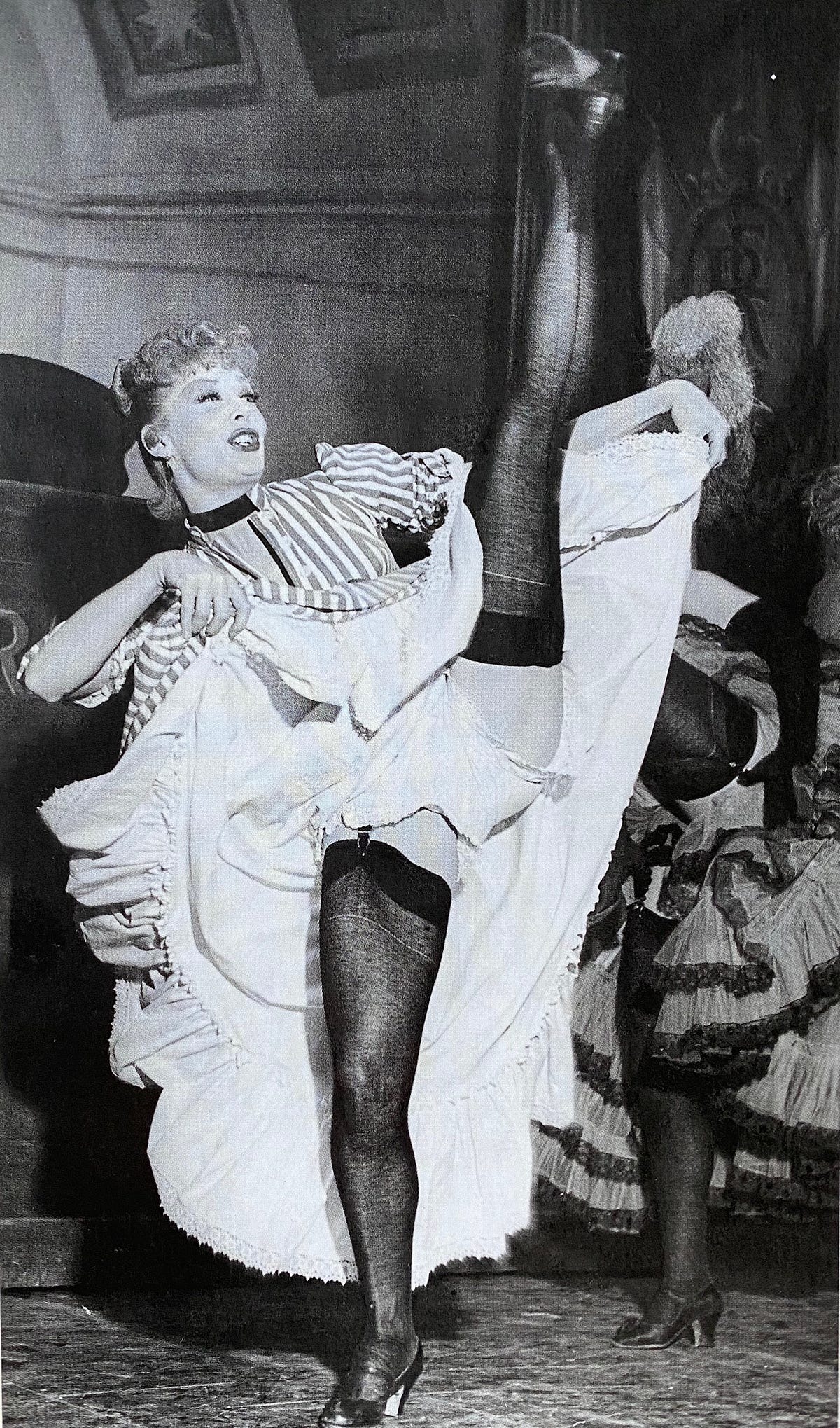
Verdon’s youth moved at a breakneck pace: marriage at 17, the birth of a son, and a quick divorce. It seemed the stage might remain in her past, but she returned, and this time, she meant business. She became an assistant to legendary choreographer Jack Cole, one of the founding fathers of theatrical jazz dance. It was Verdon who helped polish the moves of Hollywood royalty, with Marilyn Monroe and Jane Russell among her students. Her own breakthrough came in 1954 when she won her first Tony Award for her role in the musical Can-Can—a moment that made her name impossible to ignore.
Fosse’s start was a different story. Born in Chicago in 1927, he felt like an outsider from a young age. Sports weren’t his strong suit, so dance became his way of making a mark. By 13, he was already performing in the city’s cabarets and burlesque clubs. After serving in the U.S. Navy during World War II, Fosse headed to New York and eventually Hollywood. He dreamed of becoming the next Fred Astaire, but reality was harsh. Early balding slammed many cinematic doors in his face. However, this exact disappointment forced him to pivot. Fosse turned his focus to theatrical choreography, where he would soon forge his unmistakable signature style.
The Night That Changed Broadway
The spring of 1955 was a turning point. It was during rehearsals for the musical Damn Yankees that Bob Fosse and Gwen Verdon’s paths first crossed.
At the time, they were in entirely different leagues. Verdon was already an established Broadway star, while Fosse was just gaining momentum after his first hit, The Pajama Game. Producer Hal Prince offered Verdon the role of Lola—a femme fatale backed by the devil himself. Fosse, however, hesitated. He felt the actress lacked the cold irony the character demanded, so he insisted on an informal audition in a Manhattan rehearsal hall.
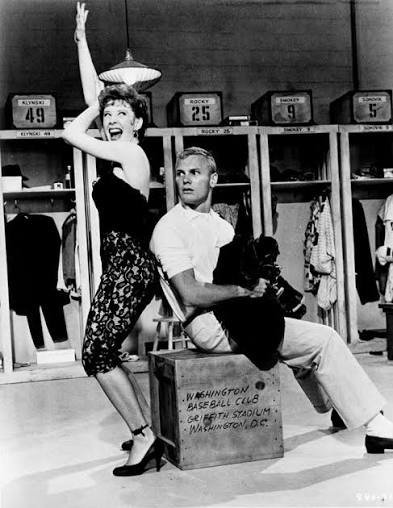
What happened that night would later be called the birth of magic. Together, they created the iconic number Whatever Lola Wants—a routine where seduction met humor, and eroticism was delivered with mathematical precision. Verdon performed an almost parodic striptease in a baseball locker room, instantly cementing the scene as a classic. The musical ran for over a thousand performances and earned Verdon her second Tony Award.
Behind the scenes, things were just as dramatic. The professional partnership quickly turned romantic. Fosse, who was married to dancer Joan McCracken at the time, left his wife for Verdon. They married in 1960 and welcomed their daughter, Nicole, three years later. From the very beginning, their story was a volatile mix of love, ambition, and inevitable compromises.
Anatomy of a Style: The Birth of the Fosse Signature
Fosse’s choreography completely redefined the role of dance in musicals. It was no longer just window dressing; it was a way to communicate what words simply couldn’t.
“The time to sing is when your emotional level is too high to just speak, and the time to dance is when your emotions are just too strong to only sing,” Fosse famously explained.
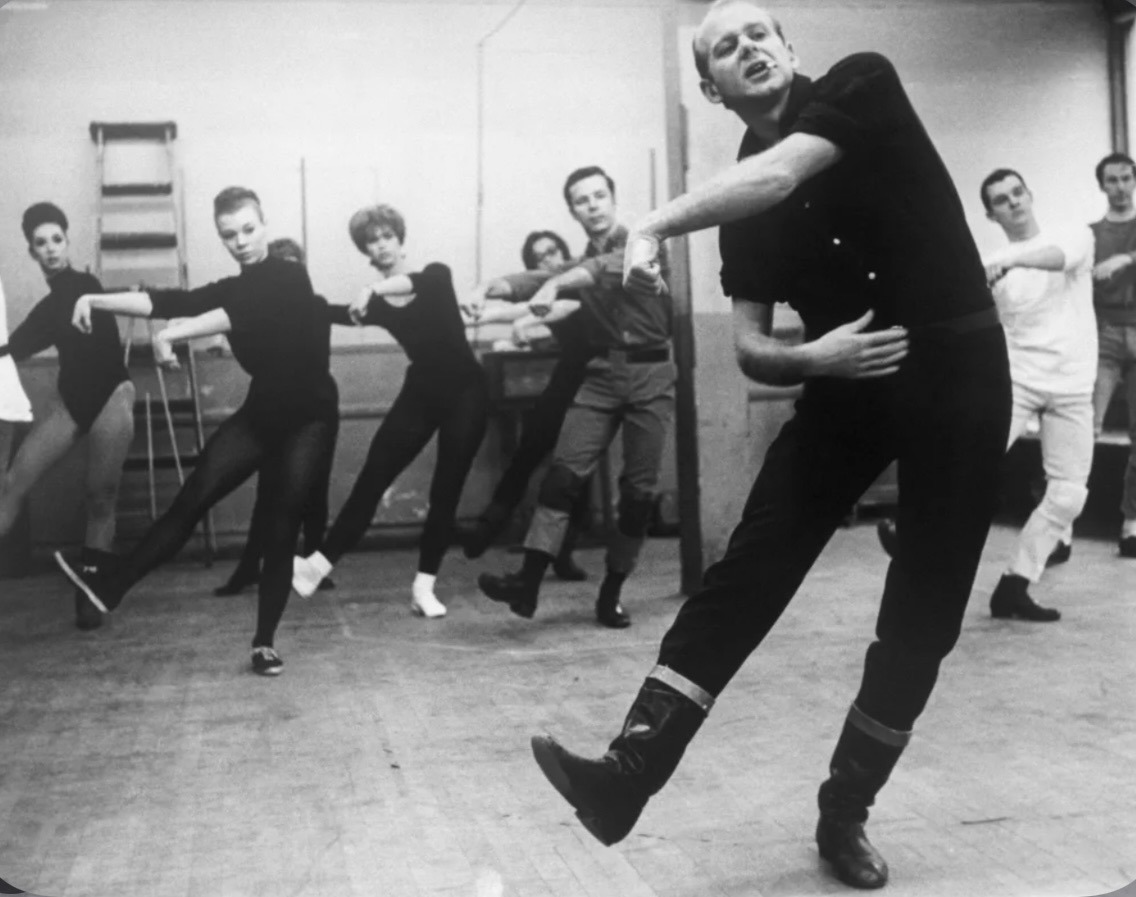
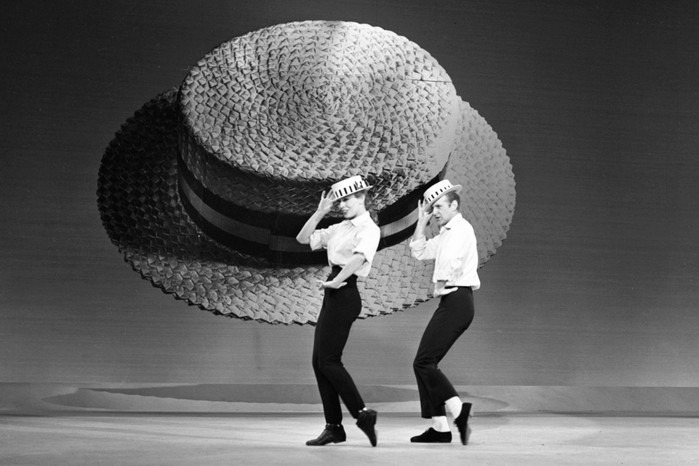
His style was born not in spite of his physical limitations, but because of them. Fosse had scoliosis, suffered from arthritis, was pigeon-toed, and started balding early. He took these perceived flaws and turned them into brilliant, expressive techniques. Turned-in knees, hunched shoulders, and a face half-hidden by a bowler hat—all of this became the foundation of his stage language.
He thought of movement in fragments. By isolating one part of the body from another, he forced the audience to “read” every gesture gesture by gesture. The famous “jazz hands” with splayed fingers became his trademark, as did his masterful use of props: canes, chairs, and white gloves. Rumor had it he loved gloves not for their elegance, but simply because he hated the look of his own hands.
But Fosse’s style would never have materialized without Verdon. She was the one who gave his choreography its pinpoint accuracy, lightness, and incredible internal rhythm. Dancer and choreographer Ann Reinking perfectly captured their dynamic:
“He’s elegant, but he’s very funky. He’s fragile, but he’s quite strong… He’s sensual, but he’s witty.”
Verdon was more than just a performer—she was the perfect instrument through which this style finally found its voice. Her body, flawless technique, and sharp sense of humor translated Fosse’s ideas into a living, pulsating reality. And that reality continues to define the look of modern musical theater today.
Brilliant Triumphs and Shared Masterpieces
Together, Bob Fosse and Gwen Verdon delivered a string of musicals that rewrote the theatrical vocabulary. Their work pulled Broadway out of the comfortable realm of light entertainment, creating a space where dance, plot, and character psychology functioned as a single, cohesive engine.
In 1955, Damn Yankees brought them their first massive triumph. Verdon took home a Tony for playing Lola, and Fosse earned his stripes as a choreographer who envisioned the stage in entirely new ways. Then came New Girl in Town, which snagged Gwen another Tony, this time shared with Thelma Ritter.
A special milestone in their creative history is Sweet Charity—a show Fosse practically tailor-made for Verdon. Inspired by Federico Fellini’s film Nights of Cabiria, the story followed a girl stubbornly looking for love in a world that constantly let her down. But the true nerve of the production wasn’t the script; it was the movement.
Their legendary collaboration on Chicago struck an even louder chord. Here, Fosse dialed his love for biting irony and dark themes up to the max. A tale of crime and the hunger for fame morphed into a sarcastic portrait of a society that easily turns justice into a sideshow. Verdon (as Roxie Hart) and Chita Rivera (as Velma Kelly) played the show like a vaudeville act—bursting with glitz, humor, and barely concealed cynicism.
In the Shadow of a Great Name
Even though Verdon was the beating heart of most of these productions, her contributions remained underappreciated for a long time. Early in their careers, she was the darling of the critics, hailed as the “soul of the show” while Fosse’s name was just gaining traction. But as the years passed and Bob evolved into a powerhouse director, the spotlight inevitably shifted.
This was glaringly obvious in 1969 during the film adaptation of Sweet Charity. Universal Pictures executives decided Verdon was too old for the role originally written for her. Shirley MacLaine took her place on screen, while Gwen was relegated behind the camera. She worked closely on the choreography, including the legendary Big Spender number. It was far from the only time she served as the invisible engine: smoothing over conflicts, polishing routines to perfection, and offering elegant creative solutions.
“Historically, there are always a lot of queens standing behind the king,” their daughter Nicole Fosse aptly noted.
Their marriage ultimately buckled under the immense pressure. Fame, infidelity, Fosse’s severe depression, and his struggles with addiction took a devastating toll. In 1971, while Fosse was working on the film Cabaret, the couple separated. However, they never officially divorced. Remaining incredibly close, Bob and Gwen continued to collaborate and support each other unconditionally.
In 1987, Fosse died of a heart attack, collapsing right in Verdon’s arms. It was a fiercely symbolic ending for two people who, even after parting ways, could never truly let each other go.
After the Applause: An Enduring Legacy
Bob Fosse’s story didn’t end with his death—Gwen made sure of that. Outliving her husband by thirteen years, she took on the role of the primary guardian of his artistic DNA. For her, it wasn’t a formality or a polite tribute; it was a deeply personal mission.
In 1999, Verdon served as artistic consultant for Fosse, a massive stage retrospective celebrating the maestro’s greatest numbers. She spent countless hours with the dancers, drilling into them the nuances that aren’t written in any score and can’t be copied from a video screen. The show won the Tony for Best Musical, but for Gwen, something else mattered far more: passing on Fosse’s style not just as a series of steps, but as a living, breathing feeling.
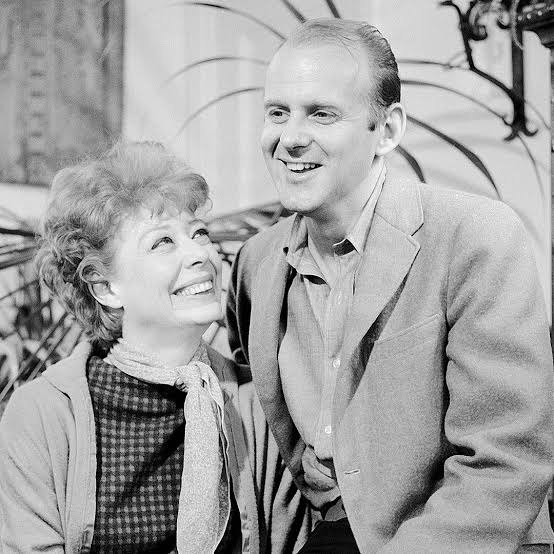
Gwen Verdon passed away in October 2000 at the age of 75. Today, their legacy is carried forward by their daughter, Nicole Fosse. In 2013, she founded The Verdon Fosse Legacy, an organization that doesn’t just archive history, but actively breathes life into the iconic couple’s creative heritage.
The story of Bob Fosse and Gwen Verdon is an ode to creative codependency and tension. It is the rare alignment of two brilliant talents who together completely rewrote the rules of the game.
They pushed the boundaries of musical theater, making it bolder, sharper, and brutally honest. Their unique style still echoes through modern pop culture today—from Broadway revivals to the choreography of superstars like Beyoncé.