


New York is not only an economic, financial, and political hub but also a cultural one. This has been true throughout history and remains so in the 21st century. As a cultural center, New York is first and foremost associated with its legendary Broadway shows and musicals. Yet, few people stop to consider how theatrical art originated in New York and what the earliest theater shows were like. To learn more about the history of theater and the first performances shown on a New York stage, read on at new-york-trend.
The Birth of Theater in New York
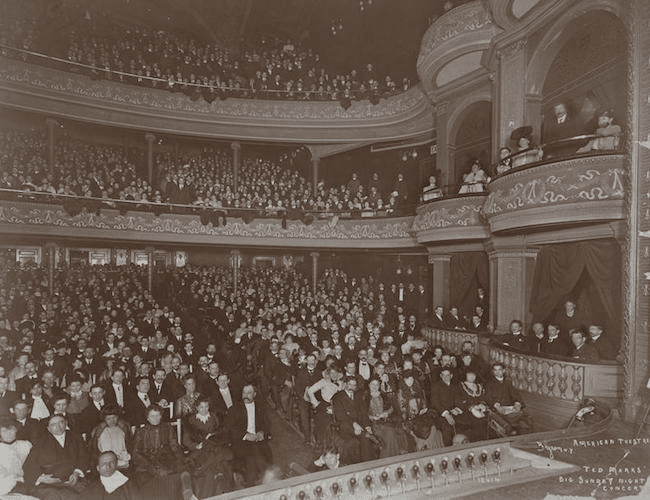
The history of New York theater dates back to the early 18th century, when its first performances took place on Nassau Street. These early productions laid the foundation for what would later become one of the most influential theatrical platforms in the world: Broadway.
At the time, New York was still a British colony, and its cultural influence was largely shaped by European traditions. As the city’s population grew, so did its appetite for entertainment.
The first recorded theatrical performance in New York took place in 1732 at a small venue on Nassau Street. In that era, the theater was a two-story wooden building owned by a merchant and former governor, Rip Van Dam. It opened in December 1732 with a performance of “The Recruiting Officer.” Located at the modern address of 64–66 Nassau Street, between John Street and Maiden Lane, it became an important part of the city’s early cultural history.
It’s worth noting that Nassau Street, one of the city’s oldest streets, became the site of New York’s first specialized theatrical space. The small wooden structure could hold around 280 people—a tight space compared to today’s large theaters. But despite its small size, this theater played a crucial role in introducing New Yorkers to dramatic art.
Early Productions and Influence
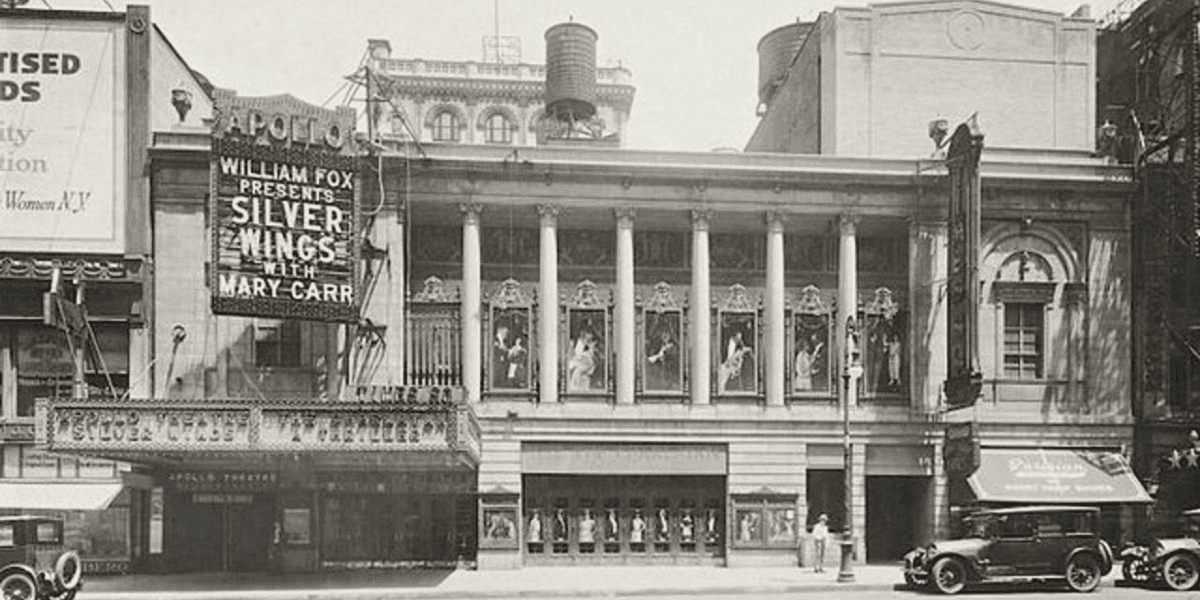
As mentioned, New York was still a British colony at the time, so early productions at the Nassau Street theater were heavily influenced by British plays. Shakespearean dramas, Restoration comedies, and morality plays were among the most popular productions. Touring theater troupes from England and other colonies staged classic works like “Hamlet” and “Richard III.”
But as theater gained popularity, local actors and playwrights began to emerge. The demand for live performances grew, and new scripts started to reflect the unique experience of colonial life in America. Although British traditions dominated the early years, New York theater gradually began to develop its own unique identity.
In 1750, shortly after Van Dam’s death, the first recorded musical production in New York, “The Beggar’s Opera,” was presented at this venue by a touring London troupe, Murray & Kean’s. This was a landmark event, as it was the first time professional actors performed in the city—previously, all theatrical performances were conducted exclusively by amateurs.
In 1753, actor and manager Lewis Hallam significantly expanded the theater, describing the updated building as “spacious, large, and magnificent.” However, in 1758, the venue was converted into a German Calvinist church, and in 1765, it was finally demolished and replaced with a more substantial structure that remained on the site until 1822.
The Evolution of Theater in 18th Century New York
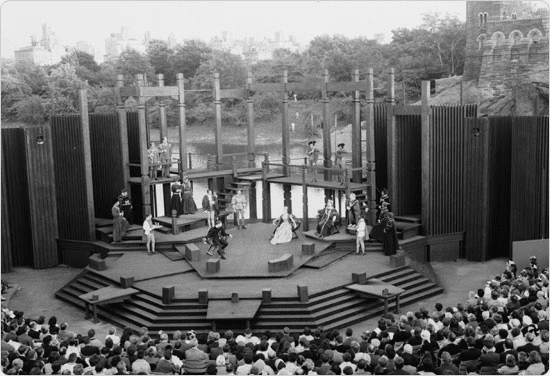
The 18th century was a difficult period for New York and the US as a whole. Despite its popularity, theater in early New York faced significant challenges. Religious groups considered theatrical performances immoral, arguing that they promoted vice and corruption. As a result, there were repeated attempts to shut down theater venues in the mid-18th century.
In addition, growing political tensions played a role in shaping New York’s theater scene. As revolutionary sentiment grew in the colonies, plays with English themes became controversial. When the American Revolution broke out, many theaters, including the one on Nassau Street, were forced to close due to military actions. The conflict temporarily halted the growth of theatrical culture in New York.
But after the revolution, New York experienced rapid growth, and its cultural life flourished. As the city expanded, theaters moved further uptown. The original venues on Nassau Street were soon replaced by larger institutions.
Thus, by the early 19th century, theater had become a central part of New York’s identity. The city welcomed diverse productions, from European operas to unique American plays. This evolution ultimately led to the birth of Broadway, which came to define American theater on a global scale.
Broadway has become a true symbol of theatrical art, where groundbreaking productions and world-class stars are born. Its stages became a venue for the most incredible experiments, which made it influential in shaping not only the culture of the U.S. but the entire world. In the 21st century, Broadway continues to be the center of theatrical life, where premieres of shows that set new standards in the performing arts happen every year.