A distinguished American actress, producer, writer, and social activist whose name is associated not only with cult films but also with political activism, the fitness revolution, and the fight for women’s and environmental rights. Read on new-york-trend.com for more about this extraordinary woman.
Born Under the Spotlight
Jane Seymour Fonda was born on December 21, 1937, in New York. Her mother, Frances Ford Seymour, was a graceful socialite of Canadian descent, and her father, Henry Fonda, was one of Hollywood’s most revered actors. A creative spirit always reigned in the family: her brother, Peter, also became an actor, and her half-sister, Frances Brokaw, continued the family’s social tradition.
But shadows hid behind the glamorous façade. When Jane was just twelve, her mother died by suicide at a psychiatric clinic in Beacon. This tragedy left a deep wound that shaped the future actress. Her father, though he loved his daughter, remained emotionally distant, so Fonda learned self-reliance from a young age. By fifteen, she was teaching dance at Fire Island Pines, and she later attended prestigious schools in Connecticut and New York. Young Jane had impeccable looks and natural charisma, easily entering the world of fashion and gracing the cover of Vogue twice.
But her true calling found her on stage. In 1954, Jane first appeared on the theater boards alongside her father in the play The Country Girl—and the fire of art was ignited in her soul. She dropped out of Vassar Collegeand went to Paris, where she studied art for six months, dreaming of forging her own path.
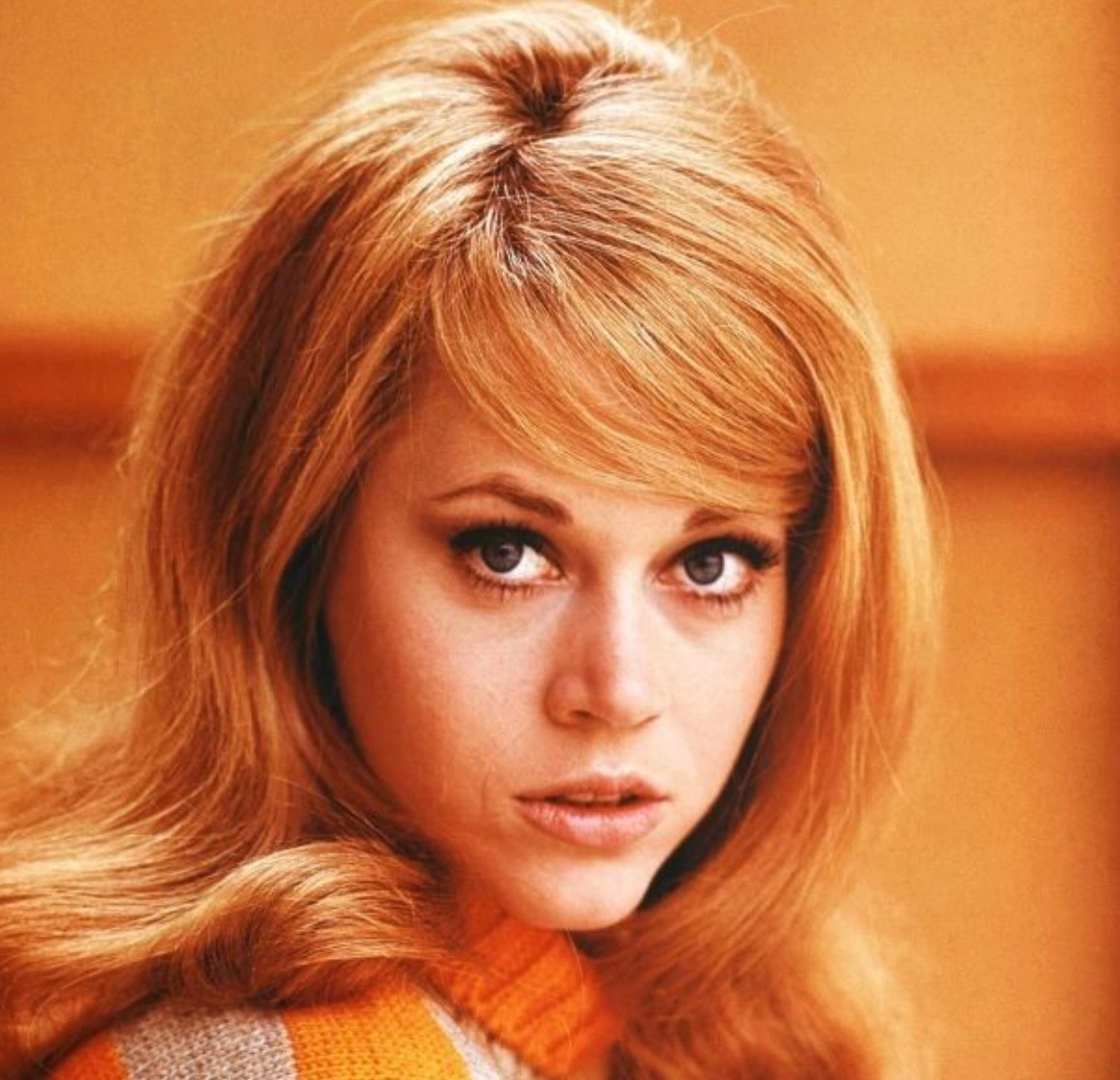
Upon returning to New York, Jane met the legendary Lee Strasberg. It was he, the founder of the Actors Studio, who recognized her talent.
“When he told me I was talented,” she recalled, “I felt like the roof of my life just blew off. I went to sleep thinking about acting and woke up with the same thought.”
Thus was born the actress who was destined to surpass even her father’s famous name and leave an indelible mark on world cinema.
The Path to Stardom
In the late 1950s, young Jane Fonda was just beginning her career on stage, but even then, the future power of a star was palpable in her acting. Following her successes on Broadway, she quickly transitioned into film, making several movies a year. She debuted in Tall Story (1960) and achieved true recognition in Walk on the Wild Side (1962), where she won her first Golden Globe.
Despite her initial success, not all critics were favorable. Harvard Lampoon even named her the worst actress of the year. But Fonda didn’t stop. In 1971, her role as the prostitute Bree Daniels in the film Klute earned her her first Oscar and confirmed the depth of her talent. Fonda actively experimented with roles and also founded her own production company, IPC Films, which released films with a social conscience, such as Fun with Dick and Jane (1977). That same year, her portrayal of Lillian Hellman in Julia earned Jane a BAFTA and another Golden Globe. Her true triumph came with Coming Home (1978), for which Fonda won her second Oscar, and just a year later, in The China Syndrome (1979), she once again demonstrated the power of socially relevant cinema.
Despite her success, Jane harbored a personal desire—to act alongside her father, the legendary Henry Fonda. This chance came with the film On Golden Pond (1981). On screen, they portrayed a difficult father-daughter relationship; in life, it was an attempt at reconciliation after years of silence. The film became an emotional confession for both and earned Henry his first and only Oscar, which Jane accepted on his behalf just months before his death.
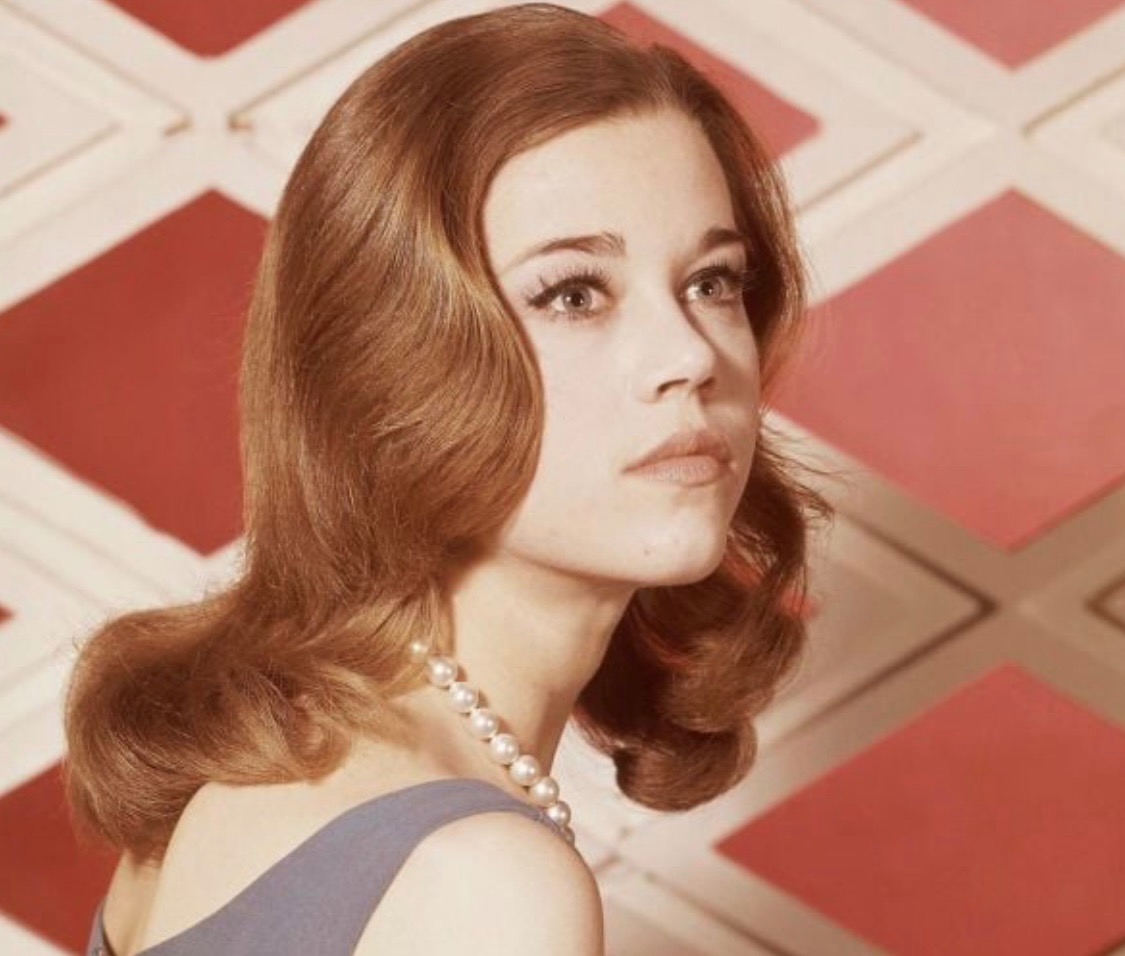
Throughout the decade, Fonda continued to surprise. She won an Emmy for the film The Dollmaker (1984), and her dramatic work in The Morning After (1986) brought her another Oscar nomination. Critics called her performance “a master class in inner pain and strength.”
The New Jane: From Fitness Revolution to Triumphant Return
Due to a leg injury, Jane left ballet and looked for a new way to stay in shape. This is how the idea for the workout video “Jane Fonda’s Workout” (1982) was born—and the world went wild. In neon leggings, with inexhaustible energy, she ignited the fitness era. The video sold over 17 million copies, launching a global home workout movement and turning Fonda into a symbol of strength, health, and self-discipline.
In 1990, the actress appeared in the deep drama Stanley & Iris, where Fonda played a simple woman who learns to love and trust again. After this film, she unexpectedly walked away from the screen—for fifteen long years, leaving behind three decades of a vibrant creative path.
Jane Fonda made a triumphant return in 2005 with the film Monster-in-Law, reminding everyone of her comedic talent. In 2009, the actress made a highly anticipated return to Broadway in the play 33 Variations, receiving a Tony Award nomination. This was followed by diverse roles: the French film All Together (2011), the comedy Peace, Love & Misunderstanding, and the portrayal of a powerful media magnate in the series The Newsroom (2012–2014), which earned her two Emmy nominations.
Fonda impressed audiences with her role as Nancy Reagan in the film The Butler (2013) and received critical acclaim for her performance in Youth (2015).
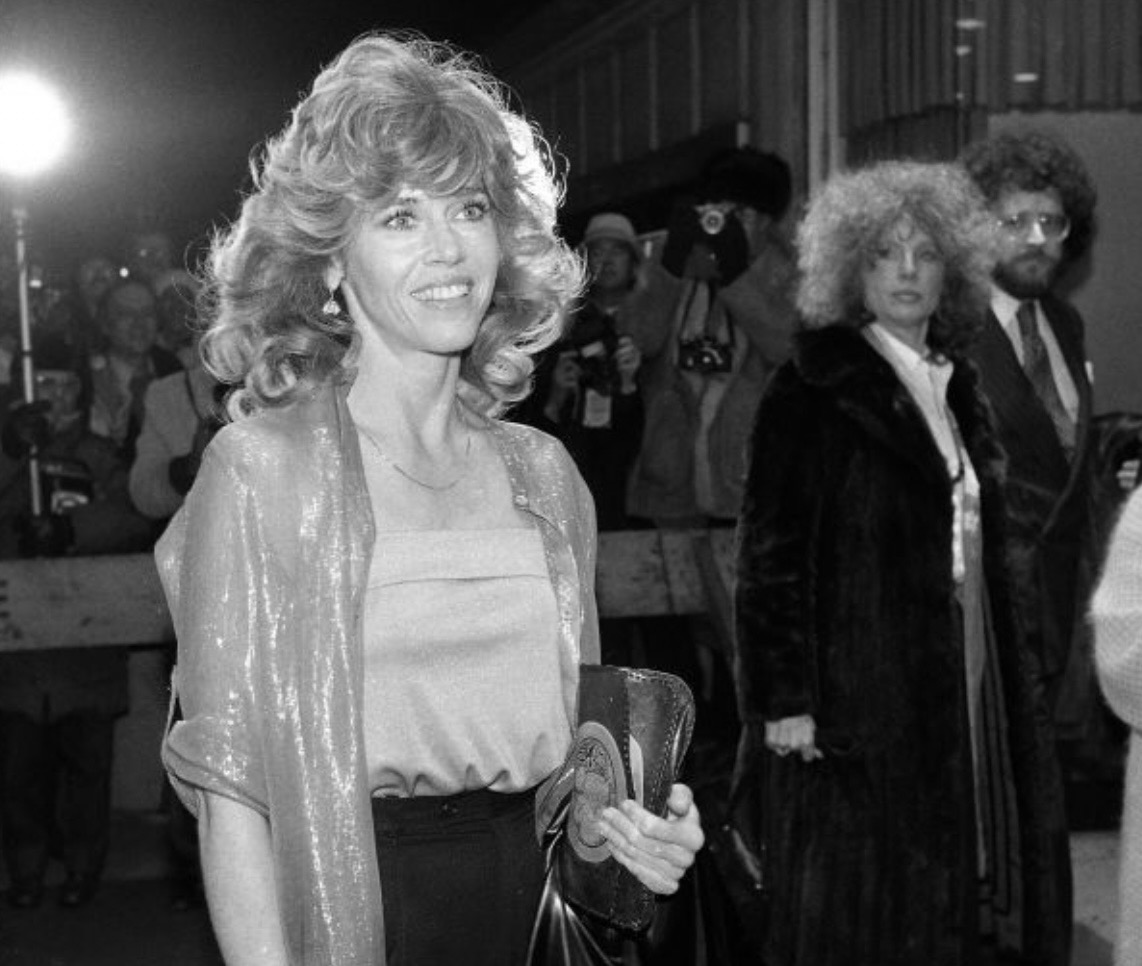
The real breakthrough came with the Netflix series Grace and Frankie (2015–2022), which became a symbol of female friendship and finding a second wind after sixty.
Jane Fonda continued to star in hit projects, including Our Souls at Night (2017), Book Club (2018) and its sequel (2023), as well as the comedies 80 for Brady and Moving On.
All her later roles radiate wisdom, humor, and vitality—just like Jane Fonda herself, who remains active in both her creative life and her personal one.
A Life on the Front Lines of Activism
While other stars were content with their roles on screen, Jane Fonda transformed her popularity into a platform for resistance, civic engagement, and political action. In the 1970s, she became a symbol of the anti-war movement, openly condemning the war in Vietnam. Fonda was unafraid to travel to North Vietnamto witness the consequences of the conflict firsthand. A photograph of the actress seated on an anti-aircraft gun used to shoot at American forces caused a storm of outrage in the U.S., but even that scandal did not silence her. Fonda acknowledged her mistake but never abandoned the idea of speaking the truth about the war.
In the 1970s, she founded the Campaign for Economic Democracy, which fought for social reforms, women’s rights, and environmental justice.
In 2022, Fonda created JanePAC, a political committee that supports candidates willing to openly oppose oil corporations and fight for climate justice. Over a few years, the PAC helped dozens of environmentally conscious politicians win seats in local and state government.
In 2024–2025, Jane Fonda once again positioned herself at the forefront of a movement—this time by reviving the First Amendment Committee, founded by her father, Henry Fonda, in the 1940s to protect free speech during the McCarthyism era. Even at 87, Jane Fonda continues to go door-to-door, persuading voters to support candidates who are fighting for a future free from fossil fuels. She is called the “conscience of Hollywood”—and that is no metaphor.
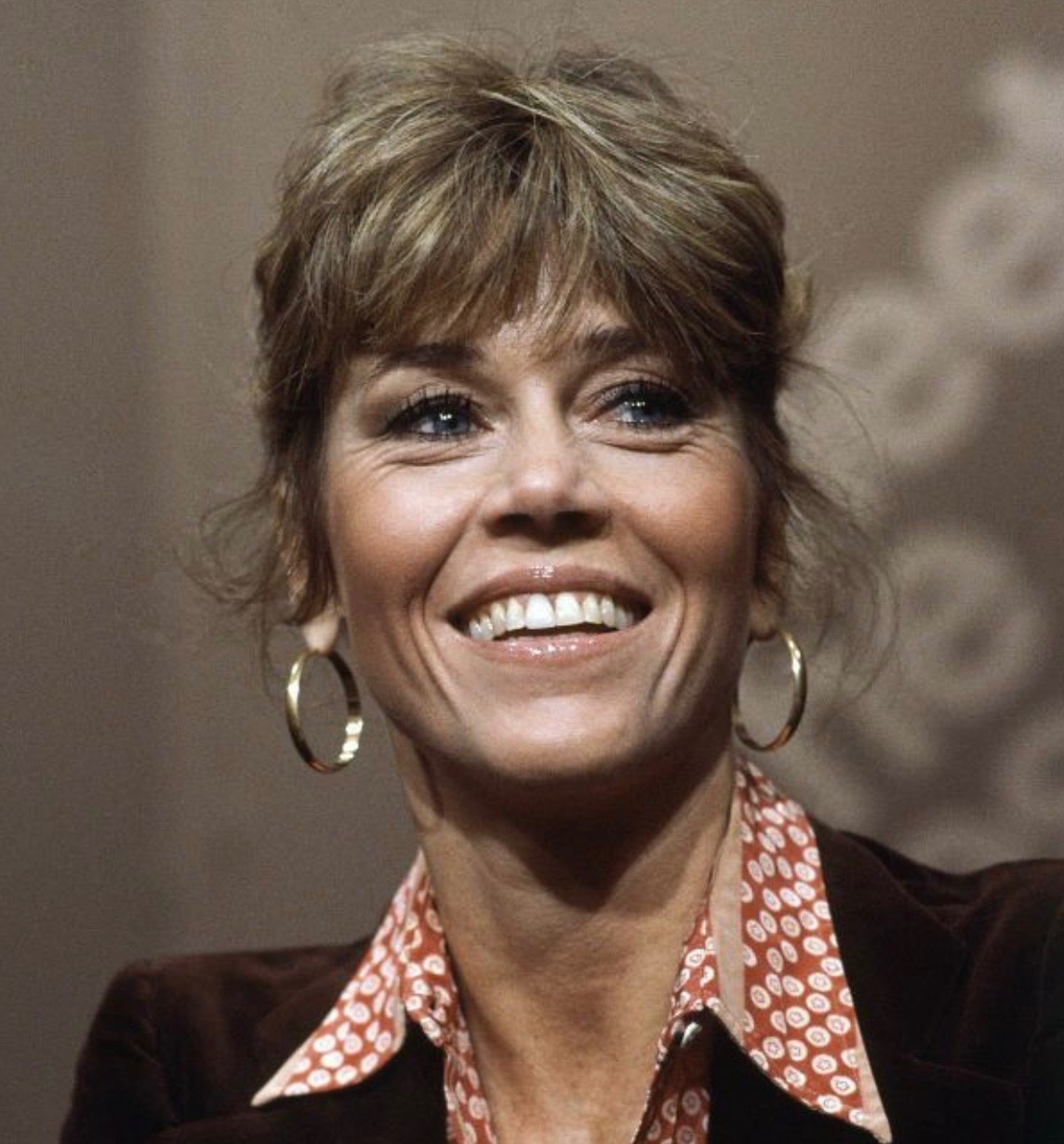
“I cannot not act,” she says. “If I know something, I can’t look away. Freedom, justice, and the planet—that is the stage I will play on until the end.”
Other Facets of Jane Fonda’s Life
Despite her star film career and activism, Jane Fonda never limited herself to one role. She proved herself as a writer, philanthropist, and a woman who speaks honestly about weakness, pain, and healing.
In 2005, Fonda released her autobiography, My Life So Far, which she described as a story in three acts—thirty years each. She called the third act the most important, as it will determine, in her opinion, how she will be remembered in history. Jane Fonda was one of the first celebrities to create her own Facebook page and Twitter account, communicating directly with fans.
In 2011, her next book, Prime Time, was published, in which Fonda writes about love, health, friendship, fitness, and spirituality after 60. Since the 1970s, Jane has used her popularity for the benefit of others. She directed a portion of the profits from her famous aerobics videos to the Campaign for Economic Democracy. In the 1990s, the actress founded the Georgia Campaign for Adolescent Power & Potential (GCAPP)—an organization that helps young people take care of their health, education, and future. Later came the Fonda Family Foundation, and in 2004, the Jane Fonda Foundation.
She has been married three times—to French director Roger Vadim, political activist Tom Hayden, and media mogul Ted Turner.
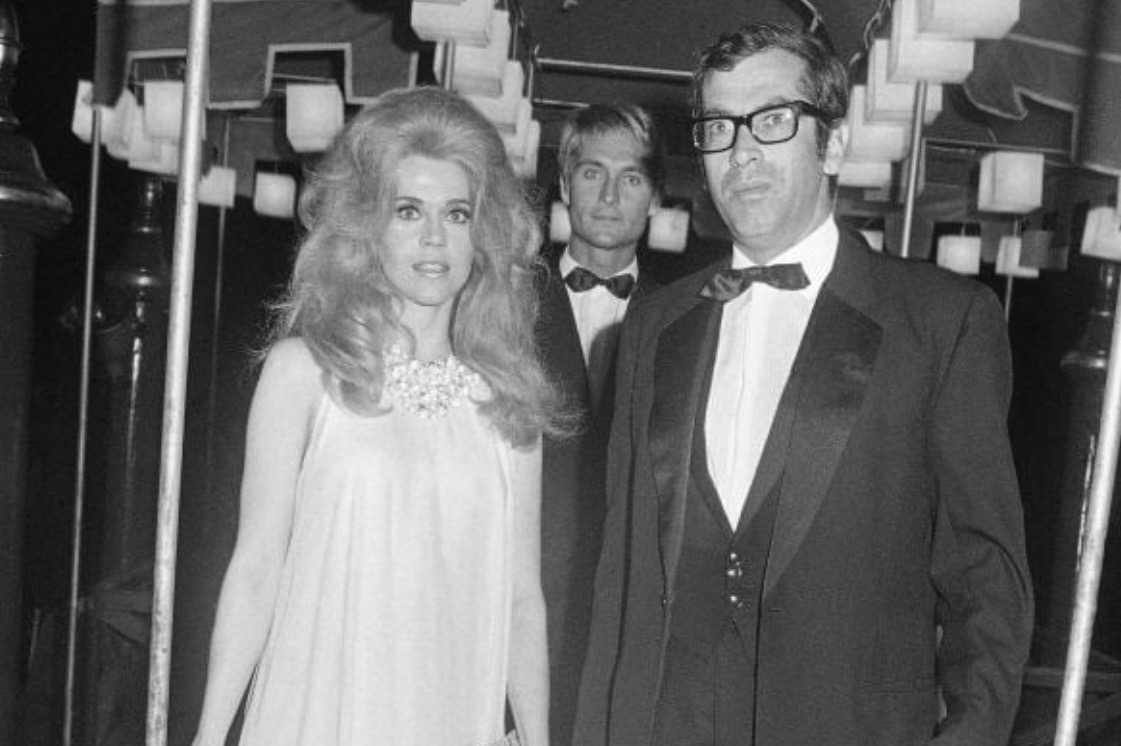
From her first marriage, Jane has a daughter, Vanessa, and from the second, a son, Troy; she also raised an adoptive daughter, Lulu Williams. Only in her mature years did Fonda come to understand that a woman’s strength lies not in being approved of, but in accepting herself.
“Some men can’t handle strong women,” she said. “But that’s their problem, not mine.”
In her later years, the actress faced breast cancer, osteoporosis, and, recently, non-Hodgkin’s lymphoma, which is currently in remission. She underwent chemotherapy while continuing her public work and once again proved that her vital energy is inexhaustible.
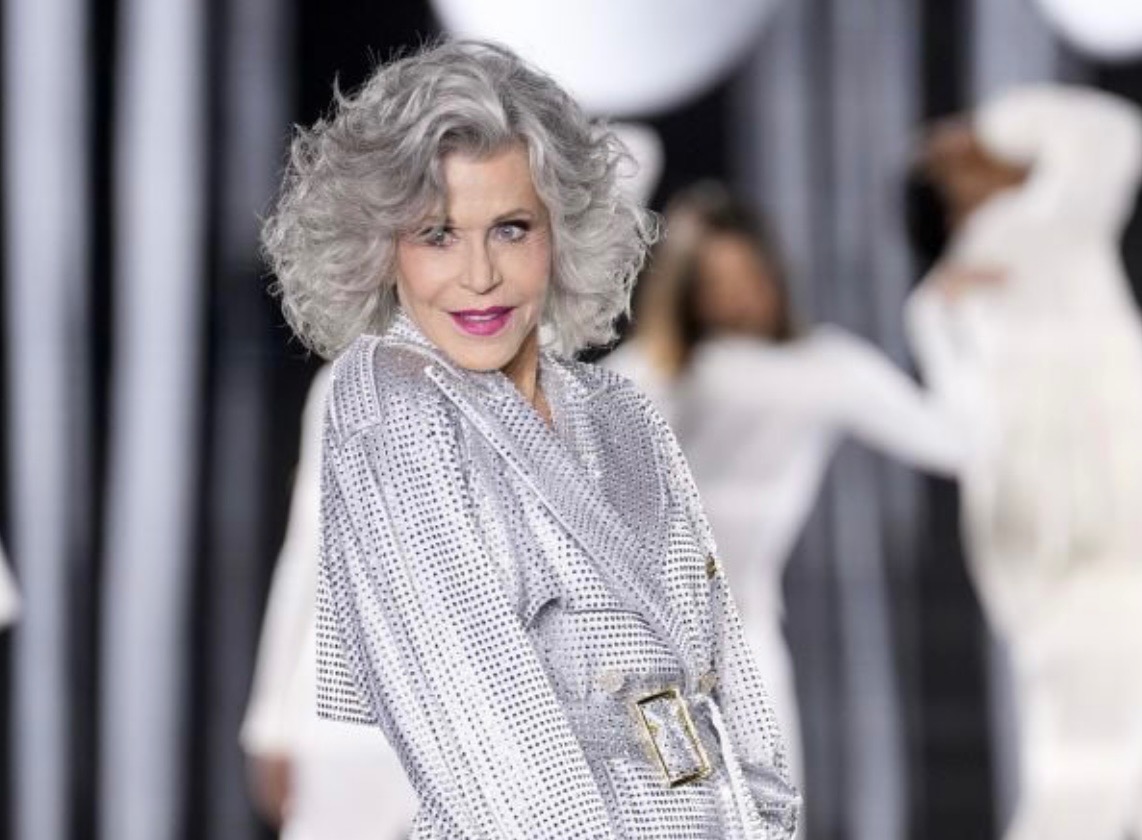
“I had to live a long life to understand: we don’t have to be perfect. We have to be real.”