His creative path is a story of tireless exploration, deep dedication to his profession, and a desire to push beyond conventional boundaries. In the years since The Pianist, Adrien Brody has created a series of powerful, diverse roles, gained international recognition, and performed on the theatrical stage. From monsters and geniuses to blockbuster heroes and independent drama leads—he always maintains his distinct sensitivity, quirkiness, and humanity, setting him apart from others. Read on new-york-trend.com for more about this uniquely talented actor.
A Child of the Arts
Born on April 14, 1973, in New York City, Adrien Brody grew up in a creative family. His mother, Sylvia Plachy, is a renowned Village Voice photographer whose work has graced the halls of the Museum of Modern Art (MoMA), and his father, Elliot Brody, is a history professor and artist. Their home was filled with art, conversations about the world, and creativity, so it’s no surprise that young Adrien felt the call of the stage early on. Even as a boy, he amazed everyone with his ability to transform.
“I would often re-enact manners, voices, situations that struck me,” he recalled.
When his parents encouraged him to perform at a friend’s birthday party, a stage persona was born—”The Amazing Adrien,” a young illusionist who captivated the audience with magic tricks. His mother noticed his acting talent while working on a photo project at the American Academy of Dramatic Arts. It was then that she suggested her son enroll in theater classes. By age 12, Brody was already performing in productions across New York, and a year later, he played the lead role in the television film Home at Last—the story of an orphaned boy adopted by a family in Nebraska.
Interestingly, Adrien initially dreamed of being an artist and even applied to the famous Fiorello H. LaGuardia High School of Music & Art and Performing Arts. He was rejected by the visual arts department, but fate intervened, and he was accepted into the drama department. It was there that he developed as an actor and realized that the stage was his true home.
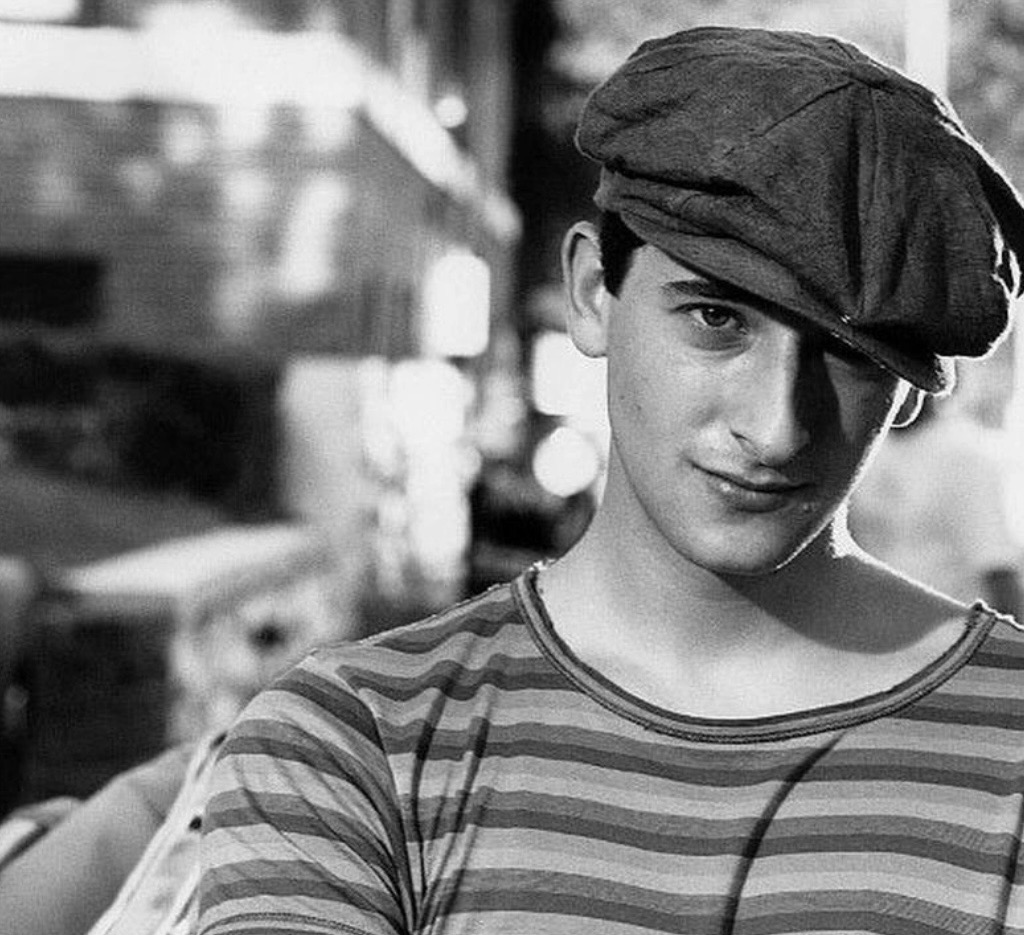
After high school, Brody briefly studied at Stony Brook University and Queens College, but academic routine quickly gave way to the desire to act. In 1989, he appeared in his first film, the anthology New York Stories, taking a step into the world where his talent would soon be noticed by all of Hollywood.
The Road to the First Oscar
In the early 1990s, Adrien Brody slowly but surely paved his way in film. In the movie King of the Hill (1993), he played the moving role of a boy trying to survive the Great Depression—a performance critics called his first real breakthrough.
This was followed by a series of films across different genres—from the family-friendly Angels in the Outfield(1994) to the drama Ten Benny (1995) and the crime film Bullet (1996) alongside Tupac Shakur and Mickey Rourke. Although these roles didn’t make Brody a star, they helped him develop his own style—a combination of vulnerability and inner strength.
Recognition came at the end of the decade. His punk rocker in Spike Lee’s film Summer of Sam (1999) became a sensation. After this, Brody appeared in Barry Levinson’s Liberty Heights and the social drama Bread and Roses by Ken Loach, showing that he was capable of playing both the American rebel and the quiet fighter for justice.
It was then that fate brought him together with Roman Polanski. The director was impressed by Brody’s performance in the film The Dandy Lions (2000) and offered him the leading role in The Pianist—the story of the Polish musician Władysław Szpilman who survived the horrors of the Holocaust. To prepare for the role, Adrien literally disappeared from public life: he sold his car, moved to a smaller apartment, lost over 30 pounds (14 kilograms), and practiced the piano for several hours daily until he mastered Chopin.
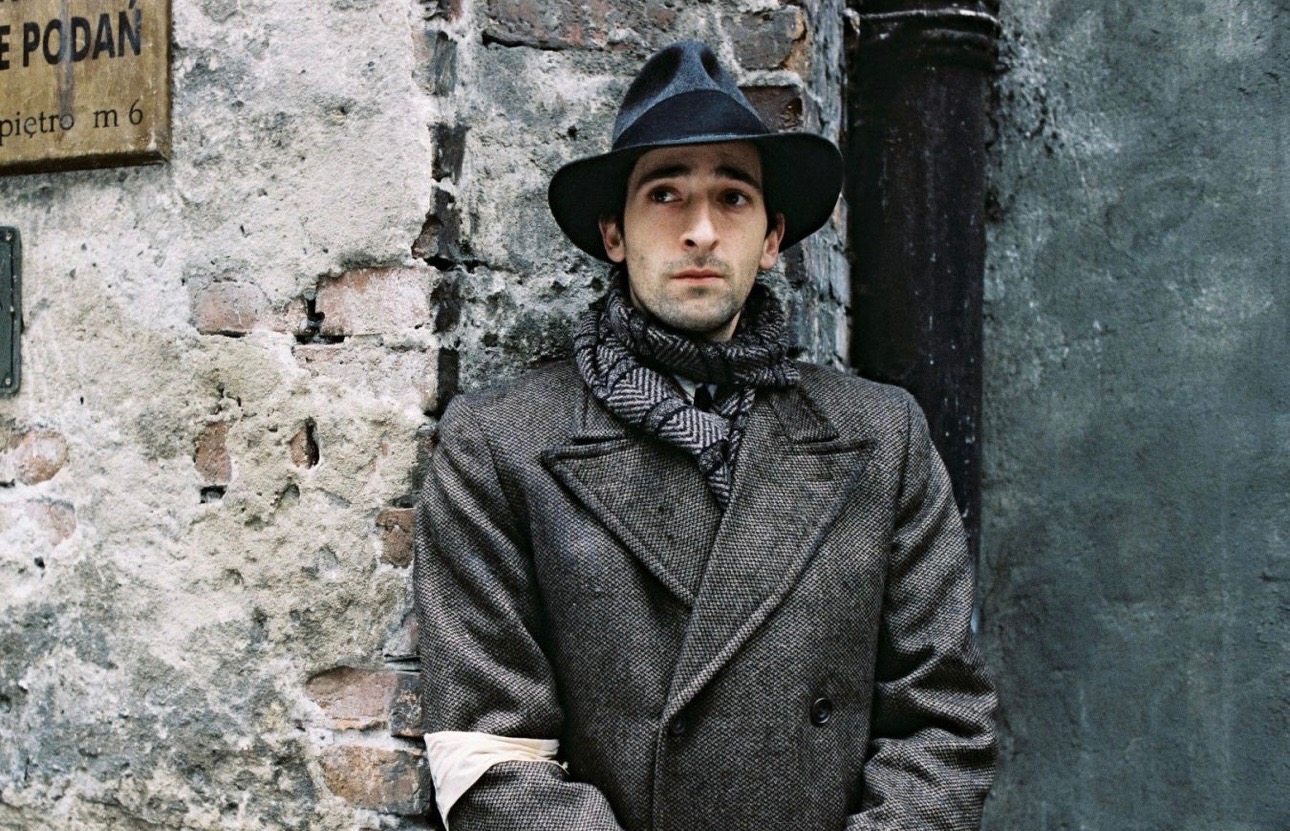
His transformation into Szpilman became one of the deepest in modern cinema. In Brody’s restrained yet extremely emotional performance, critics saw not just an actor—they saw a man who had lived through tragedy. In 2003, for this role, he won the Academy Award for Best Actor—at the age of 29, becoming the youngest winner in that category in history—and also received the prestigious French award, the César.
Versatility and Talent
After the triumph of The Pianist, Adrien Brody could have comfortably ridden the wave of fame, but he chose something else—to take risks, experiment, and play characters far removed from glamour. His subsequent roles proved he wasn’t seeking comfort; he was seeking a challenge.
Immediately after the Oscar win, the world saw Brody in the strange, even unsettling drama The Dummy(Dummy, 2002). Here, he transformed into a shy ventriloquist who falls in love with his employment counselor. For this role, Adrien studied genuine puppetry and ventriloquism, performing all the scenes live—without dubbing or special effects.
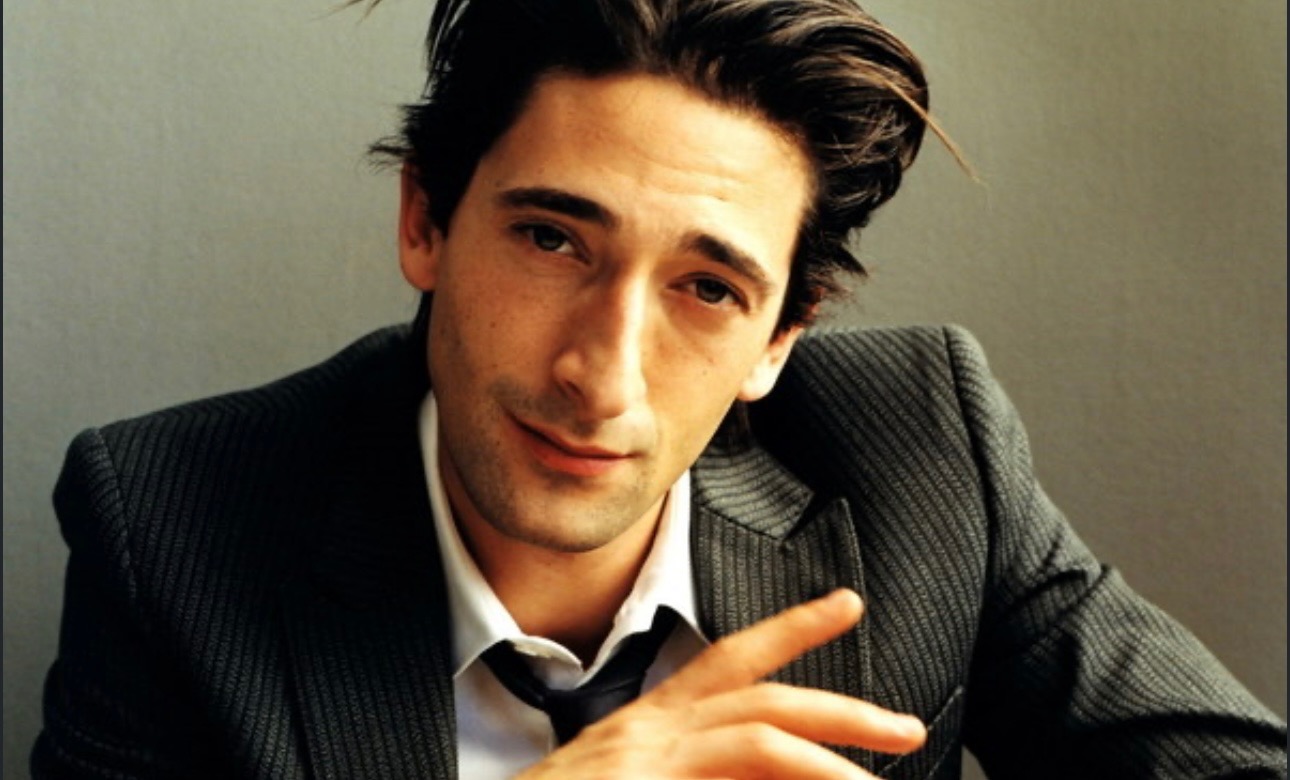
He then took on completely different characters: the gentle, vulnerable Noah in M. Night Shyamalan’s thriller The Village (2004); the wounded veteran in the psychological drama The Jacket (2005); the romantic screenwriter Jack Driscoll in Peter Jackson’s spectacular King Kong (2005), which grossed over $550 million at the box office and became the most successful film of his career; and the pensive traveler Peter Whitman in Wes Anderson’s The Darjeeling Limited (2007)—a role that revealed another facet of his lyricism.
Brody often found himself on the cusp of iconic roles. He met with Christopher Nolan about the role of the Joker in The Dark Knight (2008) and was considered for the role of Spock in the Star Trek reboot, but both opportunities ultimately went to others.
In 2010, Brody was back in the center of the action—this time as the hardened fighter Royce in the action movie Predators, produced by Robert Rodriguez. Just a year later, the actor suddenly appeared in a completely different role: in Woody Allen’s comedy Midnight in Paris (2011), he brilliantly played Salvador Dalí, creating a bizarre yet charming image of an artist living in his own reality.
In 2014, Brody collaborated with director Wes Anderson again on the cult film The Grand Budapest Hotel, where he played the charismatic antagonist Dmitri. That same year, he appeared in the drama Houdini on the History Channel, for which he received an Emmy nomination, embodying the legendary illusionist.
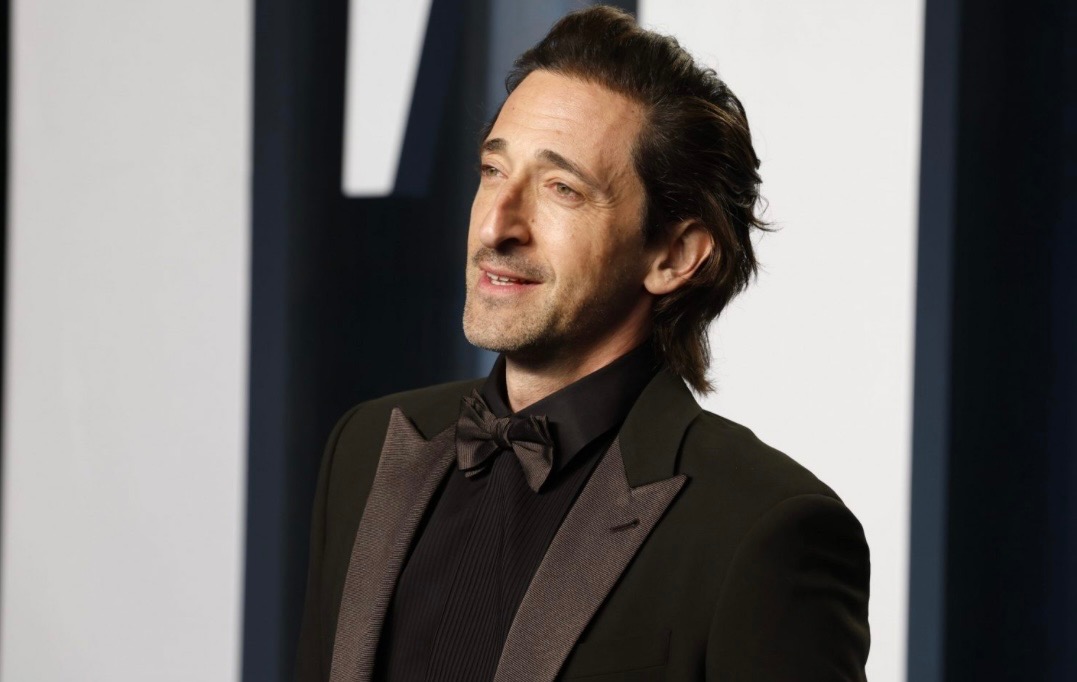
In 2015, Brody took a risk that paid off, participating in the Chinese hit Dragon Blade. In the role of Tiberius, a Roman general, he introduced himself to Asian audiences, and the film grossed over $50 million in its first week of release. That same year, he was honored with the Cinema Vanguard Award at the San Diego International Film Festival.
Brody’s authority as an artist grew. In 2017, he joined the popular series Peaky Blinders, and at the Locarno Festival, he received the prestigious “Leopard Club Award”—an honor given to those who have changed the perception of cinema.
2024 proved to be a pivotal year. In Brady Corbet’s film The Brutalist, Brody played the role of László Tóth, a Hungarian-Jewish architect—a fictional character who survived the Holocaust and tries to find himself in post-war America. The role brought the actor a true triumph: Oscar, BAFTA, Golden Globe, and Critics’ Choice Awards. Critics unanimously declared, “This is his best work since The Pianist.” In the same year, Adrien debuted on the stage of London’s Donmar Warehouse in the play Fear 13, based on the true story of a man wrongfully sentenced to death. His performance earned standing ovations and a nomination for the prestigious Laurence Olivier Award.
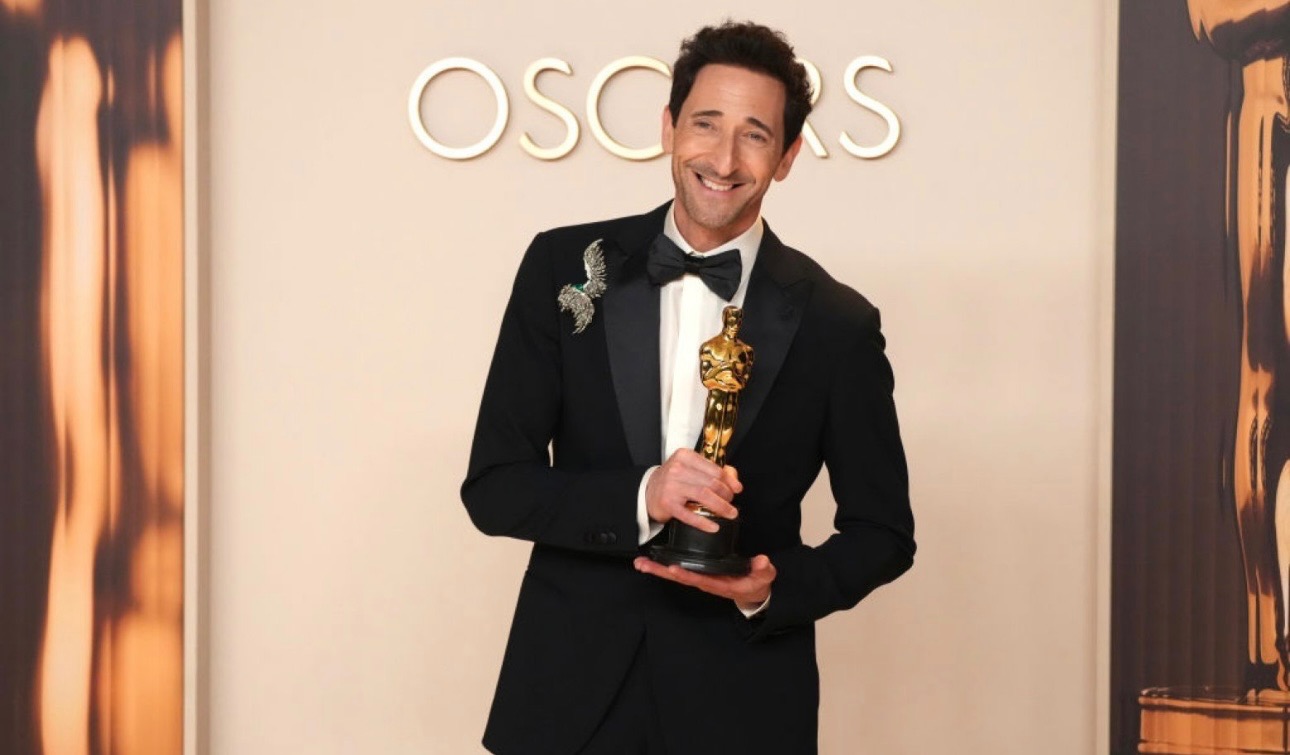
Adrien Brody is an actor who is not afraid of depth. His career is not just about red carpets, but a constant exploration of the human soul through art. He doesn’t just play roles—he tells stories. And he does it in a way that makes you want to hear them again and again.
Art in the Blood
Painting is one unique mode of creative expression for Adrien Brody. It all started by chance when French artist Georges Moquais visited his home in upstate New York and suggested he pick up a brush.
“I did—and realized it was incredibly liberating,” the actor recalls.
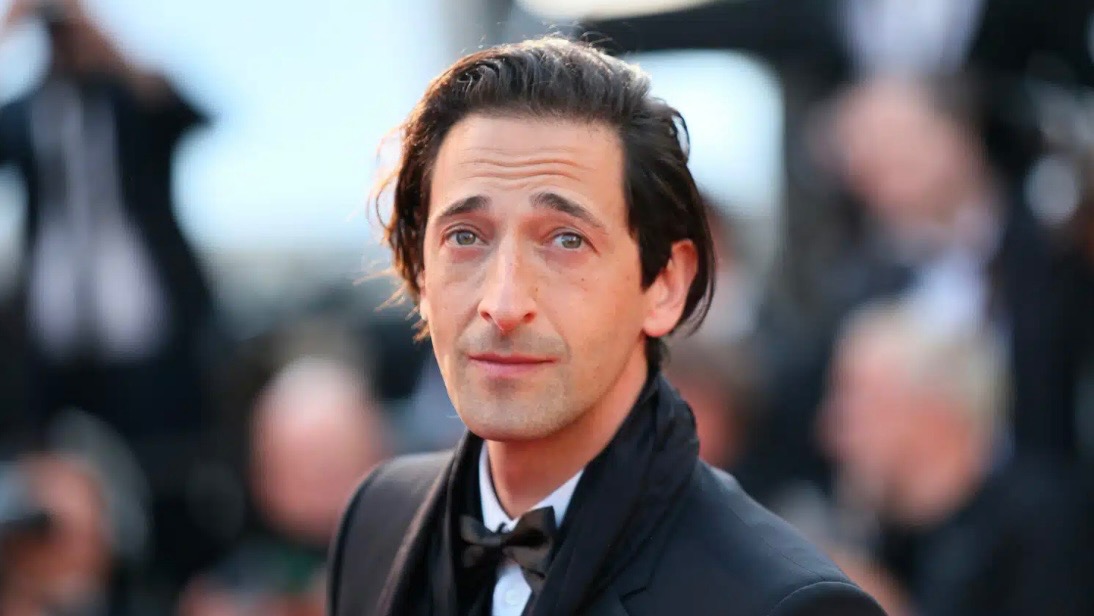
Painting became a quiet space for him where he could create his own worlds without the constraints of a script or producers. Since then, Brody sets up studios wherever he works on films and is also building a large workshop in the countryside. His favorite technique is collage, inspired by the walls of New York, covered in layers of old posters and graffiti. During the pandemic, painting became a lifeline for Brody and a way to maintain his creative form.
As in painting, he finds inspiration in design. During the promotional campaign for The Brutalist, Adrien Brody appeared in a tuxedo he co-designed with the J. Crew team. His suit—an elegant variation of the classic Ludlow model in Italian wool, with the embroidered inscription “J. Crew for A. Brody.”
“They created something wonderful, but I added a few details from my own aesthetic,” he explains.
Adrien’s interest in architecture also found expression in his role in The Brutalist. For over ten years, he has been independently renovating his own home, transforming it into a space that blends history and modernity.
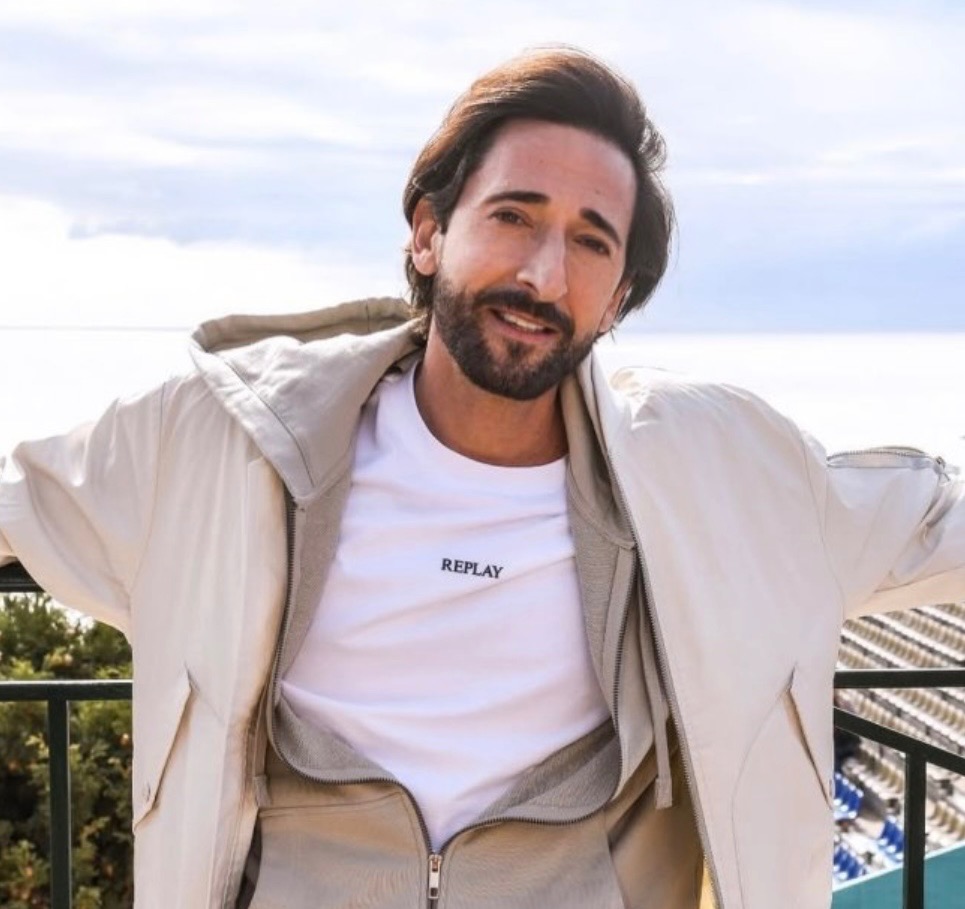
“It’s like making a movie,” Brody says. “You see the potential, you overcome the difficulties, and in the end, you bring to life what you dreamed of. My life and my art are one whole. Every project of mine, whether it’s a film, a canvas, or even a house, is an attempt to create something that will remain and speak for itself.”