This is a tender and reflective story about a young woman finding her place in the New York literary world of the 1990s. The film offers a deep dive into the process of self-discovery and the importance of following one’s convictions, even when the world around you seems unsupportive. Read on new-york-trend.com for details about how and where the film was shot, its reception by critics and audiences, and the profound meaning embedded within its simple narrative.
The Making of My Salinger Year
The film My Salinger Year (also known as My New York Year) is based on the memoirs of Joanna Rakoff, published in 2014—a tender, ironic, and at the same time, painfully honest story about her youth in the world of major literary figures. In her book, Rakoff described a year spent at the legendary New York agency Harold Ober Associates, which represented J.D. Salinger himself. Her severe boss, Phyllis Westberg, who later headed the agency, was given a different name in the film: Margaret.
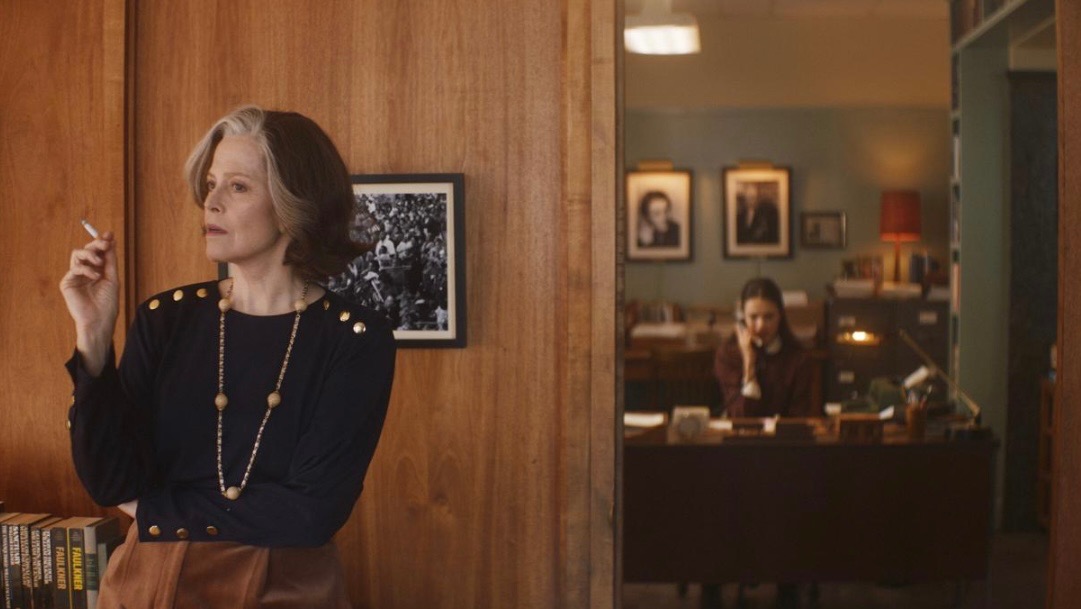
In 2019, director Philippe Falardeau, known for his poignant dramas like The Good Lie and Chuck, took on the task of adapting the story. He wrote the screenplay himself. The lead role of the young assistant was played by Margaret Qualley, while Sigourney Weaver created a complex and charismatic portrait of her boss—a powerful but vulnerable woman of the old school.
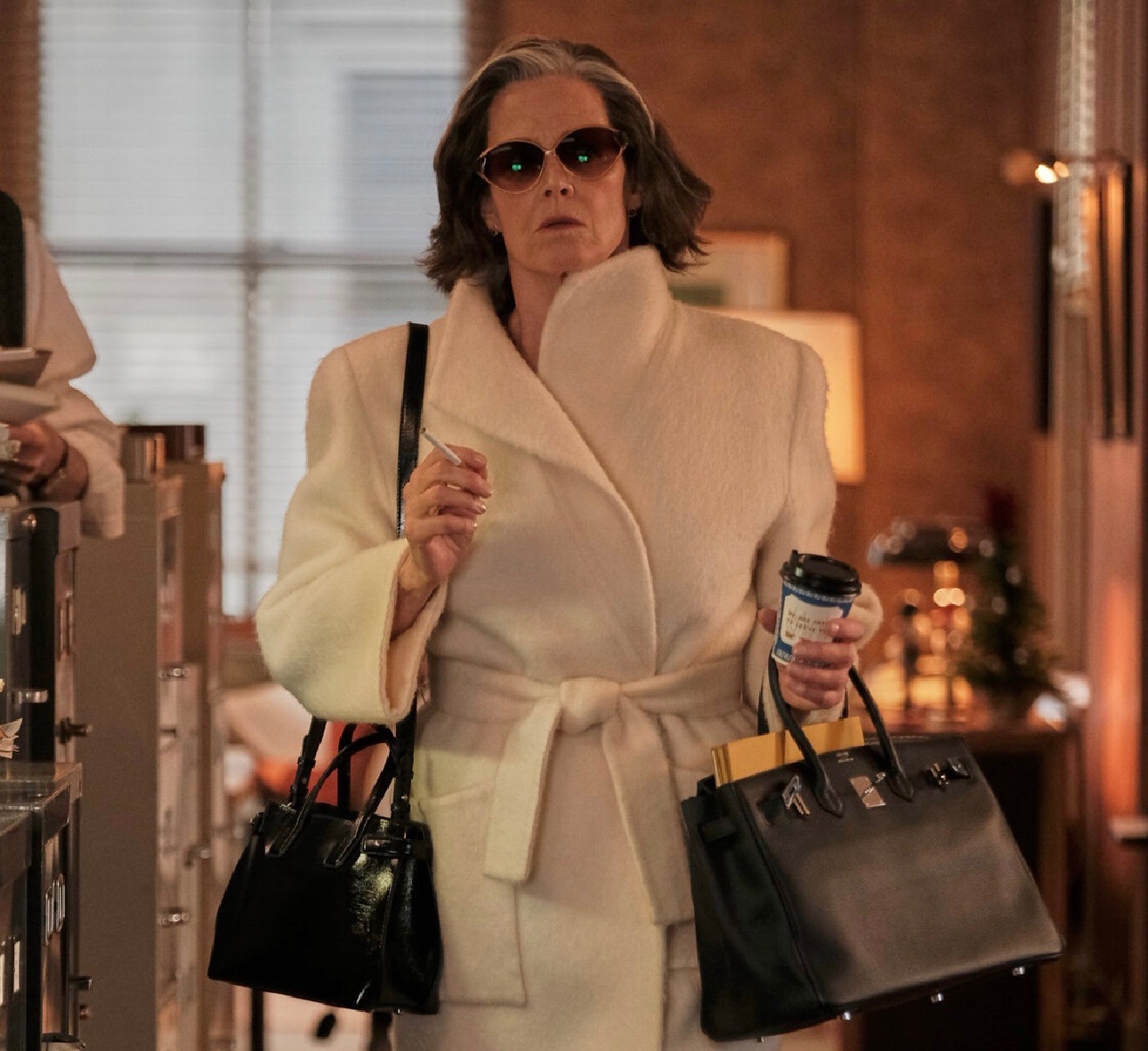
The cast also included Colm Feore, Seána Kerslake, and Théodore Pellerin, and the production companies were Micro_scope (Canada) and Parallel Films (Ireland). Filming took place in the spring of 2019 in Montreal, which brilliantly “played” the role of 1990s New York. Behind the camera was cinematographer Sara Mishara, known for her ability to convey emotional subtext through light and color, and the musical score was composed by Martin Léon, who gave the film a warm, retro soundscape.
Mary Finlay handled the editing. Thanks to her, the story achieved a light rhythm, where the mundane nature of work intertwines with the quiet moments of the protagonist’s self-reflection. Thus, a film—intelligent, visually warm, and full of gentle nostalgia—grew out of a small book of memories about a first job, uncertainty, and the awakening of a writer’s voice.
Simple Plot, Profound Meaning
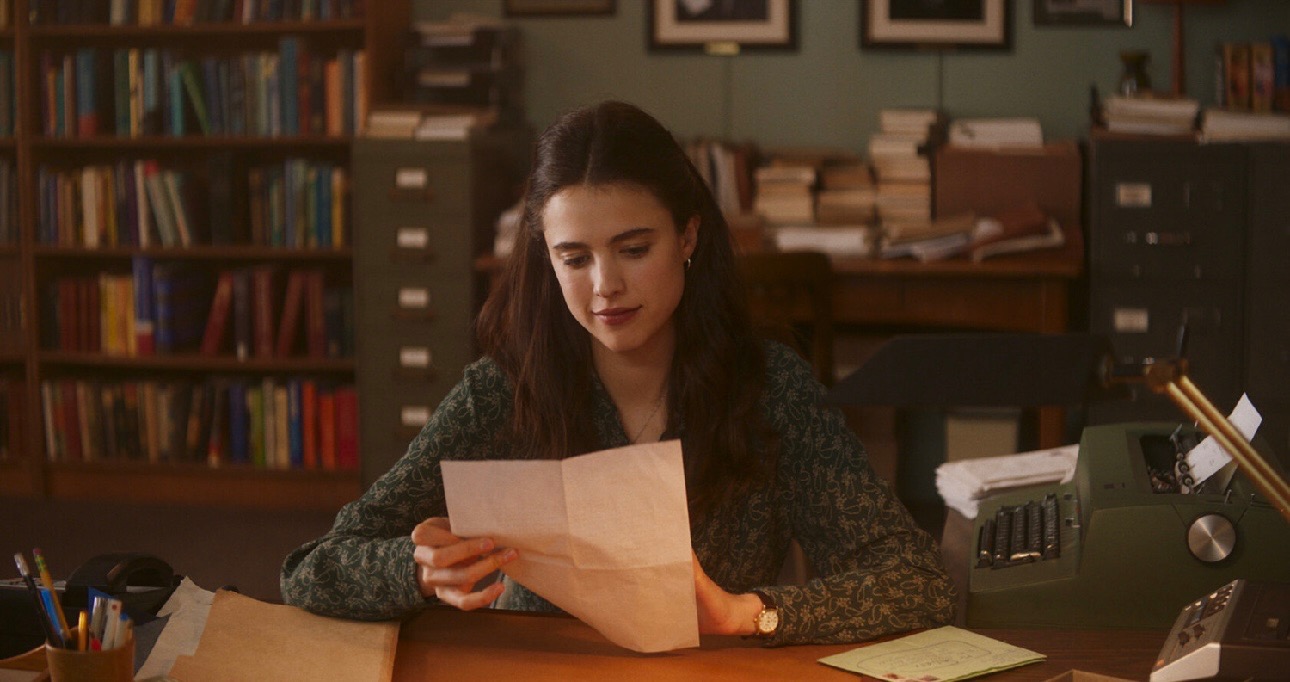
When young writer Joanna leaves her home in sunny Berkeley and moves to New York in 1995, she has no clear plans—just a dream of literature. A friend invites her to stay for a few weeks, but the city pulls her in, and Joanna quickly finds a job at a prestigious, old-school literary agency. Her boss, the formidable and refined Margaret, considers computers the enemy of culture. Therefore, Joanna is forced to type everything, from contracts to personal letters, on an antique typewriter. It is through these letters that she discovers the agency represents J.D. Salinger himself—the legendary but invisible author of The Catcher in the Rye.
Paradoxically, Joanna has never read his book. Instead, she reads his readers—hundreds of letters written with despair, tenderness, and sometimes humor. Her task is simple: to reply with a standard form letter stating that the writer does not accept correspondence. But the girl’s heart cannot bear it. She begins to break the rules, weaving her own emotions and feelings into the official responses—and this leads to the first crises, mistakes, and lessons in her new life.
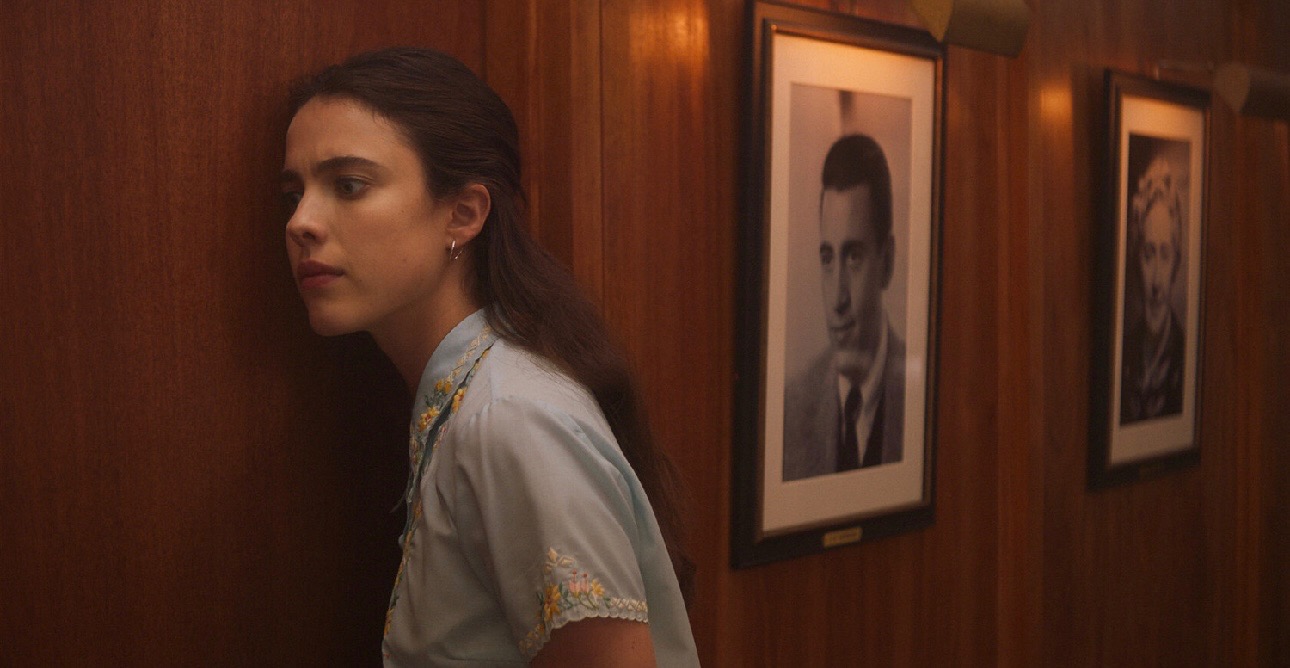
Alongside her work, Joanna tries to hold onto her personal happiness. Her new boyfriend, Don, is a bohemian writer who loves his own texts more than people. His indifference forces Joanna to realize that next to other people’s geniuses, she is losing her own voice.
When tragedy strikes the agency—the suicide of Margaret’s business partner—the relationship between the boss and her assistant changes. For the first time, the stern Margaret opens up, and Joanna sees not only authority but also loneliness in her. This experience changes both women—one who is desperately afraid of change, and the other who is just beginning to find herself.
Joanna gradually grows professionally. She participates in the publication of Salinger’s short story, “16 Hapworth 1924,” handles negotiations with publishers, and even meets the writer himself—briefly, but it becomes a symbolic event for her. At this moment, she knows: it is time to stop serving other people’s voices and start writing her own texts.
My Salinger Year is more than just the story of a young assistant in the literary world. It’s a gentle, ironic, and slightly melancholic coming-of-age story in the big city, where honesty can be both a blessing and a curse. In the spirit of The Devil Wears Prada, but instead of fashion, literature reigns supreme—with its deities, fears, and letters smelling of ink.
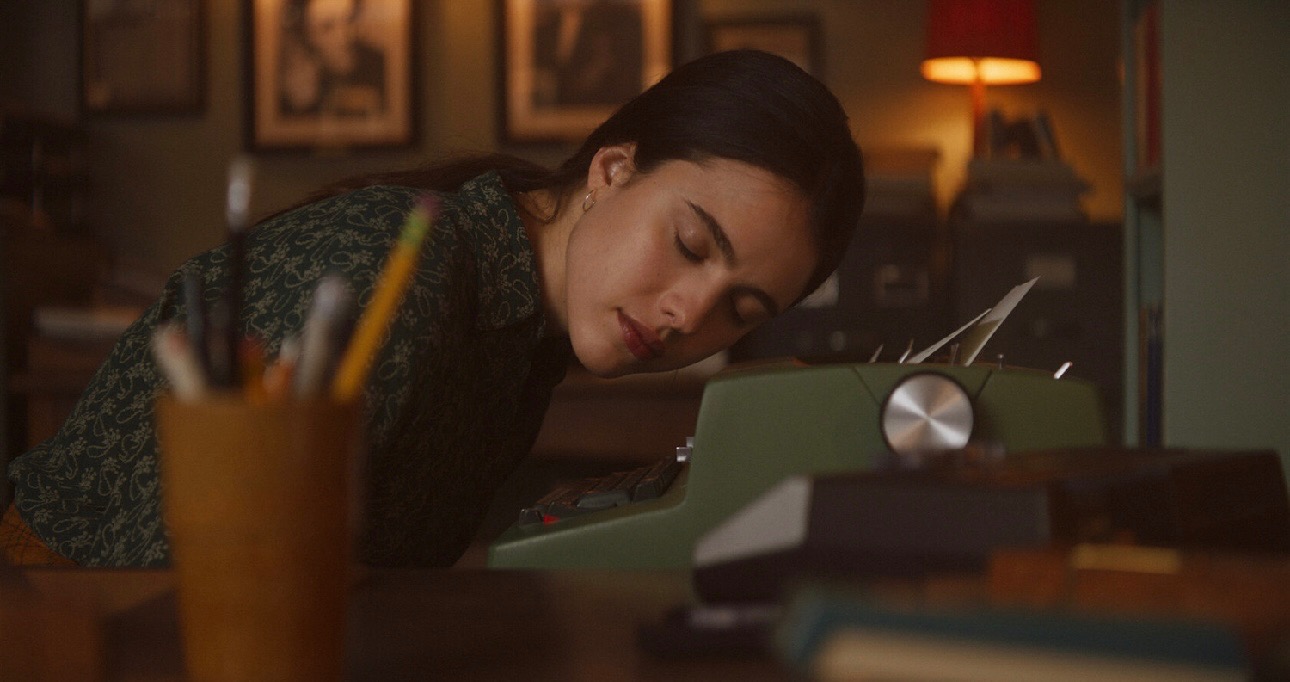
Director Philippe Falardeau transformed Joanna Rakoff’s memoirs into a sophisticated cinematic portrait of the 90s—an era when computers were just beginning to reclaim territory from paper, and young dreamers still believed that every letter could change a life.
Soft Contrasts and Vivid Metaphors
Salinger in the film is a phantom. We barely see his face, only hear the echoes of his presence. His name is a symbol of inaccessibility, and the letters Joanna has to sort are a reminder that a wall always stands between the author and the reader. We see not a mythical writer, but a shared human need: to be heard.
Although the film is set in New York in the mid-1990s, filming took place in Montreal. It was here that Falardeau recreated the retro Manhattan office atmosphere, where time seemed frozen. The streets of Montreal, with their architectural restraint, helped create the feeling of a city existing outside a specific era—between the past and the present.
The cinematic work of Sara Mishara masterfully combines two worlds: modern New York, already breathing the internet, and the “museum-like” space of the agency, ruled by typewriters, phone books, and paper contracts. This visual clash of eras underscores the main theme—the collision of generations, old ideals, and new illusions.
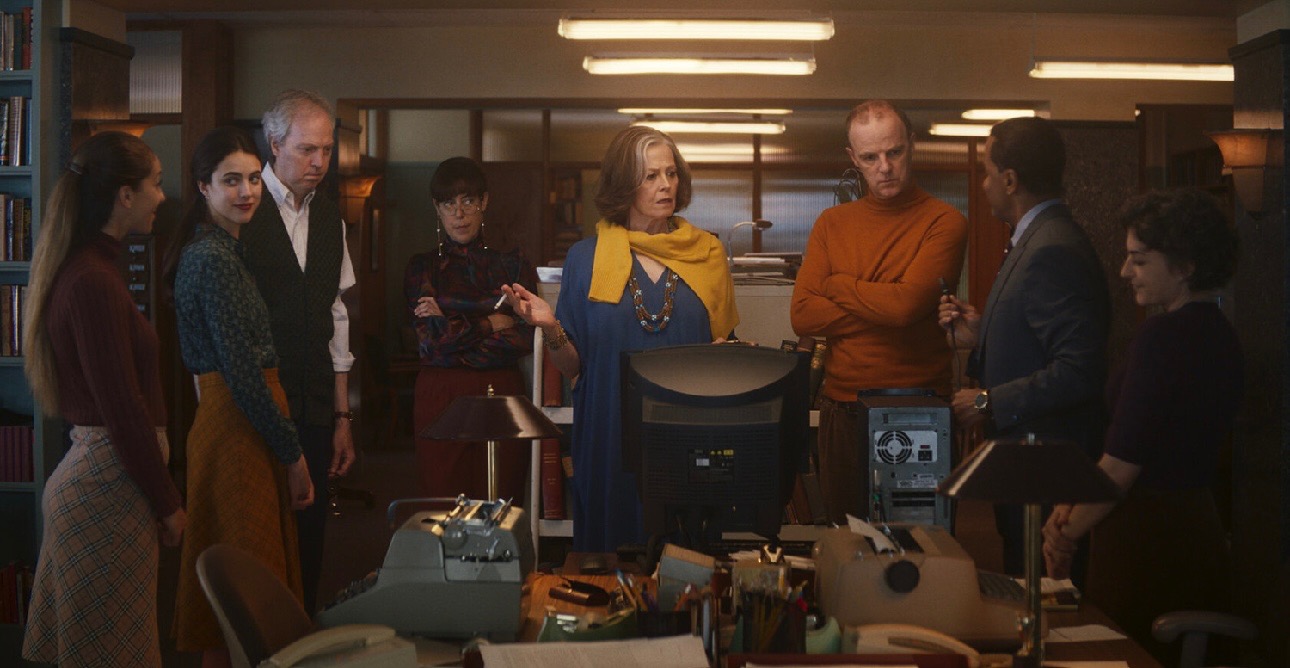
This is Falardeau’s first film with a female lead, and the director deliberately avoids a male gaze. This reflects the feminist subtext of Rakoff’s book: a woman in the literary world is constantly forced to prove that her voice is worthy of attention.
The film balances between gentle nostalgia and critique. On one hand, it’s a story about first adulthood—poetic evenings, cheap apartments, and romantic encounters. On the other hand, it’s an attempt to show that the path to true writing has nothing to do with the myth of New York as a city of creative miracles.
Falardeau hints that Joanna only sees the glamour of book signings in writing, but not the hard work and loneliness behind them. Therefore, her journey is not just an entry into the profession but also a disillusionment. “My Salinger Year” is a quiet, intimate film about the boundary between a dream and maturity. It shows how difficult it is to find yourself in a world where everyone strives to be heard, but no one is listening.
The Film’s Reception
The world premiere of My Salinger Year took place on February 20, 2020, at the 70th Berlin International Film Festival—an event that opened the film’s path to an international audience. Following its festival debut, distribution rights were acquired by IFC Films, and the film was simultaneously released in Canada and the U.S. on March 5, 2021. The premiere in Ireland took place slightly later, on May 17, 2021.
Critical reaction was mixed. On Rotten Tomatoes, the film received 71–75% positive reviews, with an average score of 6.3/10. On Metacritic, it scored just 50 out of 100, indicating mixed or average reviews. This data accurately reflects the dual perception of the film—some saw tender nostalgia for the past, while others criticized the lack of intensity and internal conflict.
Gary Goldstein of the Los Angeles Times called the film “a graceful journey of creative and emotional awakening.” Kevin Maher of The Sunday Times also spoke favorably, noting that “it’s a familiar story, but brilliantly cast—a triumph of casting.”
On the other hand, Peter Bradshaw of The Guardian criticized the film, giving it only one out of five stars. He called it a “colorless and self-satisfied copy of The Devil Wears Prada, devoid of energy, eroticism, or humor.”
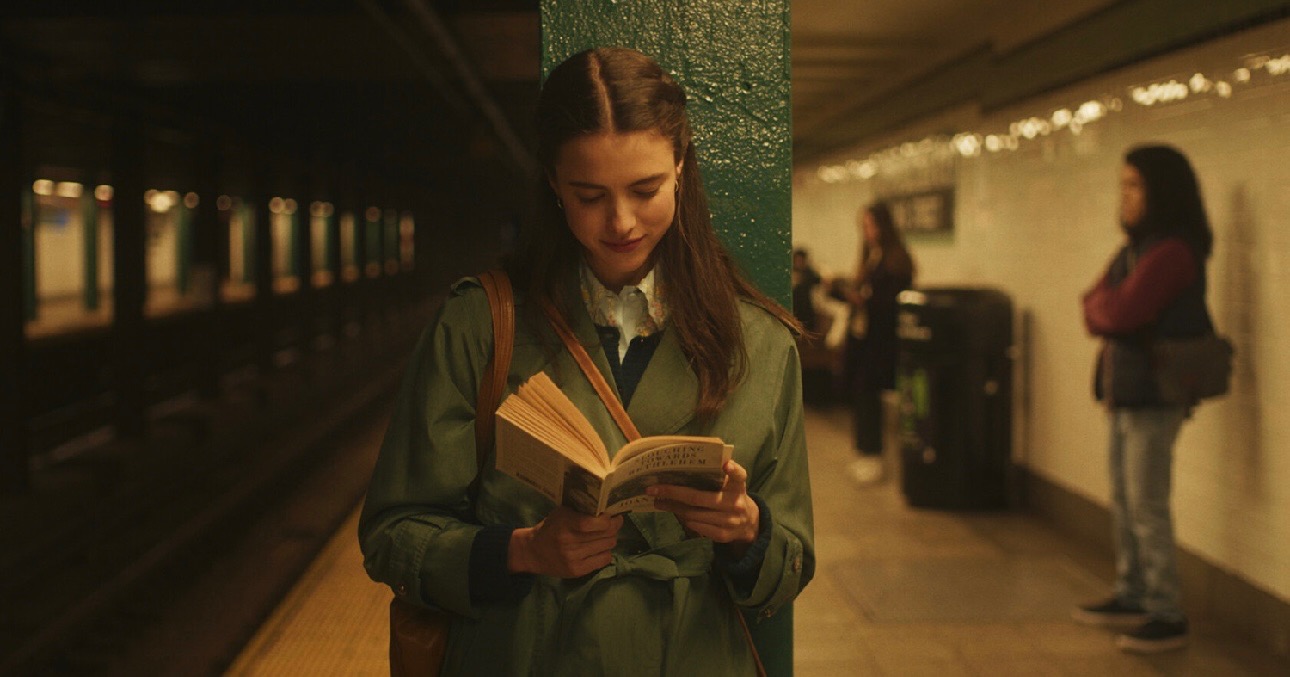
Despite the controversial criticism, My Salinger Year received a number of national nominations and awards in Canada, including the Canadian Screen Awards and the Prix Iris.
Although the film was not a huge hit, it found its niche among those who appreciate subtle stories without obvious climaxes. And if the film has charm, it lies in simple things: the hum of the typewriter, the warm mutual respect between two women of different generations, and the realization that true adulthood begins when you dare to write your own story.