Talking Heads were a seminal American rock band from New York City, founded in 1975, who became architects of the post-punk and New Wave movements. The group brilliantly fused punk, art rock, funk, and experimental music into a signature “intellectual” sound. Comprised of David Byrne, Chris Frantz, Tina Weymouth, and Jerry Harrison, the band is legendary for albums like Remain in Light, Fear of Music, and Speaking in Tongues, as well as hits like Psycho Killer, Once in a Lifetime, and Burning Down the House. Here is on new-york-trend.com the story of one of the most influential groups in the history of modern music.
From the Loft to the Limelight
The Talking Heads story didn’t start in a garage, but in the classrooms of the Rhode Island School of Design (RISD). In 1973, students David Byrne and Chris Frantz formed their first band, The Artistics—a proto-punk outfit that played covers while searching for a voice of its own. Tina Weymouth—Frantz’s girlfriend and fellow student—was always nearby, initially helping with transportation before becoming a central figure in the band’s destiny.
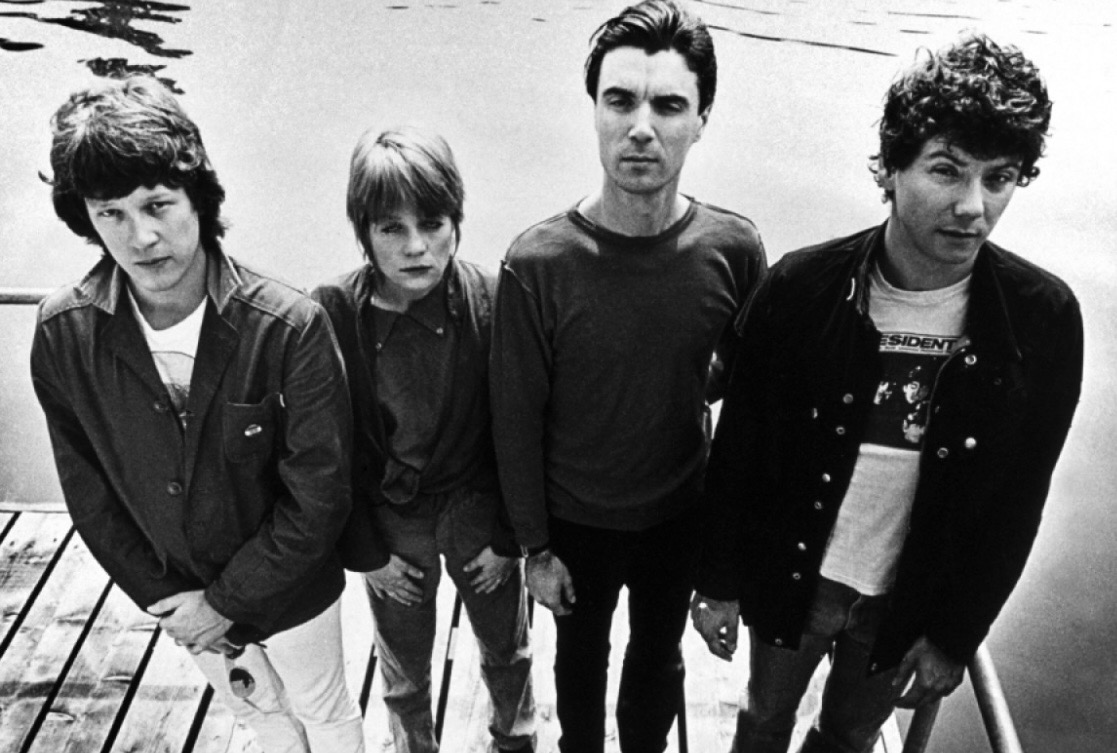
After The Artistics split in 1974, Byrne, Frantz, and Weymouth moved to New York City, moved into a shared loft, and decided to start fresh. When they couldn’t find a bassist, Weymouth took up the instrument herself. Frantz encouraged her to learn by playing along to Suzi Quatro records. Gradually, the core of Talking Heads took shape, though Byrne wasn’t immediately sold on the idea—it took three auditions before Tina became a full member.
The trio’s first show as Talking Heads took place on June 5, 1975, at the legendary CBGB, opening for the Ramones. While their early demos didn’t immediately land a contract, the grit of the NYC live scene paid off: in 1976, they signed with Sire Records.
Their debut album, Talking Heads: 77, brought them critical acclaim and the iconic track Psycho Killer. By 1977, Jerry Harrison joined the group, adding depth with his keyboards and guitar, and Tina Weymouth and Chris Frantz officially tied the knot.
A new chapter began with their collaboration with producer Brian Eno. The album More Songs About Buildings and Food (1978) expanded their musical horizons and delivered their first major hit, a cover of Take Me to the River.
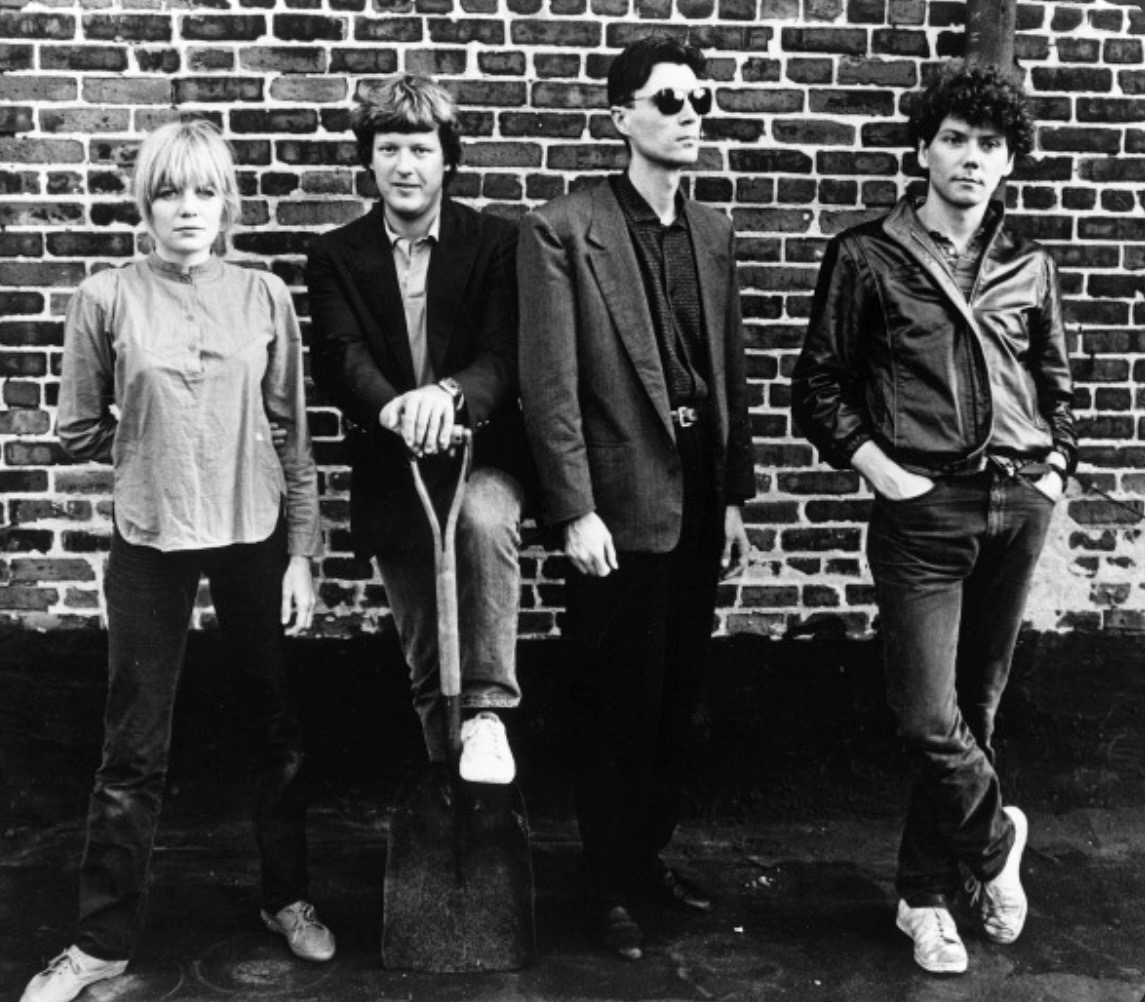
With the release of Remain in Light (1980), Talking Heads shattered the traditional rock mold, blending funk energy, world music, and the avant-garde. At the same time, the members began exploring solo paths: Weymouth and Frantz launched the successful Tom Tom Club, Harrison recorded a solo album, and Byrne experimented with global rhythms alongside Eno.
Commercial Peak and the Long Goodbye
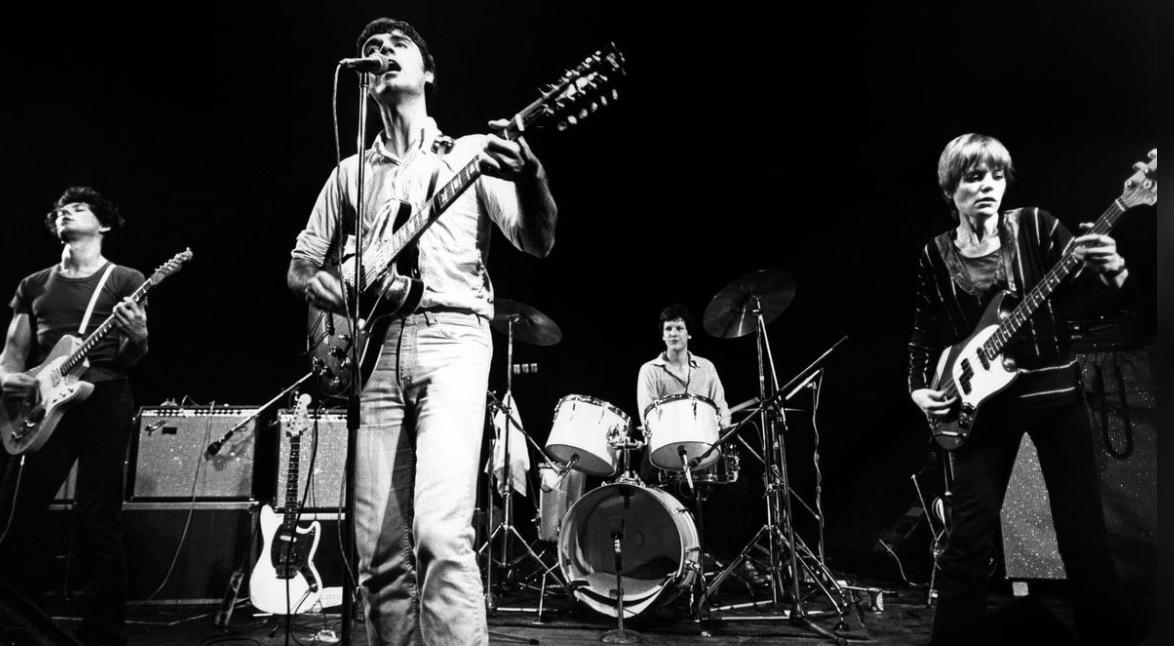
After the relentless sprint of the late 1970s—releasing four albums in just four years—Talking Heads finally took a breather. Their comeback was deafening. In 1983, they released Speaking in Tongues, a massive commercial breakthrough that delivered their only U.S. Top 10 hit, “Burning Down the House.” The music video became a staple on MTV. The supporting tour became legendary through Jonathan Demme’s film Stop Making Sense—not just a concert doc, but a manifesto for a new language of rock performance. Paradoxically, this triumphant tour would be the band’s last.
From there, Talking Heads functioned primarily as a studio project. Little Creatures (1985) saw a surprise pivot toward a more straightforward, Americana-tinged pop-rock sound, yielding hits like “And She Was” and “Road to Nowhere” while becoming their best-selling album. In 1986, they released True Stories, a companion piece to David Byrne’s quirky feature film of the same name, which produced the hit “Wild Wild Life.” Their final curtain call was Naked (1988)—a political, anxious, and Afro-polyrythmic record that served as a summation of their years of experimentation.
Behind the scenes, Byrne’s dominant role became increasingly pronounced. Following Naked, Talking Heads quietly went on a hiatus that never ended. In December 1991, the breakup was made official. Frantz later remarked with some bitterness that he found out about the split through the newspapers; to him, the band hadn’t broken up—David had simply decided to leave.
Everyone went their separate ways. Byrne focused on his solo career and multimedia art. Tom Tom Club enjoyed a second wind, and Jerry Harrison became a sought-after musician and producer. An attempt by Frantz, Weymouth, and Harrison to carry on without Byrne under the name “The Heads” resulted in legal battles and only deepened old wounds.
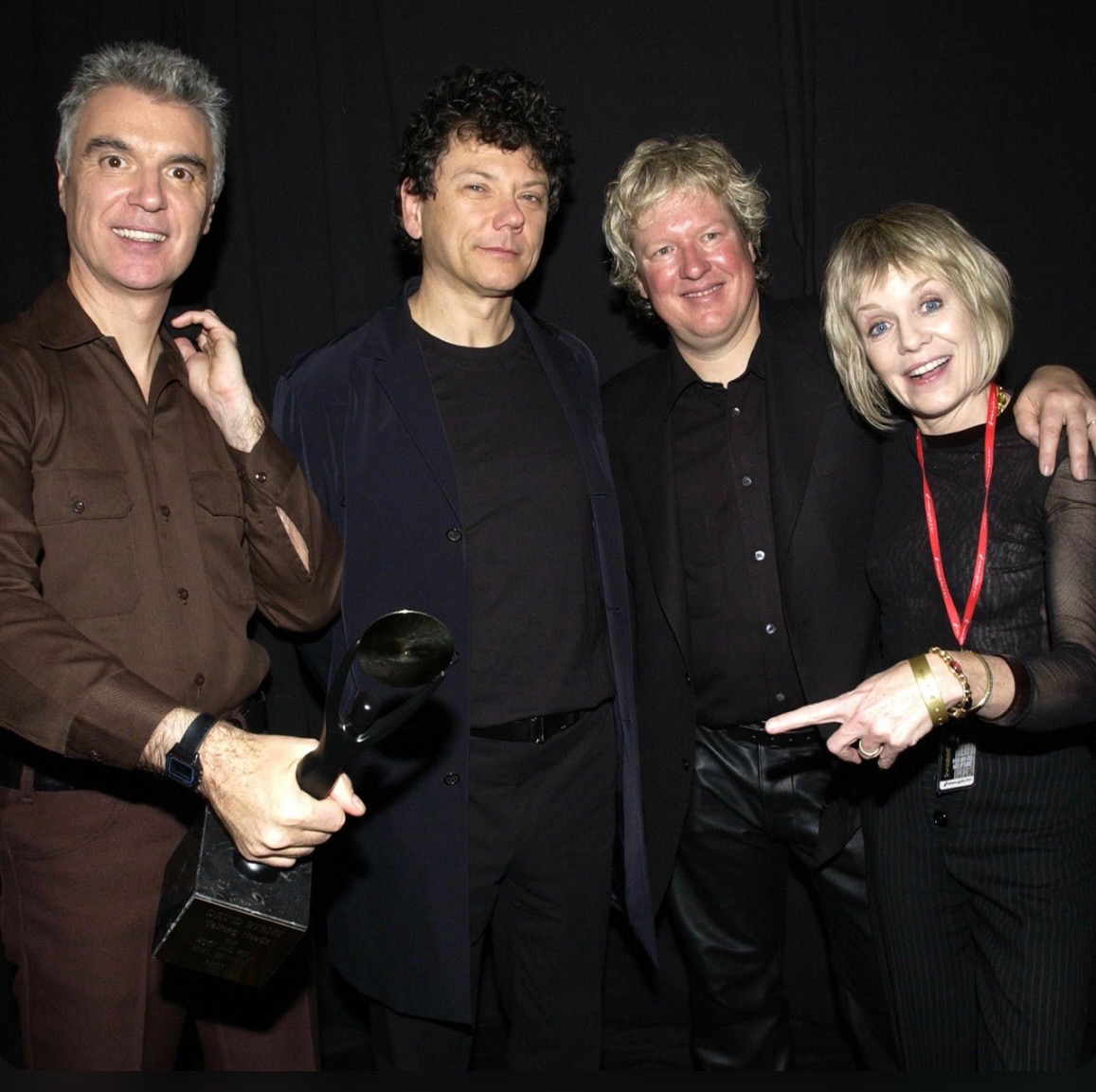
The only true reunion of the classic lineup occurred in 2002 for the band’s induction into the Rock and Roll Hall of Fame. They took the stage together one last time but quickly made it clear there would be no permanent comeback.
However, the band’s story hasn’t stayed in the archives. In 2023, Stop Making Sense returned to theaters in a stunning IMAX restoration, and the four members appeared together in public for the first time in years for a series of Q&A sessions. Despite endless rumors and astronomical financial offers, they turned down a reunion tour. Instead, in 2025—exactly 50 years after their first gig—the band marked their anniversary with a brand-new video for “Psycho Killer.”
Musical Style and the Story Behind the Name
The band’s style was a restless evolution, moving from minimalist guitar punk to art-funk, experimental pop, and complex African polyrhythms. As David Byrne himself put it:
“I think people understand our work mostly intuitively. But when they try to put it into words, they get tongue-tied. And maybe that’s the power of Talking Heads: music that is felt by the body before it is ever decoded by the mind.”
They were weird, twitchy, and awkward—yet they churned out flawless pop classics. Over the course of eight albums, Talking Heads managed to bridge the gap between the future and the past, intellect and the dance floor, high-concept art and the radio hit. To this day, it feels like the world has never seen another band quite like them.
Even their name has a sharp backstory, pulled straight from television industry jargon. In the 1970s, the term “talking head(s)” referred to a tight camera shot showing only the head and shoulders of a person speaking—typically a news anchor or a “dry” interview with no action.
David Byrne spotted the term in TV Guide and fell in love with its cold, detached, and slightly ironic tone.
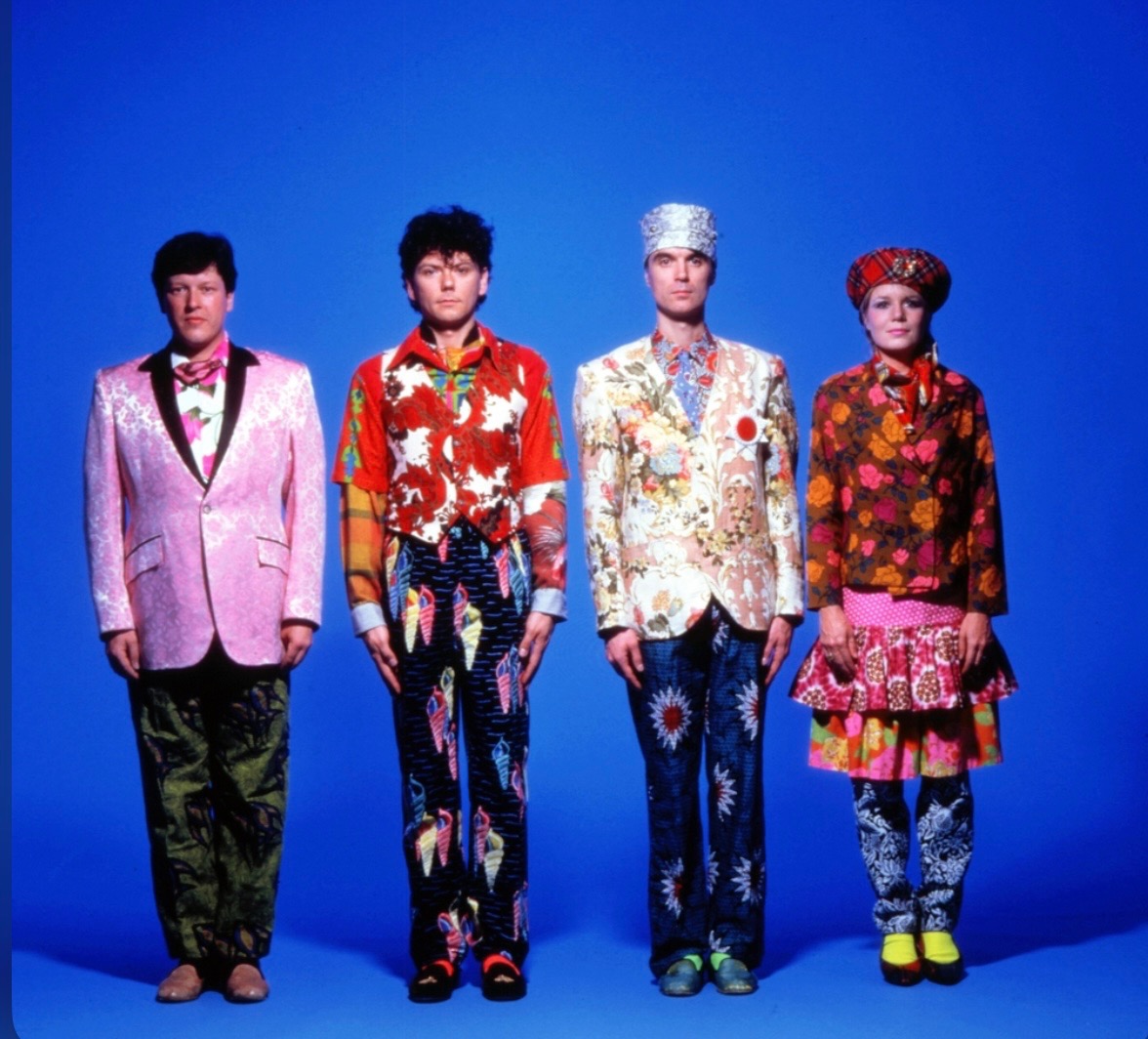
The name fit the band’s aesthetic perfectly:
- A focus on intellect and lyrics over rock-and-roll glamour.
- The feeling of an outside observer watching modern society.
- A calculated distance between the artist and the audience.
Ultimately, Talking Heads wasn’t just a literal description; it was an image of people talking to, and analyzing, the world around them.
A Legacy That Won’t Quit
Talking Heads may have officially disbanded in 1991, but they never truly went away. Their music has survived through new genres, new voices, and new cultural movements. Their DNA can be found in artists from entirely different sonic universes: from Nelly Furtado and Kesha to Eddie Vedder, Trent Reznor, St. Vincent, LCD Soundsystem, The Weeknd, Danny Brown, and The 1975.
In 2014, when director Paolo Sorrentino accepted the Oscar for The Great Beauty, he thanked Talking Heads as a primary source of inspiration—further proof that their reach extends far beyond the recording studio.
Since the split, David Byrne has emerged as one of the most tireless and broad-minded artists of his generation. His solo career has touched everything from rock and pop to classical, electronica, Latin rhythms, and opera. His label, Luaka Bop, became a legendary sanctuary for global music.
For Tina Weymouth and Chris Frantz, Talking Heads was just one chapter. Their side project, Tom Tom Club, became a dance-floor phenomenon. Their hit “Genius of Love” didn’t just climb the charts—it became one of the most sampled tracks in hip-hop history, used by everyone from Grandmaster Flash and 2Pac to Mariah Carey and Busta Rhymes.
Talking Heads long ago ceased to be just a band. They became a benchmark for indie rock, art-pop, and the experimental scene—a proof of concept that intelligence, irony, and a danceable beat can live in the same song. Their music didn’t vanish with the breakup; it continues to speak, even when the “heads” themselves are silent.
As is often the case with the greats, a period at the end of a biography doesn’t mean the end of the influence. Talking Heads left behind more than a catalog; they left behind a way of thinking—musical, cultural, and entirely free.