The Ramones were a seminal American punk rock band from New York City, born in 1974 in the Forest Hills neighborhood of Queens. As the primary architects of the U.S. punk movement, they became famous for their stripped-down, lightning-fast sound, relentless touring schedule, and a colossal influence on global culture that far outweighed their modest commercial success. Their journey—from a handful of Queens teenagers to the leaders of a worldwide movement—is one of the most enduring legends in music history. Here is on new-york-trend.com a look at the story behind the band.
The Birth of New York Punk
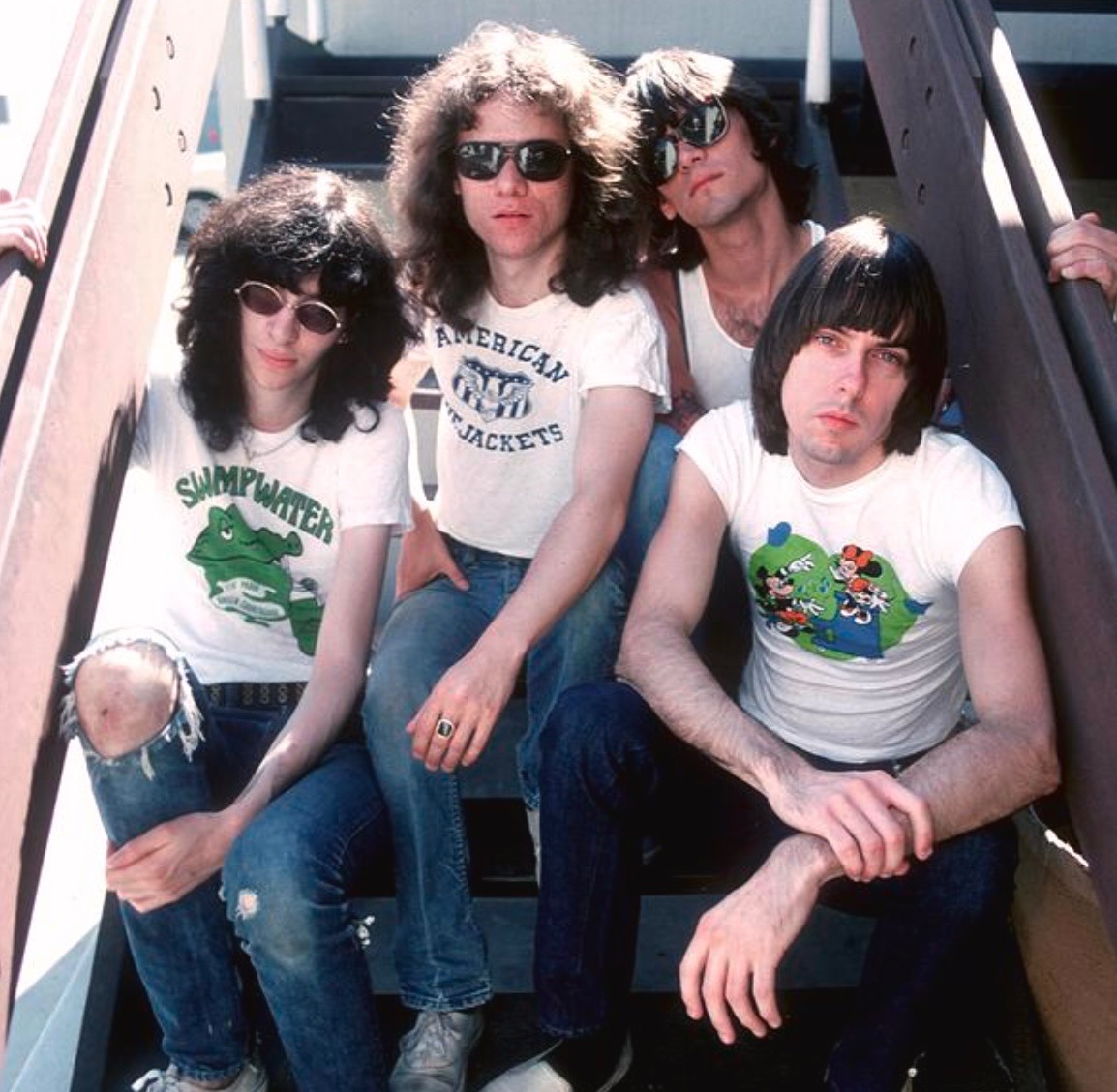
The story of the Ramones didn’t start on a grand stage, but on the quiet, middle-class streets of Forest Hills. It was there that the paths of John Cummings, Thomas Erdelyi, Douglas Colvin, and Jeff Hyman—the future icons of punk—first crossed. Cummings and Erdelyi had played in a garage band together during high school. Their circle eventually grew to include Colvin, a recent arrival from Germany, and Hyman, who had experience in a glam rock project called Sniper.
In early 1974, the group decided to try something radically simple and loud. The lineup and roles shifted on the fly: Colvin moved from guitar to bass and dubbed himself Dee Dee Ramone; Cummings became the sole guitarist and transformed into Johnny Ramone; Hyman became Joey Ramone. Tommy Ramone (Thomas Erdelyi) started as their advisor and manager before eventually stepping behind the drum kit.
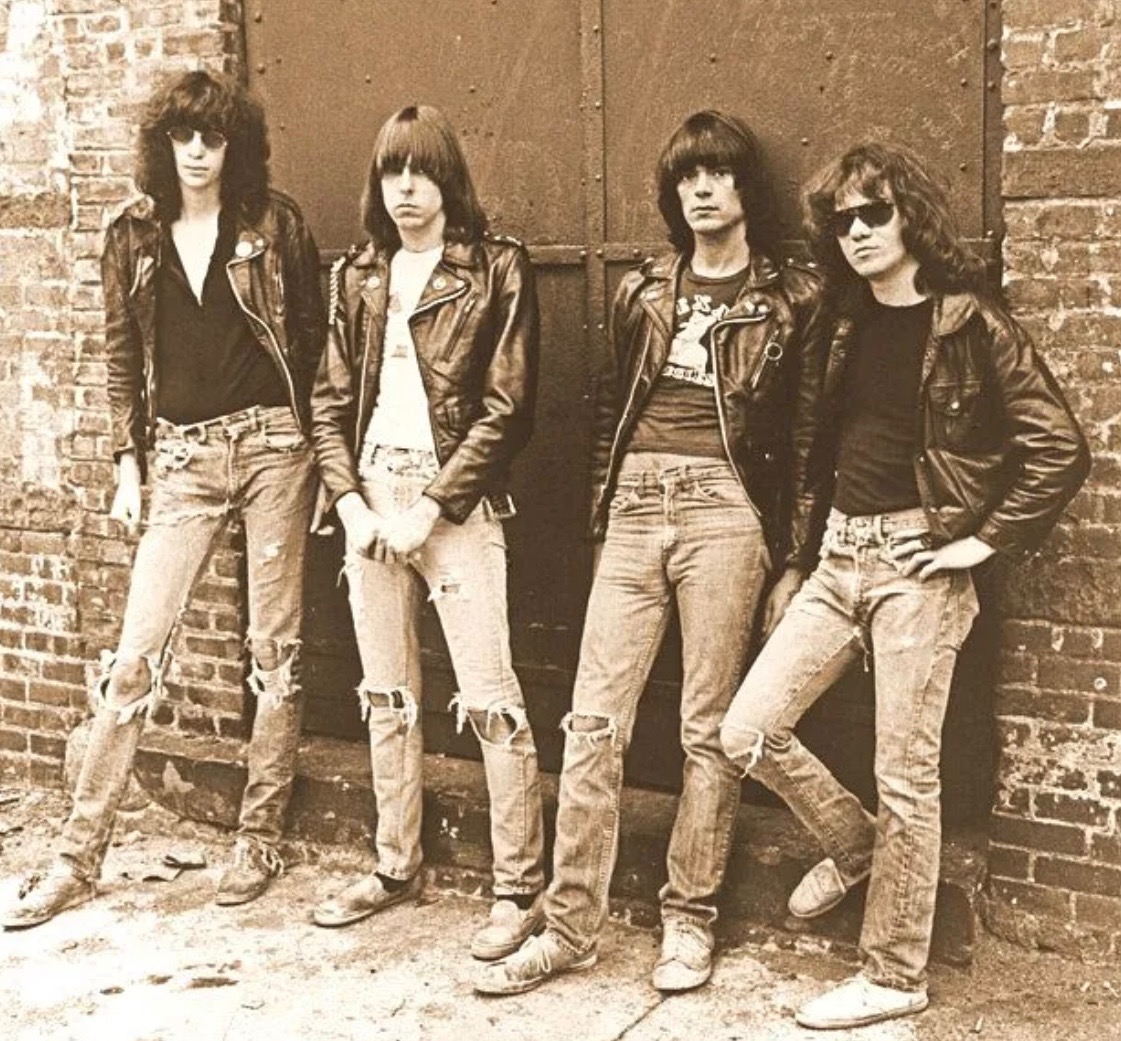
The band’s name was born from a mix of spontaneity and defiance: “The Ramones” was inspired by Paul McCartney’s early pseudonym, “Paul Ramon,” which Dee Dee adored. Their first rehearsals took place at Performance Studios in Manhattan, sharing space with the likes of Blondie and the New York Dolls. On March 30, 1974, the Ramones took the stage for the first time in front of a handful of people. Their songs were breakneck short, insanely fast, and completely unadorned—exactly what “punk” was destined to become. By that summer, they were regulars at CBGB—a gritty, half-empty bar on the Bowery that would soon go down in history as the cradle of punk rock. The leather jackets, the black-and-white minimalism, and the “wall of noise” felt like something from another planet.
By late 1975, the Ramones were the centerpiece of the New York underground scene. Their blistering sets, which rarely lasted more than fifteen minutes, caught the ear of Sire Records. In February 1976, the band recorded their debut album, Ramones: fourteen songs, almost none of which hit the three-minute mark. The record received rave reviews and instantly became a cult classic, even if it didn’t initially light up the charts.
The real explosion happened after a trip to the U.K. in the summer of 1976. A legendary gig at London’s Roundhouse and a meeting with the Sex Pistols and The Clash acted as the spark that ignited the British punk scene. Upon their return, the Ramones doubled down with the albums Leave Home and Rocket to Russia(1977), featuring their most iconic hits, “Sheena Is a Punk Rocker” and “Rockaway Beach.”
By the end of 1977, the Ramones weren’t just playing punk—they were defining exactly what it should be: fast, simple, honest, and completely devoid of pretension.
The Evolution of the Ramones After the Classic Era
By the late 1970s, the Ramones were entering a period of transition. Tommy Ramone stepped away from the drum kit to focus on production, handing the sticks over to Marky Ramone. The album Road to Ruin (1978) marked a shift away from their rigid minimalism, introducing longer tracks and even ballads—including the future classic “I Wanna Be Sedated.”
In 1979, the band made their big-screen debut in Roger Corman’s cult film Rock ‘n’ Roll High School. This surge in popularity caught the eye of legendary producer Phil Spector, who took the helm for the band’s fifth album, End of the Century (1980). The recording sessions were notoriously tense; mythic stories eventually surfaced of Spector’s almost tyrannical control in the studio. While the album became their biggest commercial success—reaching No. 44 in the U.S. and No. 14 in the U.K.—it caused a rift within the band. Johnny Ramone openly criticized the record as “watered-down Ramones,” feeling it strayed too far from their aggressive punk roots.
The mid-1980s saw the band attempting to reclaim their edge. Marky briefly left the group and was replaced by Richie Ramone, whose arrival sparked the high-energy Too Tough to Die (1984). Subsequent albums like Animal Boy and Halfway to Sanity leaned into a heavier sound and found massive success on international tours, particularly in South America. Internal friction led to more lineup changes, but the return of Marky closed out the decade with Brain Drain (1989), featuring the hit “Pet Sematary.”
By the 1990s, the Ramones were living legends. Despite the departure of founding member Dee Dee Ramone, the band pushed forward with Mondo Bizarro (1992), the covers album Acid Eaters (1993), and their final studio effort, ¡Adios Amigos! (1995).
The final curtain call came on August 6, 1996, in Los Angeles. The last Ramones concert was a massive event for the entire alternative scene, featuring guest appearances by Lemmy of Motörhead, Eddie Vedder of Pearl Jam, and Tim Armstrong of Rancid. For these musicians, the Ramones weren’t just a band—they were the starting line. After 2,263 concerts, the story of the band finally came to an end.
The Ramones were never “perfect.” They fought, barely spoke to each other off-stage, and frequently hated each other’s creative choices. But it was precisely that friction that forged the style that changed rock music forever.
The Ramones Aesthetic
While the Ramones’ sound seemed primitive on the surface, it was actually a sophisticated blend of 1950s and ’60s pop—from Buddy Holly and the Beach Boys to the Beatles and early girl groups. This formula—melody fused with aggression—was a deliberate middle finger to the bloated “arena rock” of the 1970s, with its self-indulgent solos and pretension. The Ramones stripped rock back down to speed, simplicity, and pure impact.
Critics eventually distilled their style down to a few chords, a manic tempo, and minimalist down-stroke guitar work, all seasoned with dark humor and a B-movie “trash” aesthetic. This radical simplicity effectively “cleaned out the pipes” of rock music, laying the groundwork not just for punk, but for pop-punk and power-pop as well.
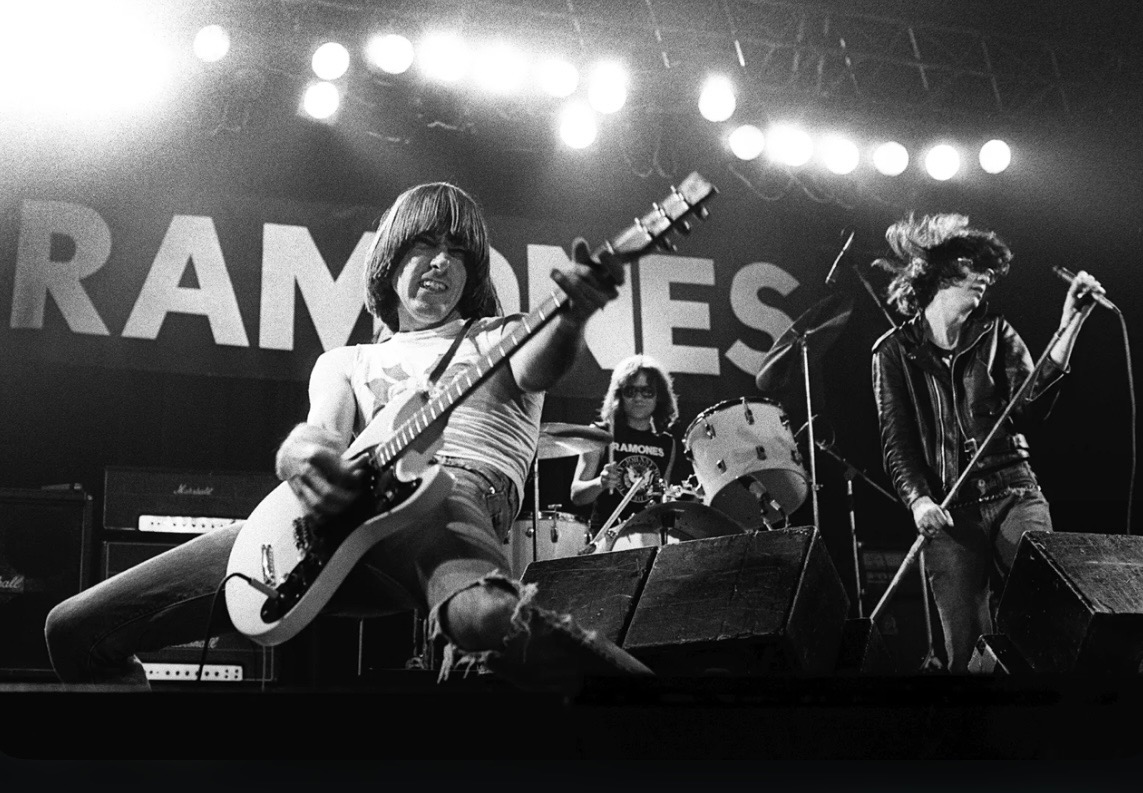
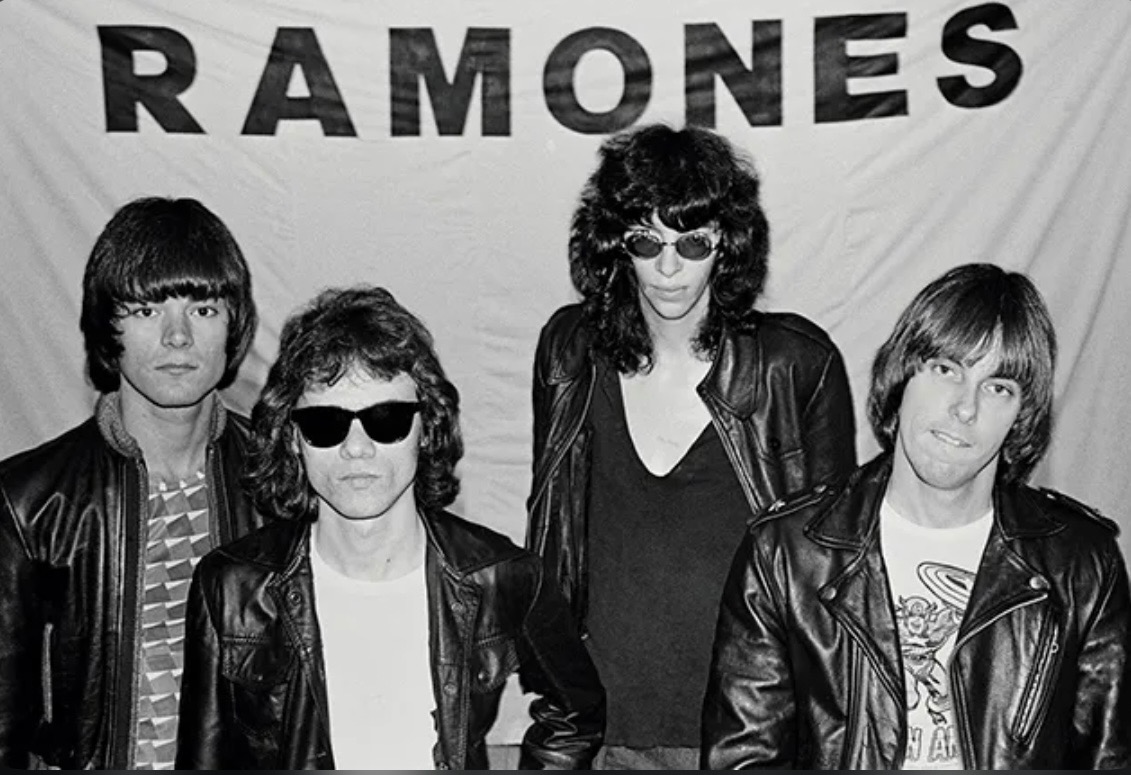
On stage, they were just as uncompromising: no pauses, minimal banter, and almost military discipline. A concert wasn’t a dialogue; it was a frontal assault—fast and relentless. Their uniform—leather jackets, ripped jeans, sneakers, and long hair—became the official canon of New York punk, a visual equivalent to their noise. Inspired by comic books, the avant-garde, and pop culture, they looked like characters from their own mythos.
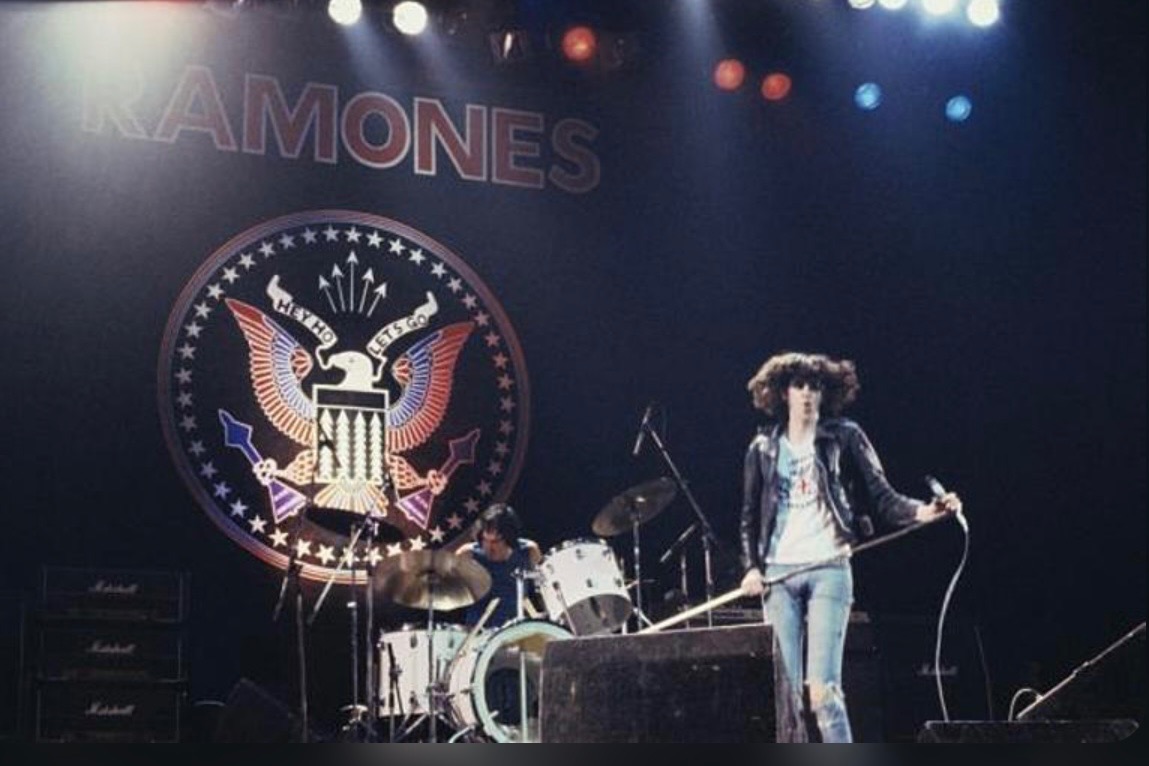
The crown jewel of this visual identity was the legendary Ramones logo, designed by New York artist Arturo Vega. Inspired by the Great Seal of the United States, Vega reinterpreted it to fit the band’s spirit: the eagle symbolized strength and aggression, but instead of an olive branch, it held an apple tree branch—a nod to the band’s quintessentially American character. In its other claw, the arrows were replaced by a baseball bat, Johnny Ramone’s personal symbol of choice.
The eagle’s beak held a banner with the battle cry “Hey Ho Let’s Go,” while the circle featured the names of the band members. Though the names changed as the lineup evolved, the symbol remained unshakable. The logo quickly transcended music to become a global shorthand for punk culture. As Marky Ramone later noted, there is a certain paradox in the fact that millions wear the T-shirt without ever having heard the music. But perhaps that’s where the magic lies—the symbol lives its own life, eventually leading the curious back to the songs.
Influence and Legacy
The Ramones’ impact on popular music was profound and permanent. Music historian Jon Savage described their debut album as one of the few records that changed pop music forever. Critics agree that the band’s first four albums provided the DNA for American punk and hardcore for decades to come.
In New York, the Ramones were the direct catalysts for the local hardcore scene. Members of the Beastie Boys, Agnostic Front, and the Cro-Mags have repeatedly cited them as their primary inspiration.
Even more significant was their impact across the Atlantic. Their London shows in July 1976 acted as a detonation for the British punk movement; overnight, bands began playing faster and stripping away musical filler. It was in the wake of these performances that the Sex Pistols, The Clash, The Damned, and Sham 69found their footing.
Accolades and Cultural Impact:
- 2000: VH1 ranked them No. 17 on the list of the “100 Greatest Artists of Hard Rock.”
- Johnny Ramone was named one of the greatest guitarists of all time by both Time and Rolling Stone.
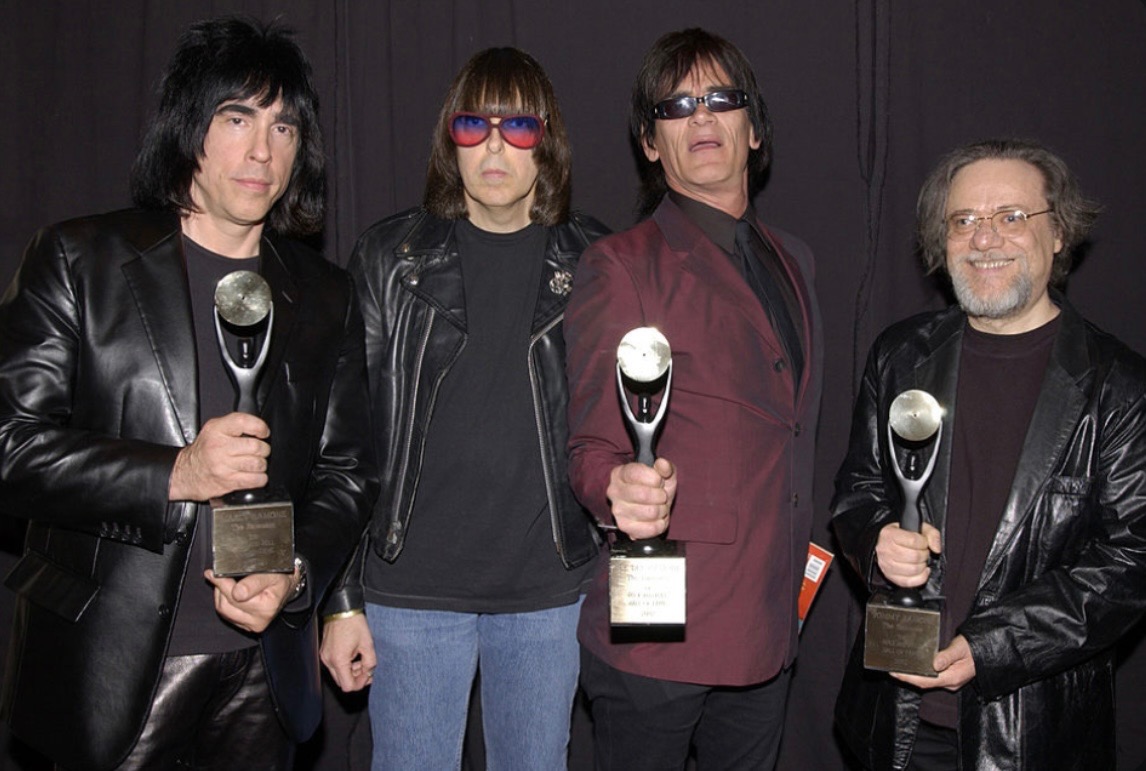
- 2002: The band was inducted into the Rock and Roll Hall of Fame.
- 2011: They received the Grammy Lifetime Achievement Award.
Despite limited commercial success during their active years, the Ramones proved to be far more than a “cult” act—they became the very foundation of punk rock as a global cultural phenomenon. Their influence echoes through Green Day, Nirvana, Metallica, Rancid, The Offspring, and thousands of others. The Ramones proved that music doesn’t need a permit—it just needs desire, volume, and the guts to step onto the stage.
They didn’t just play punk rock. They taught the world what it was supposed to sound like.