


New York is, famously, the city that never sleeps. Its endless opportunities, entertainment options, and vibrant energy draw a massive number of tourists from all over the world. And it seems this has always been the case. The city’s inhabitants often recall the golden age of nightclubs in the 1940s and beyond with a special fondness. Back then, New Yorkers hardly had to choose between staying home in front of the TV or going out. If you wanted a truly great evening, you simply had to step out and visit one of the city’s premier venues. Among them, the Copacabana club stood out, its walls bearing witness to the incredible history of an entire generation. Now, it’s time for us to discover that story on new-york-trend.
The History of Copacabana
The Copacabana club opened its doors in November 1940. While Europe was deep in the throes of World War II, Americans had recently emerged from the Great Depression and were eager to live life to the fullest. Dancing, singing, and having fun were high on the agenda. This energetic mood was perfectly captured by Monte Proser—the club’s creator and owner. Proser had experience as a press agent, producer, and entertainment organizer. He possessed a perfect blend of entrepreneurial drive and creative energy, which allowed him to launch his new project. He named it after the famous beach in Rio de Janeiro and designed it in the spirit of Latin American culture. The venue was located at 10 East 60th Street, right next door to the Hotel Fourteen. The club immediately attracted the attention of the New York public—and not just them. A certain organized crime group also spotted a potential source of profit in the Copacabana.
It was not uncommon in New York at the time for businesses to be controlled by mobsters, who used them as cover for their illegal activities. Clubs, in particular, were ideal for their schemes. The Copacabana was no exception. Try as he might to protect his brainchild, Monte Proser received an offer he simply couldn’t refuse—because he had no real choice in the matter. That’s how crime boss Frank Costello entered the picture. Unwilling to publicize his involvement, Costello entrusted Jules Podell with managing the club’s day-to-day operations. The Copacabana thus became a tandem of creative enterprise and mob influence. This had a profound impact on the venue’s history, shaping the distinct style and reputation it became known for.
The 1940s served as a true launchpad for the venue’s popularity, which continued to soar through the 1950s and 60s. Monte Proser fought hard for his project, working side-by-side with Podell. Proser was responsible for the entertainment, atmosphere, and image, while Podell managed the kitchen and waitstaff. Their styles, however, differed radically. While Proser poured his heart and creative energy into the club, Podell was known for his ruthlessness. Eventually, Proser was fired, and the club fully passed into the hands of the mafia and its associates. Despite this, that period was the venue’s golden age. The stage buzzed with various shows, hosting musicians, comedians, and performers of all stripes. Celebrities flocked from all over New York, and the club was consistently sold out.
This success lasted until 1972, when mobster Joe Gallo was managing the club. After Jules Podell died in 1973, the Copacabana closed for three years. It only managed to reopen in 1976 under new management: John Guiliano, Peter Dorn, and Ron Hollik. The venue briefly regained its former glory thanks to the hit song by Barry Manilow, which brought back a wave of nostalgia for the club’s best days among New Yorkers. Afterward, the venue faced a series of relocations, opening and closing due to the search for a suitable location, licensing issues, the pandemic, and other circumstances. Since 2022, the Copacabana has been operating at 625 West 51st Street.
Club Life
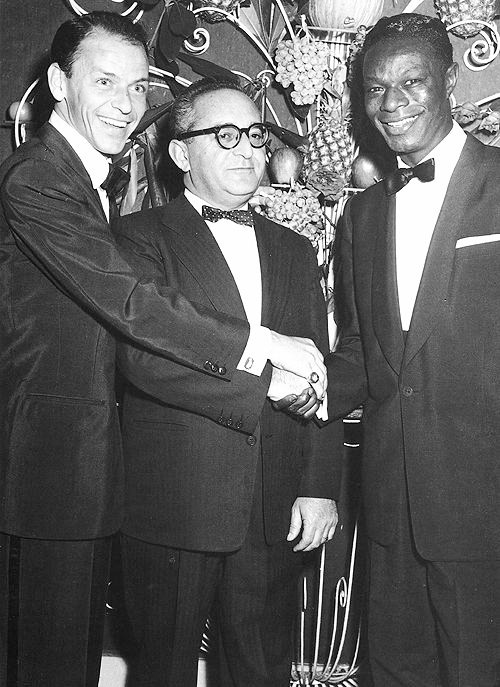
Life at the Copacabana felt like a dream that the rich and famous gladly immersed themselves in every night. The club was an elite space, only accessible to wealthy, influential, and recognizable people. So, if you didn’t have a reserved table or some extra cash in your pocket, you simply couldn’t get in. The entire look of the venue channeled the atmosphere of its namesake beach, offering entertainment for every taste. Monte Proser conceived this whole environment, and Clark Robinson brought it to life. This is how the numerous columns and palm trees, the velvet and glitter, the vibrant colors, the majestic stage, and countless tables scattered throughout the opulence came to be. The club’s location—nestled in the basement of the Hotel Fourteen—was also a major asset, convenient for out-of-town guests and those who lingered late. And as everyone knew, the party only truly began at midnight.
The club was destined for success, as both its concept and execution were superb. The Copacabana immediately became the center of New York’s nightlife, earning a reputation of untouchability. People came for the experience and the exclusive status. The venue combined everything needed for a successful evening and night: visitors could dine, enjoy a strong cocktail, stay for the live show, listen to headlining stars, dance the night away, and score a major social outing. The club attracted plenty of attention. Paparazzi waited outside every night, and the next morning, the latest gossip could be read in the papers. However, photographers were not allowed inside; all internal photos were taken by an in-house person to ensure guest confidentiality and safety. The entire Copacabana show was broadcast on the radio, allowing listeners to enjoy the exquisite music and hear the list of attendees. It quickly became the premier stage for musicians.
Both up-and-comers and major celebrities performed here. A spot on the club’s stage automatically granted you fame and recognition. The list of famous names included Sam Cooke, Frank Sinatra, Sammy Davis Jr., Peggy Lee, Ella Fitzgerald, Keely Smith, Johnny Ray, the Supremes, the Temptations, Dean Martin, and Jerry Lewis, among others. American music stars traveled from various cities, and their performances became major sensations. No matter how much the club expanded, the demand to see a show far exceeded capacity. The number of seats varied from 400 to 1,500. As for the food, patrons enjoyed Chinese and French cuisine, and the menu caused no less of a sensation than the entertainment. Charity events, singers, comedians, wild dancing, secret deals—the Copacabana perfectly captured the spirit of the era in which it was created.
The Copa Girls
The undisputed stars of the famous New York club were the Copa Girls. These performers presented the best all-female show in the city and captivated every visitor. They made their debut in 1941 and performed until 1969, even after the Copacabana had begun to fade from its golden age. Their eventual dismissal was partly related to this decline. The ensemble’s manager was Jack Entratter, who rapidly climbed the career ladder. Shortly after joining the club, he became a co-owner and the show’s producer. Despite his mob connections, he was highly effective at his job. The Copa Girls were celebrated and talked about everywhere; their shows were sell-outs, and the women themselves became genuine stars.
Entratter’s show achieved extraordinary popularity thanks to his creative vision and keen understanding of the entertainment world. He moved away from standard performances where the girls had to execute complex dance routines and juggle multiple tasks simultaneously. In Jack’s opinion, this made the performers lose their sparkle and charisma. Instead, the producer emphasized beauty, ease, and grace. That’s why during castings, he prioritized the girls’ looks and downplayed their dancing skills. All he wanted was to find beautiful faces. And, of course, the Copa Girls had the best costumes, hairstyles, and makeup. One ensemble could cost upwards of $4,000, often adorned with feathers, fur, sequins, and other details. They had many such costumes, and the girls frequently dyed their hair to match each look.
The Copa Girls performed 7 days a week, giving three shows daily. The first started at 8:00 PM, the second at midnight, and the last at 2:00 AM. The audience was wild, and sometimes the girls could barely squeeze through the tables. “Performers” is the most accurate term for them, as they danced, sang, interacted with the crowd, and radiated energy. However, they were strictly forbidden from socializing with patrons while working. This is why they resorted to tricks, quickly changing between sets and rushing out for dates. For guests, showing up with one of the performers was a great honor. Even the most famous men at the Copacabana courted the show participants. When the club finally began its decline, the Copa Girls still managed to maintain their success. The women teamed up outside the venue and began a new chapter in their history.
The Club’s Legacy and Expansion
News of the Copacabana quickly spread throughout the entertainment world. Stars from all across America flocked to the club. It was stunning with an atmosphere that was hard to even explain. The delicious food, dazzling interior, famous performers, beautiful dancers, popularity, and dangerous connections attracted everyone. It’s no wonder people tried to replicate the club’s success. The first person to do so was someone directly connected to the Copacabana: Jack Entratter. He decided the West Coast also needed a venue like it. In 1952, the producer began work on his vision. That same year, the Sands Hotel opened in Las Vegas, featuring the Copa Room club. Everything was the same as in New York, and Entratter—dubbed “Mr. Entertainment”—was responsible for the atmosphere there.
While the hotel was one of many in the city, Jack’s influence made it special. He brought the Copacabana phenomenon. He assembled a new lineup of Copa Girls for the new location, who immediately wowed the audience. Expensive costumes, charismatic dancers, and spectacular performances took Las Vegas by storm. Other venues tried to copy that success, but there was only one Copa. Famous performers also started flocking here, recording albums and giving unforgettable concerts at the club. The venue became a crucial stage for artists; it could make anyone famous or restore their former glory. In 1981, following the same blueprint, the hotel opened its club in Atlantic City. Perhaps this success was due to a lucky coincidence or an excellent instinct for the entertainment business. Regardless, those times were the golden age for both the Copacabana and its sister clubs. Now, they mostly live on only in memory.