


The Metropolitan Opera House in New York, also known as The Met, is one of the most prominent opera houses in the world. This is a vibrant place for talented singers, conductors, composers, and the most creative directors, designers, artists, as well as choreographers from different corners of the world. Read more at new-york-trend.
Since the establishment of the opera house, its creative team has been constantly raising theatrical standards. They increased the number of new productions and launched a number of initiatives to attract a larger audience on the international stage. The most inventive directors working in the establishment have even created a successful series of live broadcasts of performances and productions in HD quality in cinemas around the world. Such an initiative has captivated audiences and has become a quite felicitous project. Moreover, connoisseurs of opera and theater art highly appreciate all the productions and performances. The Metropolitan Opera always presents brilliant works by classics alongside contemporary masterpieces.
Let’s try to learn a little more about the founding of the most prestigious opera house in the United States of America.
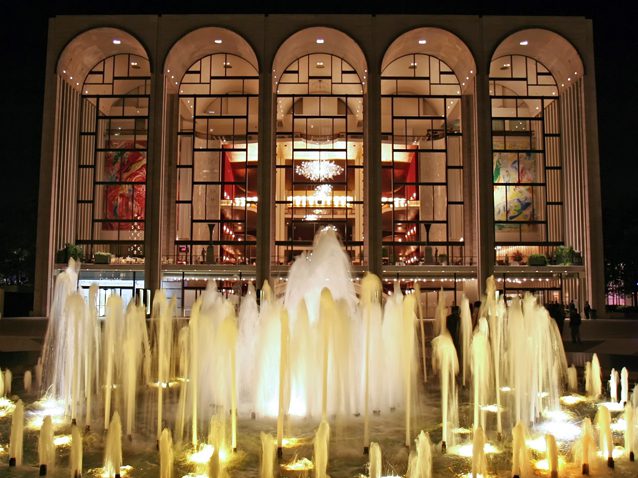
THE WHIM OF MILLIONAIRES OR THE FOUNDATION OF THE OPERA HOUSE
From the mid-19th century, the Academy of Music was the only opera theater in New York, which was built on donations from the elite class of the big city. Only wealthy and respectable citizens had the privilege to attend opera performances. Seats in the theater’s exclusive boxes were reserved solely by the well-known families of great antiquity.
In archival sources, there is even a witty comment by the German opera singer Lilli Lehmann about this. One evening, the wife of the heir to the wealthiest Vanderbilt family (at the time in the United States) was very upset when she could not get into the theater. To please his wife, her husband decided to build the most luxurious opera house. Thus, the most important institution of opera art in the United States was founded, the famous Metropolitan Opera.
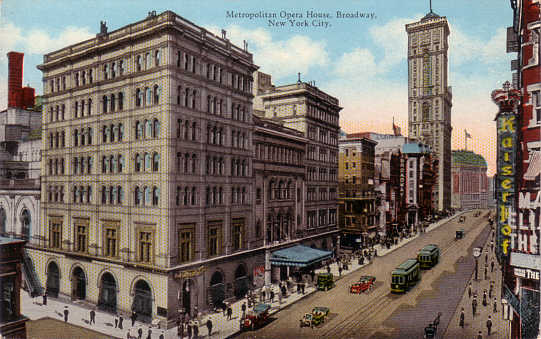
After the end of the American Civil War, the new affluent aristocracy lacked private lodges in the Academy of Music. In 1880, a group of wealthy businessmen who were extremely dissatisfied with the arrangement and number of seats in the old theater decided to build their own. The rich and eminent proposed to build a new opera house, twice the size of the Academy, with three tiers of private boxes. In total, 70 shareholders allocated $1.7 million to purchase the land and construct the opera theater at Broadway and 39th Street.
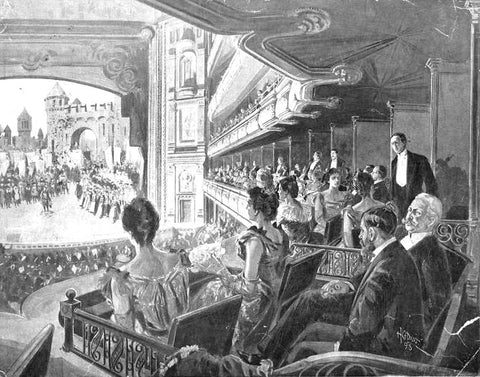
The Metropolitan Opera was opened on October 22, 1883. It was designed by J.C. Cady in the Italian Renaissance style with magnificent Romanesque panels. Locals nicknamed it “Yellow Brick Brewery” or “Warehouse” due to its typical industrial appearance. However, there were others who found the intimate interior of the Metropolitan Opera very attractive. It is interesting that the architect had never designed such buildings before and had never even been inside a theater. That is why, being remarkable, the structure of this building had several functional shortcomings.
The opera house, in general, satisfied the eyes of the upper-class society. The opera lodges at the time were the best place for women of New York’s elite to display their jewels and fancy dresses. The Metropolitan Opera building became a new meeting place for the local socialites.
The season of performances in the newly built theater was opened with the opera “Faust” by Charles Gounod, featuring Christine Nilsson and Italo Campanini. Initially, the main artists and composers who performed in the opera house were European. But operas by German composer Richard Wagner dominated the repertoire. However, over time, American artists, conductors and opera singers began to appear as well.
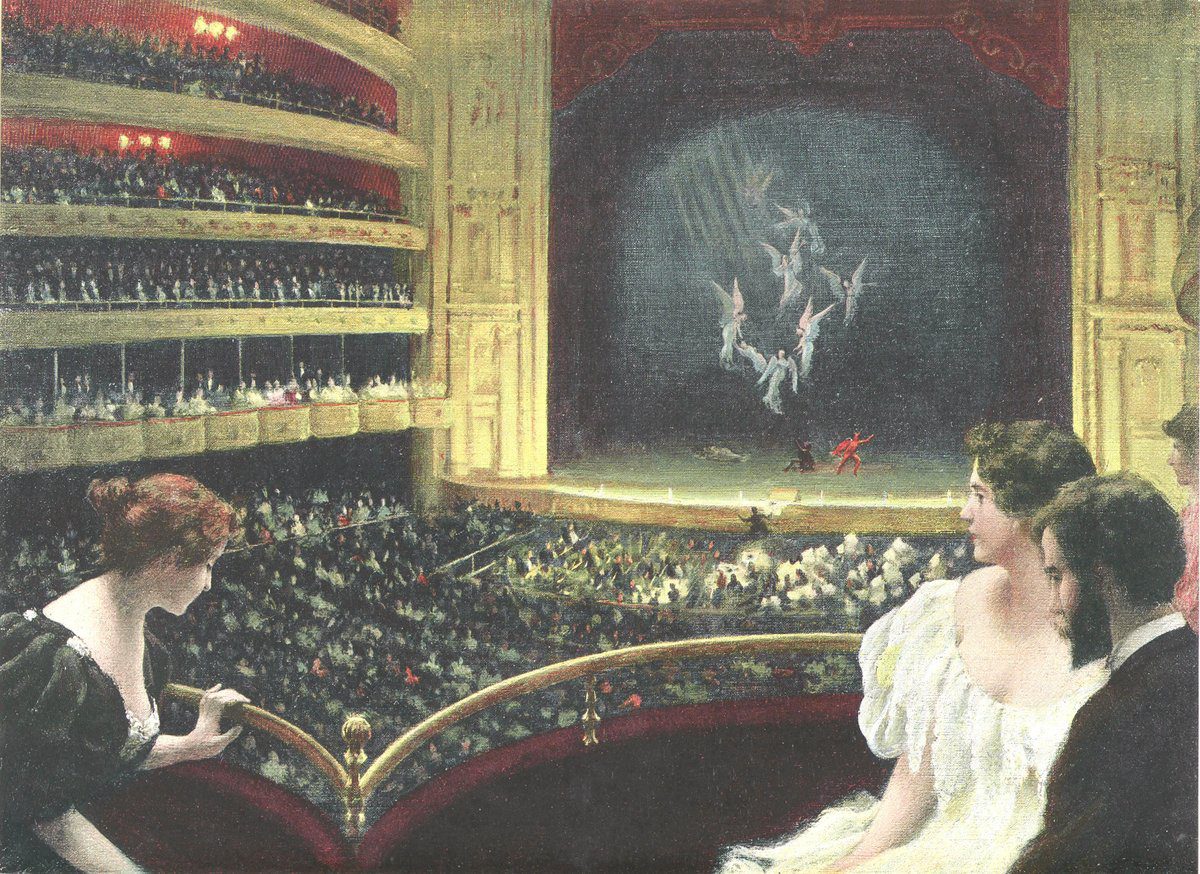
FIRE IN THE THEATER AND A MILLION DOLLARS FOR BUILDING RECONSTRUCTION
At the end of August 1892, a stage designer accidentally threw a cigarette stub into a bucket of solvent. The opera house caught fire instantly. The flames quickly spread to the wooden decorations, which led to the destruction of the theater premises.
The renovation required significant funding, more precisely a million dollars. The shareholders of the Carrère and Hastings company confidently embarked on a new project. The new space was significantly improved by adding 350 new seats and expanding the standing area for spectators. In 1906, the original golden damask stage curtains were installed, which was a finishing touch to the interior design of the opera house.
The theater was about to be demolished in 1938 if not for the public donations of $1 million that saved the cultural space.
DESTRUCTION OF THE OLD THEATER BUILDING AND CONSTRUCTION OF THE NEW MET
After World War II, American political, financial, and cultural leaders decided to take advantage of Europe’s economic weakness and make New York a new international cultural capital. To achieve this goal, a new opera house had to be built that would meet all the requirements and regulations. Despite its elegance and impeccable acoustics, the old Metropolitan Opera building lacked technical facilities, especially on stage and behind the scenes.
Any attempts and efforts to demolish and replace the Metropolitan Opera have been stopped by the multimillion-dollar historic preservation campaign “Save the Met.” Even the US Department of the Interior recognized that the establishment has to be a national landmark. Despite all the efforts of “Save the Met”, the Metropolitan Opera Association rejected this title, as they had already planned to replace the opera house.
Long discussions led to the decision that the new Metropolitan Opera House would become a part of the Lincoln Square Renewal Project proposed by the American urbanist Robert Moses. Lincoln Center was intended to become a prominent cultural epicenter, making NY equal to London, Paris or Vienna.
UNIQUE ROYAL DECORATION
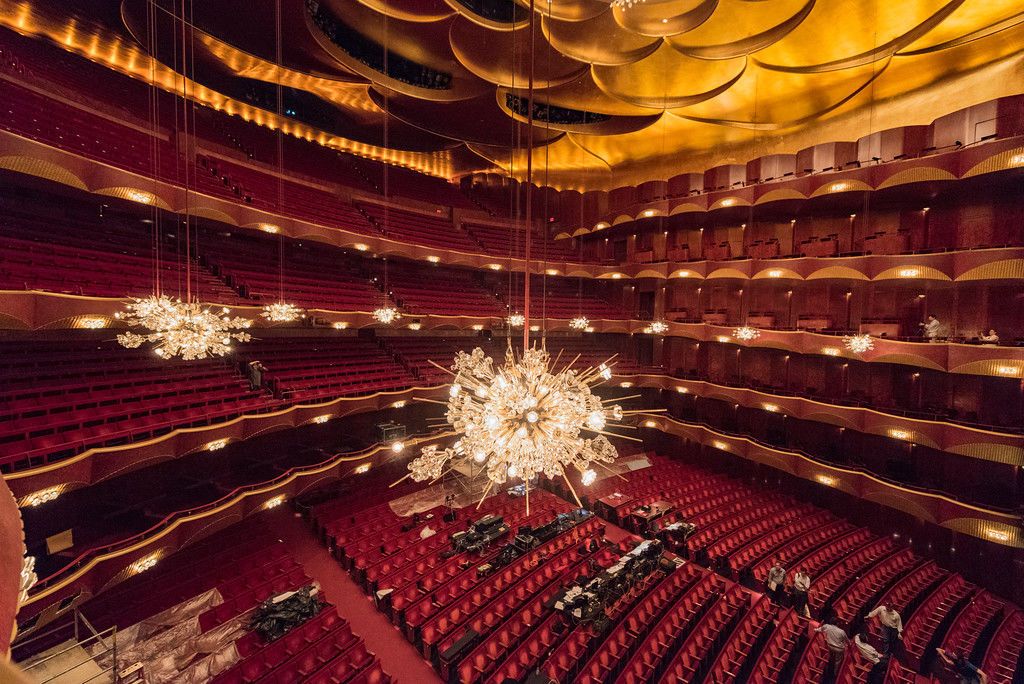
The newly rebuilt Metropolitan Opera impresses not only with its grandeur but also with its unique decoration. The ceiling in the auditorium immediately attracts the attention of the audience because it is covered with gold. More than a million gold leaves, each 23 carats, were meticulously placed on the ceiling one by one. It was a time-consuming process, but the American government itself slowed it down to avoid depleting its reserves.
Furthermore, it is hard not to notice the magnificent chandeliers in the foyer and the auditorium. They were a gift from Austria to the United States as a gratitude for the Marshall Plan. They are special elements of interior decoration.
In 1995, small screens were installed on the seats, allowing the audience to read subtitles to the work, which facilitated understanding of the performance.
REPERTOIRE OF THE METROPOLITAN OPERA
At the beginning of their long journey in art, the creative personnel at The Met, feeling the mood and preferences of the public, changed their direction several times. At first, all productions were performed in Italian (in particular, “Carmen” and “Lohengrin”) and then in German (“Aida” and “Faust”). Eventually, all the pieces were presented in their original language.
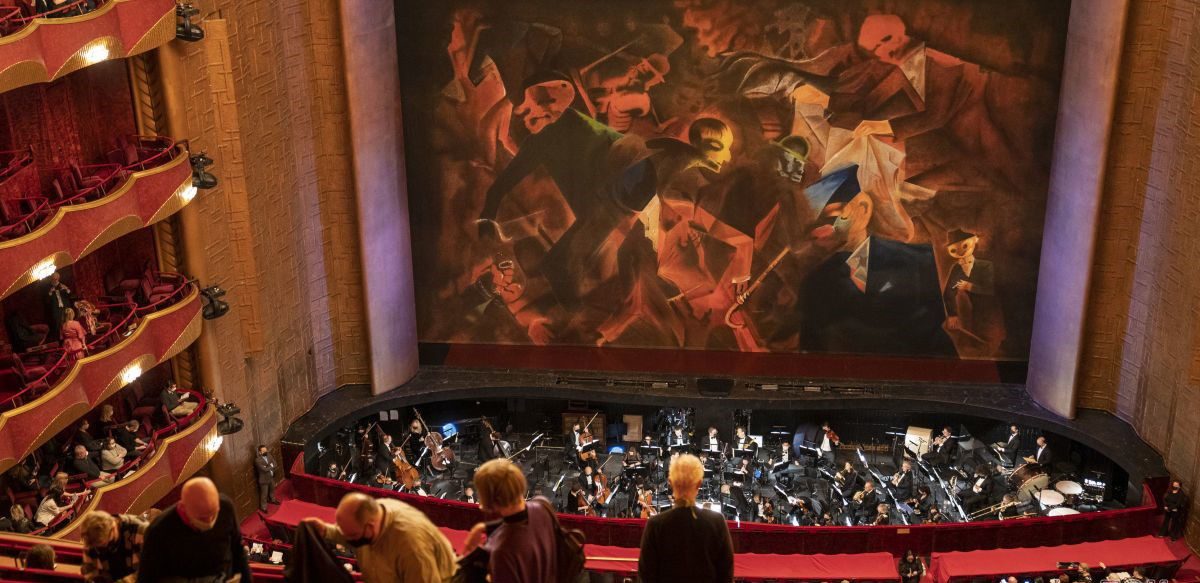
The Metropolitan Opera has always attracted the world’s most outstanding artists. Opera stars Kristina Nilsson and Marcella Sembrich successfully opened each new season. German opera singer Lilli Lehmann sang the primary arias in Richard Wagner’s repertoire. Shortly after, famous American opera divas Emma Eames, Lilian Nordica, Geraldine Farrar, Australian opera star Nellie Melba and French singer Emma Calvet joined the cast along with Italian opera singer Enrico Caruso.
The Met today continues to showcase the best talents from around the world as well as discover and educate the next generation of artists.