


Ukrainian singer Kvitka Cisyk was born and raised in the USA. Although she spent her entire life outside her native country, her talent did not have bounds. Her voice was magical. Learn more at new-york-trend.
Her collaborations with Michael Jackson, Whitney Houston and other global stars prove her enormous impact on the music scene. However, paradoxically, her name became widely known in Ukraine only after her death. Two Ukrainian-language albums, released at her own expense, still have lasting popularity, offering listeners unique melodies and experiences.
KVITKA OR KACEY?
The singer’s full name is Kvitoslava. Her family and close friends called her Kvitka. She gained popularity in America under the stage name Casey, a combination of the first letters of her first name and surname, Kvitka Cisyk.
CHILDHOOD OF KVITKA
Kvitka Cisyk was born on April 4, 1953, in New York to a family of immigrants from western Ukraine. In their homeland, Kvitka’s family belonged to the elite, but they were forced to leave the country in 1949 due to the risk of persecution by the Soviet authorities.
The Cisyk family, although living across the ocean, preserved their Ukrainian identity and nurtured it in their children. Thus, Kvitka attended a regular American school during the week and went to Ukrainian School on Saturdays.
In addition, the girl was a member of the Plast Scout organization. She attended summer camps where she studied Ukrainian songs, customs and traditions and participated in cultural events organized by Plast. Life in emigration was difficult, but saving money for the summer gatherings of Plast members, which their daughters were to go, was a rule for the Cisyk family. Before the holidays, the sisters attended a regular school in Queens on weekdays.
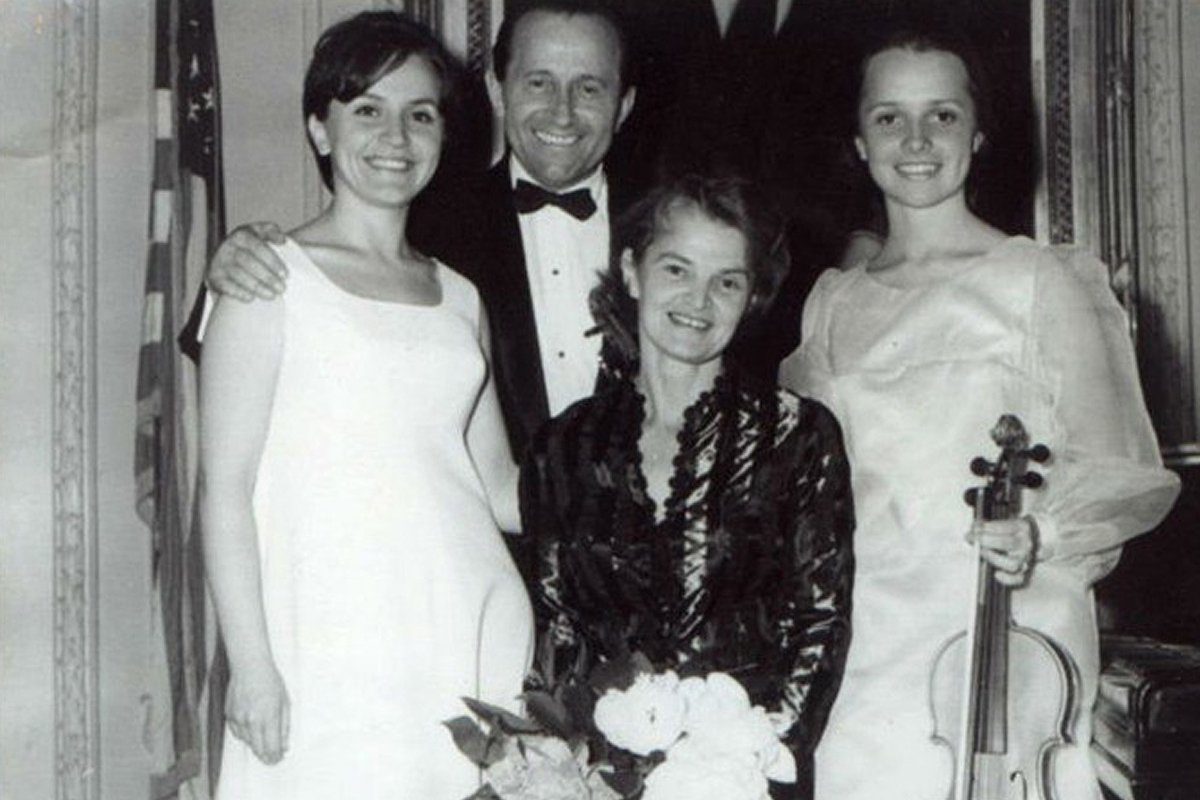
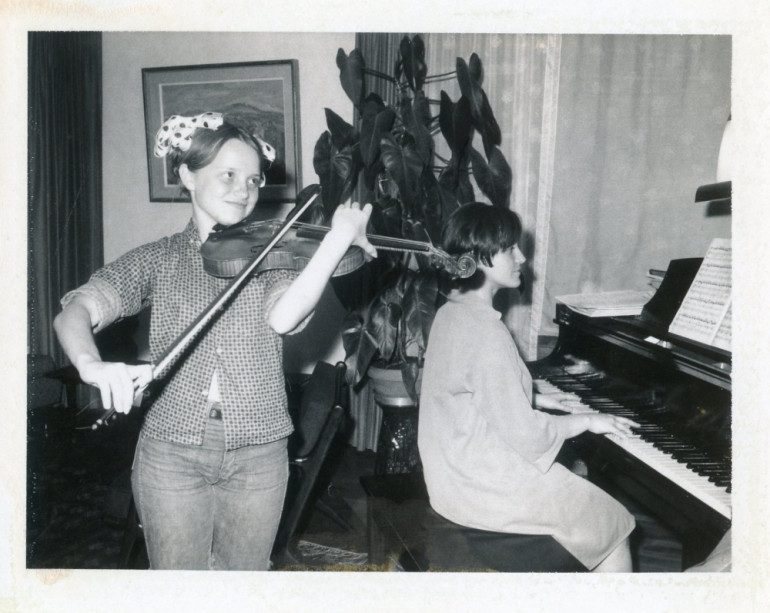
Kvitka had been involved in music since childhood. Her father, Volodymyr Cisyk, a famous violinist from Kolomyia, taught her, while her mother, Ivanka, ensured that the atmosphere at home fostered learning and a love for the arts. Thanks to her diligent work, Maria became a renowned pianist, later managing the conservatory in San Francisco and giving master classes at Carnegie Hall. Kvitka, on the other hand, had an amazing singing career and became the highest-paid singer of jingles, songs that can be heard in advertisements.
A RARE VOICE
Cisyk had a coloratura soprano. Admirers sometimes heard the sound of a violin in her voice. She effortlessly experimented with styles, from jazz to classical. She was good at both performing pop songs and in opera singing. Additionally, Kvitka used a technique common in the Carpathian villages known as “white voice.”
FIRST STEPS IN CAREER
Cisyk did not immediately realize that she was meant to sing. She mastered the violin, studied performing arts at a ballet school and simultaneously sang in a choir, alongside Michael Jackson. At 17, Kvitka graduated from the High School of Music and Arts in New York and entered Binghamton University, where she studied violin and singing. After college, she continued her education at the National Conservatory of Music of America in New York. She excelled in all musical styles, and within a year, in 1970, she got a fellowship to study vocals at the Mannes College of Music in Ghent, Belgium. Later, she chose opera singing as her main subject.
Performances in clubs in New York helped Cisyk find herself in music. There she experimented with jazz, pop and even rock. Her talent on stage was noticed, and soon Kvitka began collaborating with some of the most prominent figures in the American music industry. She recorded songs with Quincy Jones, Robert Flack, B.B. King and Carly Simon.
STAR OF AMERICAN ADVERTISING
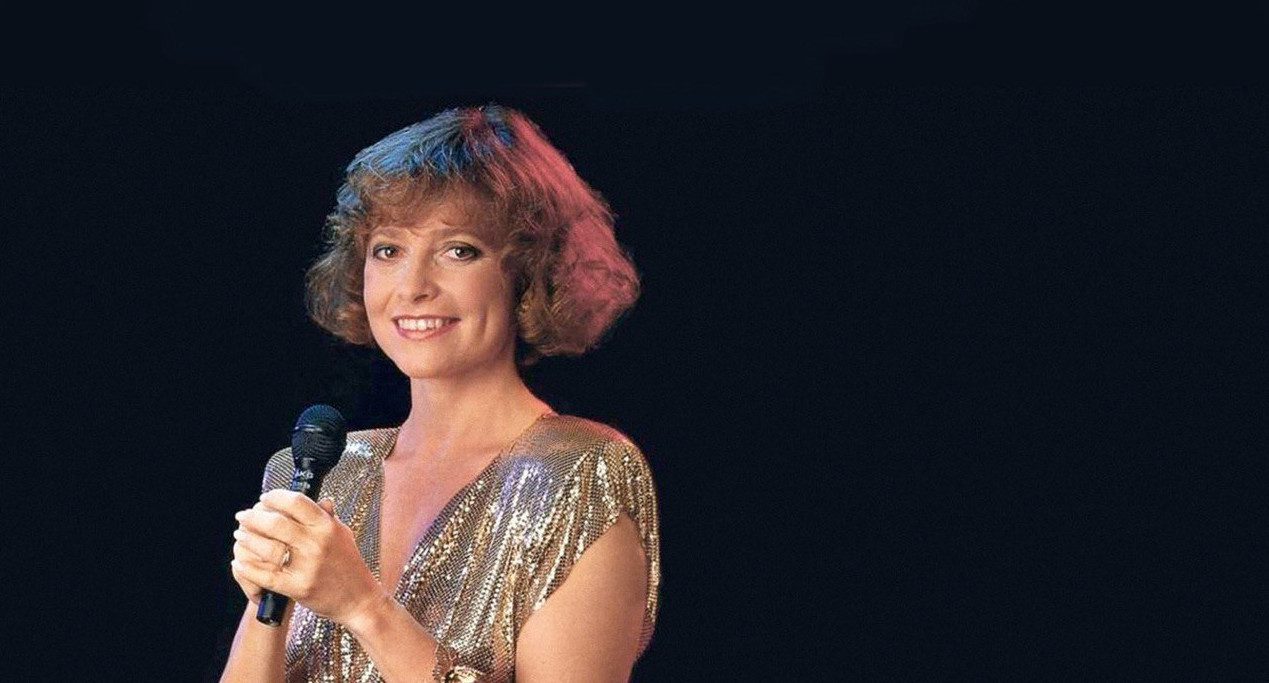
With her new passion in the mid-1970s, Cisyk conquered the world of jingles and achieved her long-desired American fame. She recorded a rock commercial jingle for Pepsi in the morning, a ballad for McDonald’s during lunchtime, the U.S. Army National Anthem in the afternoon and a 60-second opera for AT&T at night. This delicate girl was tireless, yet always attentive to details and kind to people. Thanks to her talent, hard work and humaneness, she became one of the most successful performers of campaign songs. The jingle “Have you driven a Ford lately,” which the singer wrote for Ford Motor Company, was listened to over 22 billion times. It’s no surprise that until the end of her life, Kvitka was the sole official voice of the company and had the right to collaborate with other automobile giants whenever she wanted.
FAMILY
Kvitka was married twice, and both times she chose men from the music world. Her first partner was Jack Cortner, a well-known composer-arranger and jazz musician. He wrote music for theater, radio and television.
Edward Rakowicz, Kvitka’s second husband, is a successful sound engineer and the owner of several recording studios that were united into the Clinton Recording Studios complex. It was in these studios that some of the most popular American artists of all time recorded their songs, from Frank Sinatra to Lenny Kravitz.
In this marriage, the singer gave birth to a son, Edward-Volodymyr Rakovich in 1990. The son continued the musical dynasty, engaging in classical music and becoming a pianist.
SONGS ABOUT UKRAINE
Kvitka’s connection with cinema was short but bright. She performed the soundtrack “You Light Up My Life” for the film of the same name by Joseph Brooks. The song was later covered by nearly all American artists, including Whitney Houston. However, Kvitka’s life’s work became the recordings of Ukrainian songs.
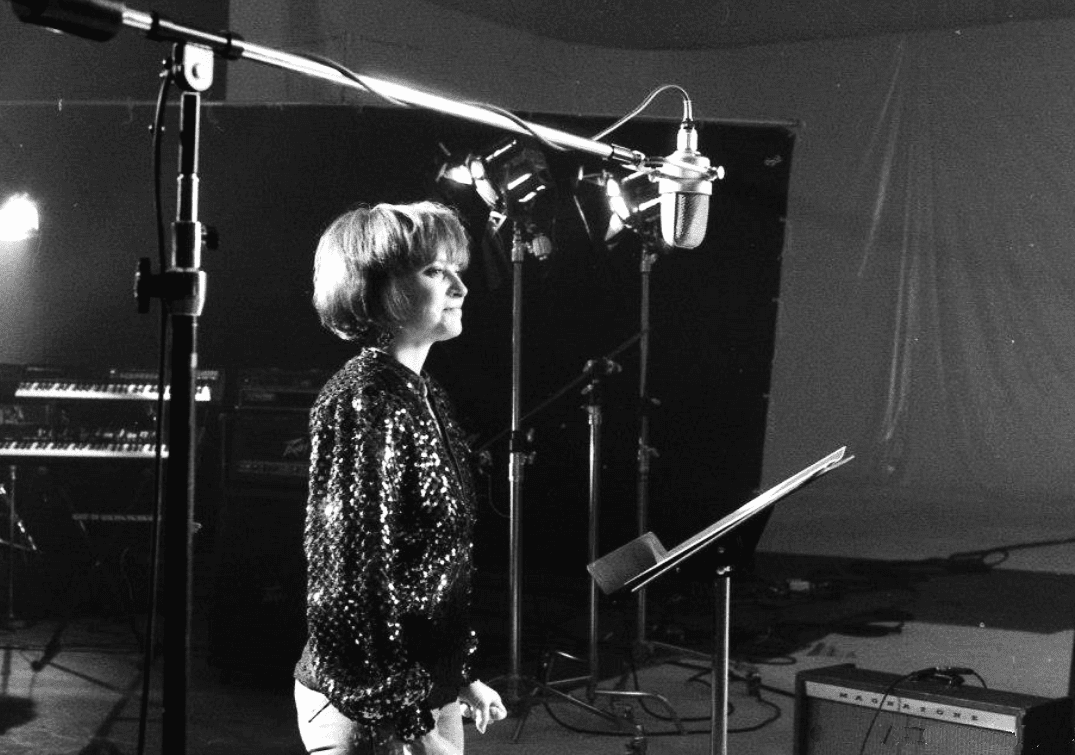
To record a quality album of Ukrainian songs, Kvitka attracted the best studio instrumentalists from New York. She involved her sister, who played the piano and her mother, who ensured that the pronunciation was as accurate as possible. The recording process took months of work and $200,000 of the singer’s own money to achieve a high-quality and flawless sound. Thus, in 1980, the album “Kvitka, Songs of Ukraine,” was released. It contained several compositions sung in a unique technique called “white voice,” which can be heard in the Carpathian villages.
In 1989, the album “Two Colors” was released.
The first album won the highest American Music Awards in 1988, and both Ukrainian-language records were nominated for a Grammy in 1990. The third album was intended to feature lullabies, but it was not meant to be, as illness struck the young singer.
THE ONLY TRIP TO UKRAINE
In 1983, Cisyk visited Ukraine for the first and last time. She came here with her mother. They visited Lviv and other cities in the western part of the country. This visit was private and not publicized. One of the reasons was that Kvitka’s songs were banned in Soviet Ukraine.
However, Cisyk was invited to participate in the Chervona Ruta festival in 1989 and 1992 on the occasion of the second anniversary of Ukraine’s independence. There were even negotiations for a series of performances, but those plans did not come true.
THE ILLNESS OF KVITKA
In 1992, Kvitka was diagnosed with breast cancer. Doctors gave her only a few months to live, but those months turned into seven years. Kvitka passed away just five days before her 45th birthday, which she would have celebrated in 1998. Her mother and sister also died from the same illness.
With her voice, Kvitka Cisyk breathed new life into already familiar songs that are still listened to today. Her artistry instilled faith in a whole generation of artists who were inspired to promote the development of Ukrainian culture in Ukraine.
HONORING HER MEMORY
Even many years after her death, Kvitka remains a beloved singer for millions of Ukrainians around the world. Poems are dedicated to her and prose is written about her. Director Valeriy Nevedrov dedicated a theatrical performance called “I Am Kvitka” to the singer. Various artistic projects are held in Ukraine and other countries in honor of the artist, and streets are named after her.
Perhaps the most well-known project in honor of the singer is the charitable foundation “Unforgettable Kvitka,” which helps Ukrainian women fight breast cancer. One of the founders of the foundation is composer Alex Gutmacher from Odesa. At one time, he underwent cancer treatment in the same hospital as Kvitka Cisyk. He raises funds for diagnostic equipment for the early detection of breast cancer.